Published on October 31, 2026 · Updated on October 31, 2026
Of everywhere I went on my first trip through Morocco, Chefchaouen is the place I think about most. A whole town painted in every shade of blue, tucked high into the Rif Mountains, with ordinary mountain-town life carrying on behind all those blue walls. It quickly became one of my favorite places in the country.
I have put together my favorite things to do in Chefchaouen, along with where I loved eating, where I stayed, and a few practical tips I wish I’d had before I went.
The short version: Chefchaouen is small, walkable, and made for wandering. Give it at least one full day and a night, get lost in the blue medina, climb to the Spanish Mosque for sunset, and go out early with your camera before the day-trippers arrive. Eat well, shop the little craft shops, and do not rush it.

A quick feel for the place
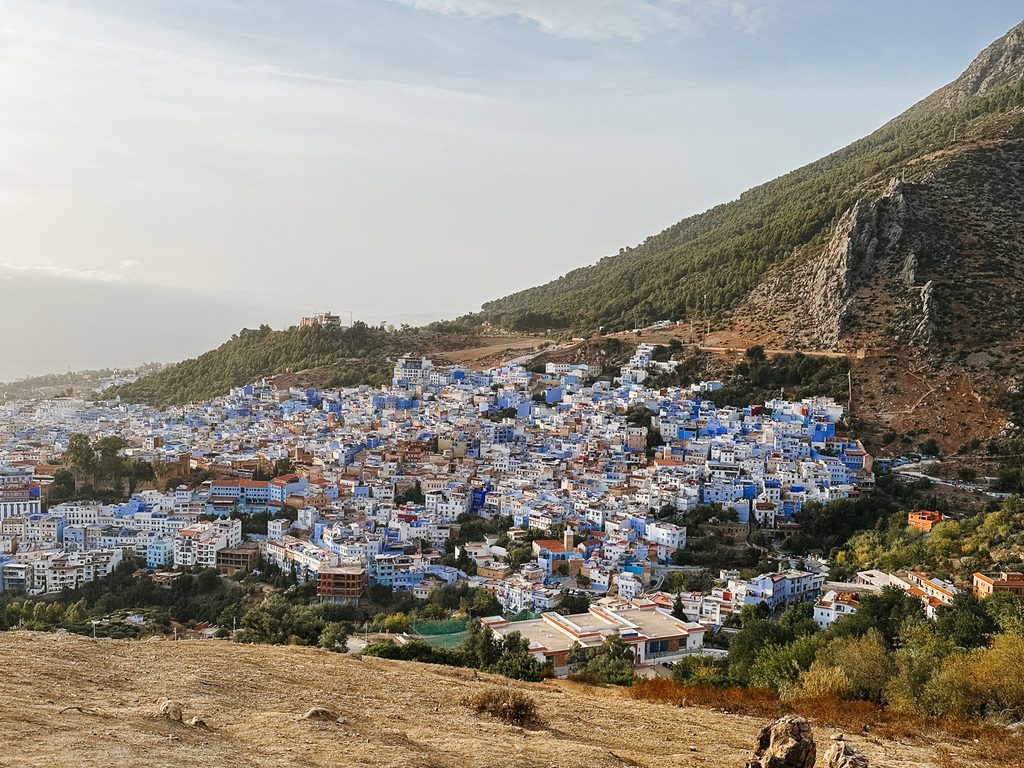
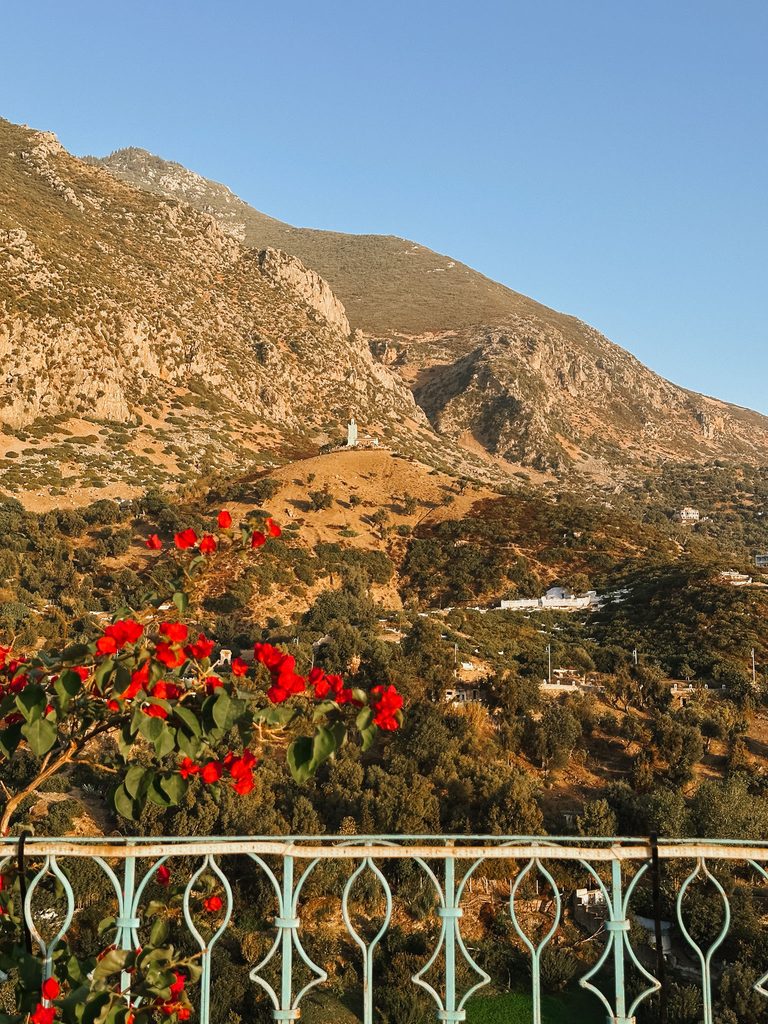
Chefchaouen, or Chaouen as locals often call it, sits around 600 meters up in the Rif Mountains in northern Morocco. It was founded in 1471, and the old town is a tight tangle of lanes painted in blues that range from pale powder to deep cobalt.
There are all sorts of theories about why it is blue, from keeping the houses cool, to warding off mosquitoes, to a tradition brought by Jewish refugees who saw blue as the color of the sky and the divine. I dig into the full story separately in my post on why Chefchaouen is blue, but honestly, whatever the reason, it is just unbelievably photogenic. If you are into photography at all, this place is a must.
What surprised me most is that for all its fame, Chefchaouen is still a real, lived-in town. Behind the postcard-perfect doorways, people are baking bread, hanging washing, and going about an ordinary morning. That mix is what makes it special.
The best things to do in Chefchaouen
1. Get lost in the blue medina
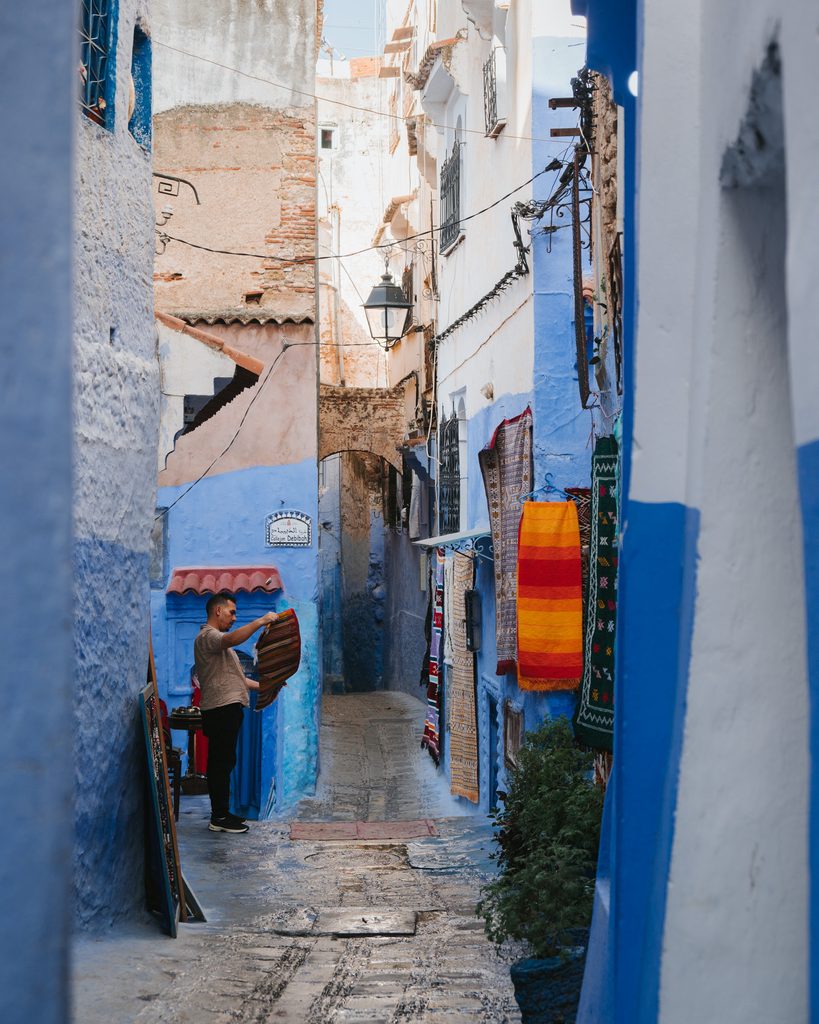
Honestly, this is what I would spend most of my time doing in Chefchaouen. The medina is small and mostly car-free, so you can just wander down whichever little street catches your eye without worrying too much about getting lost.
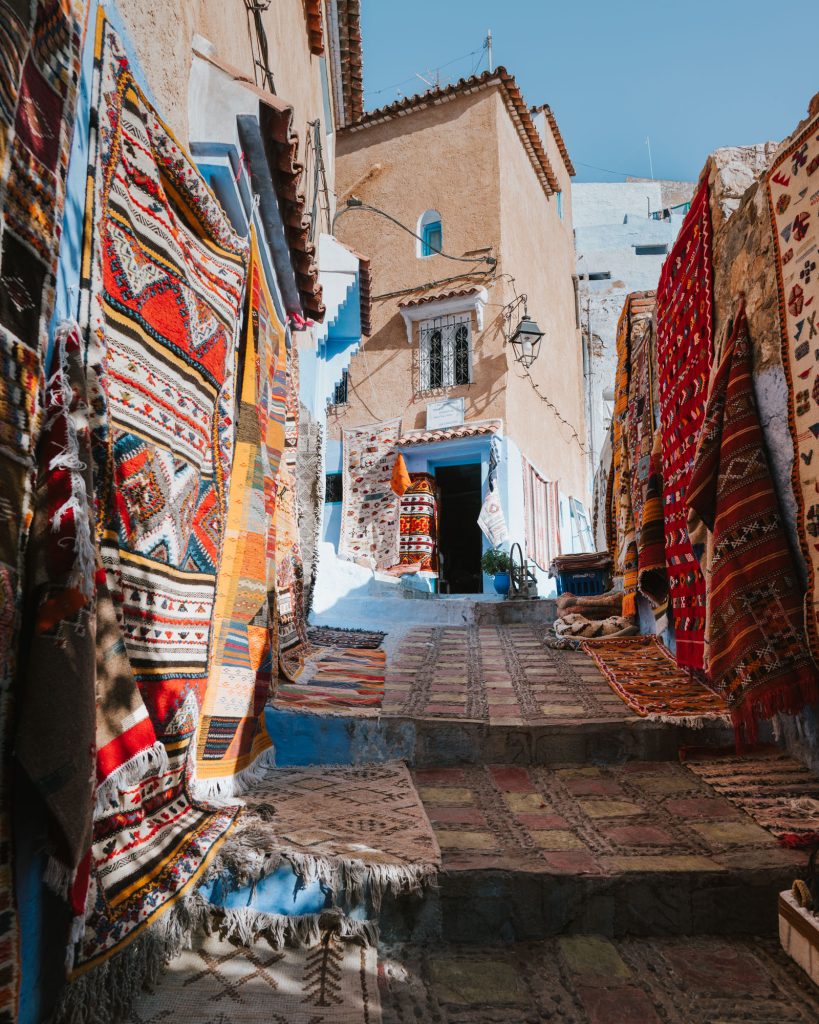
There are blue staircases lined with plant pots, beautiful old doors, cats asleep in the most photogenic spots imaginable, and little shops tucked into corners you might otherwise walk straight past. I could have spent hours photographing the doors alone.
Give yourself a couple of hours with absolutely no plan. That is when I enjoyed Chefchaouen the most.
2. Watch the sunset from the Spanish Mosque
On the hillside above the medina sits the Spanish Mosque, and the walk up is the thing to do for sunset. It is a steady uphill climb that got our whole group sweating, but it is completely worth it. From the top you can see the entire blue town spread out below you, folded into the green mountains, and on a clear evening it is a gorgeous spot to watch the light go golden and then pink.
Head up maybe an hour before sunset so you are not rushing, bring water, and wear shoes you can actually walk in.
3. Explore early, before the day-trippers arrive
If you are into photography, this is my biggest tip: get up early.
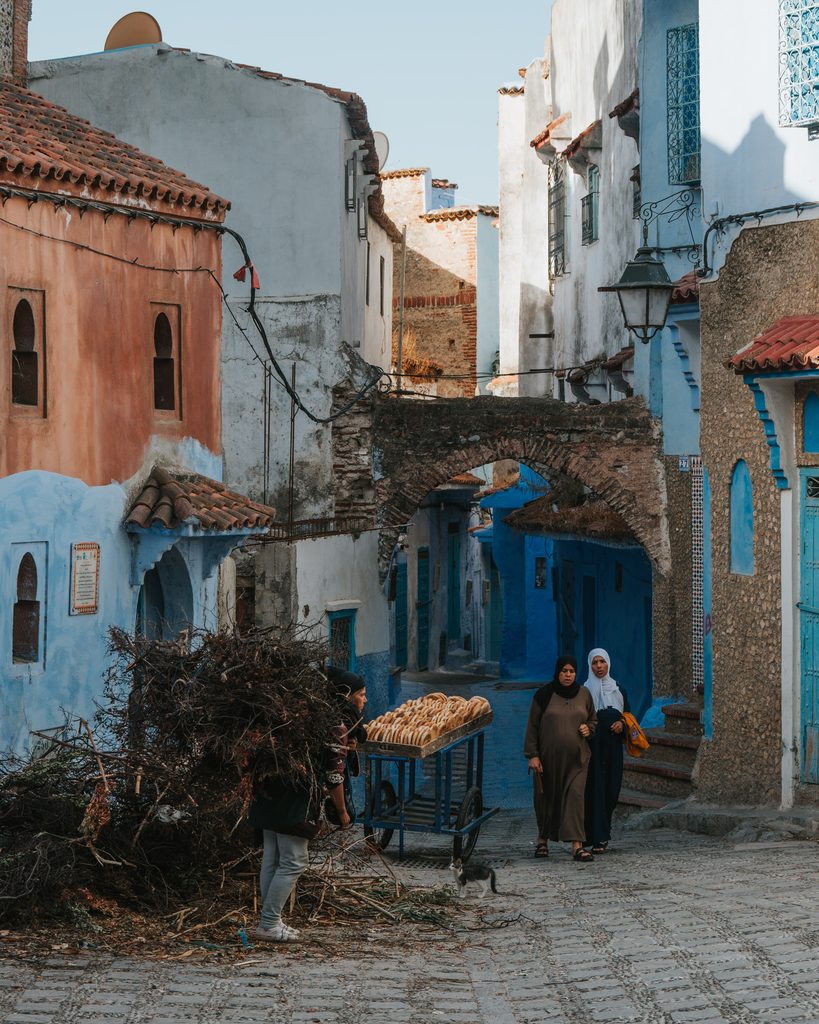
One morning I dragged myself out of bed before the tour buses started arriving, and it turned into one of my favorite mornings of the whole Morocco trip. The streets were quiet, the light was lovely, and I had some of those famous blue lanes almost entirely to myself.
But what I remember most was not actually the blue walls. It was watching a man baking bread in a communal oven, women carrying bundles of branches through the lanes, and the town slowly waking up around me. It is easy to forget, when you are busy photographing all those beautiful doorways, that people actually live here. Getting out early gave me a little glimpse of that everyday life, and I loved it.

4. Sit in Plaza Uta el-Hammam
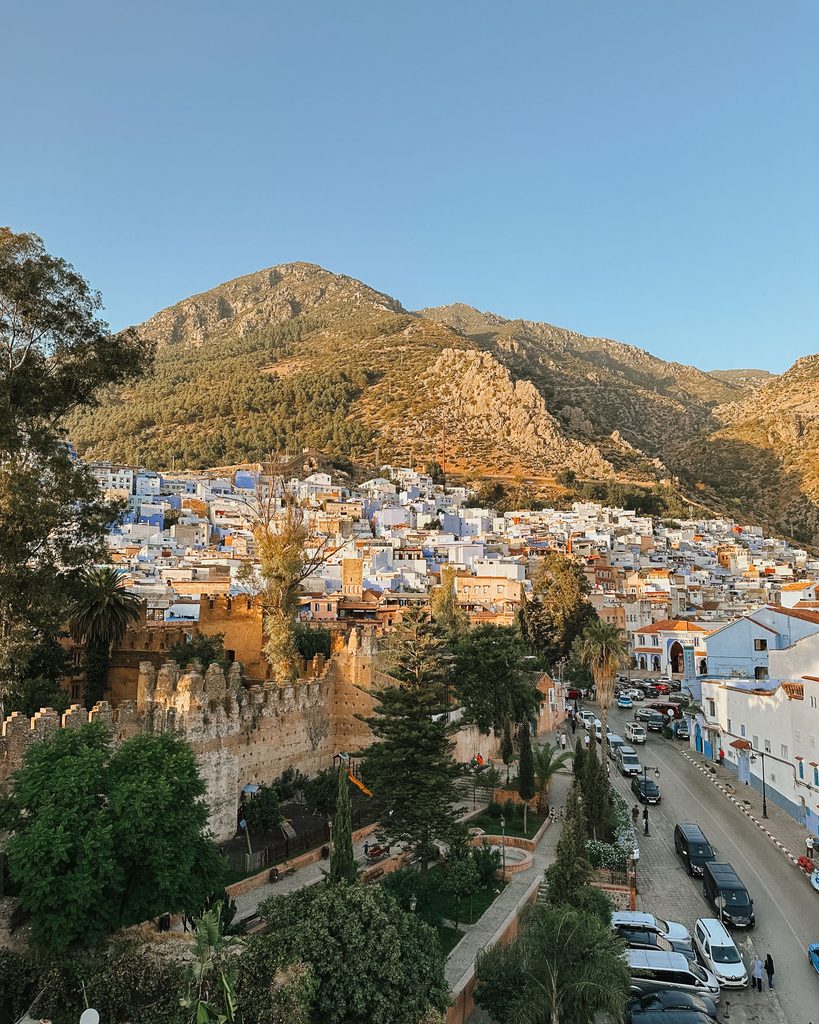
The main square, Plaza Uta el-Hammam, is the heart of town and the natural place to slow down. It is ringed with cafes and restaurants, with the red-walled kasbah on one side and the Grand Mosque and its unusual octagonal minaret on the other.
Grab a mint tea, claim a seat, and just watch the town go by for a while. It is also the easiest landmark to navigate back to whenever the lanes have turned you around.
5. Visit the Kasbah and its gardens
Right on the square, the 15th-century kasbah is a restored fortress with peaceful Andalusian-style gardens, a small ethnographic museum, and a tower you can climb for views over the rooftops. Entry currently costs around €8 for foreign adults, and it is a nice change of pace if you want a little history between wandering the blue lanes.
6. Walk out to Ras el-Maa
At the eastern edge of the medina, follow the lanes downhill and you reach Ras el-Maa, a little mountain stream and waterfall that was historically a communal washing spot. There are a couple of simple cafes perched beside the water, and it makes a pretty, low-key stop. From here you can also pick up the path that climbs toward the Spanish Mosque.
7. Shop the little craft shops
Chefchaouen is a lovely place to shop, and generally more relaxed than the big-city souks. The region is known for wool, woven blankets, and leather, and you will also find plenty of argan oil and local cosmetics.
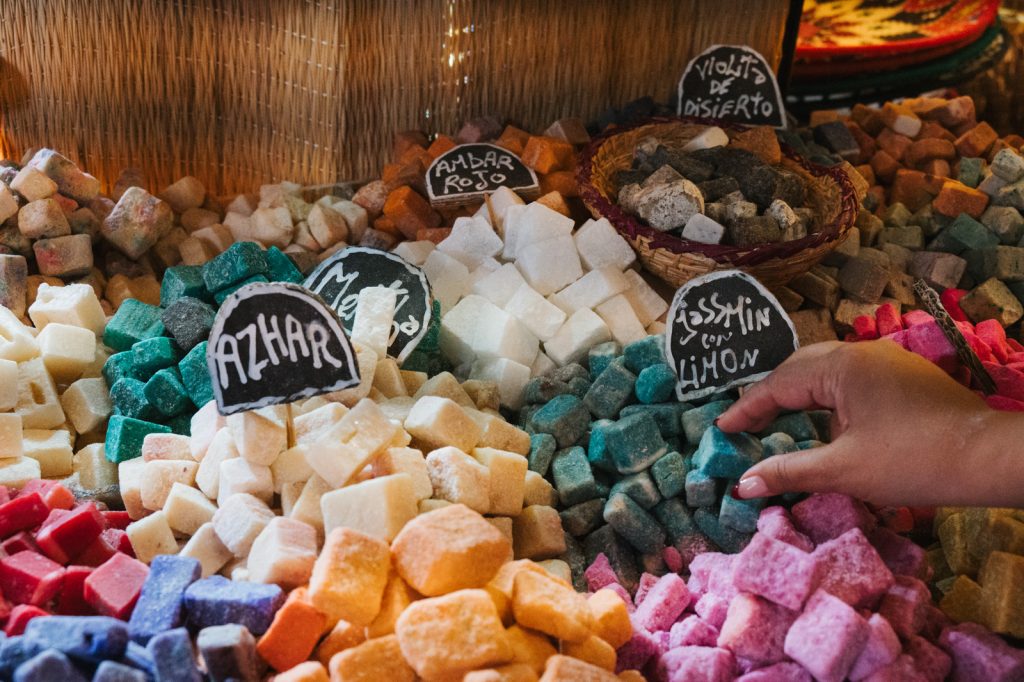
My favorite find was La Botica de la Abuela Aladdin, a little soap, perfume, and argan oil shop. I picked up some beautiful scented argan oil, and their solid perfume bars were really interesting.
8. Eat your way through town
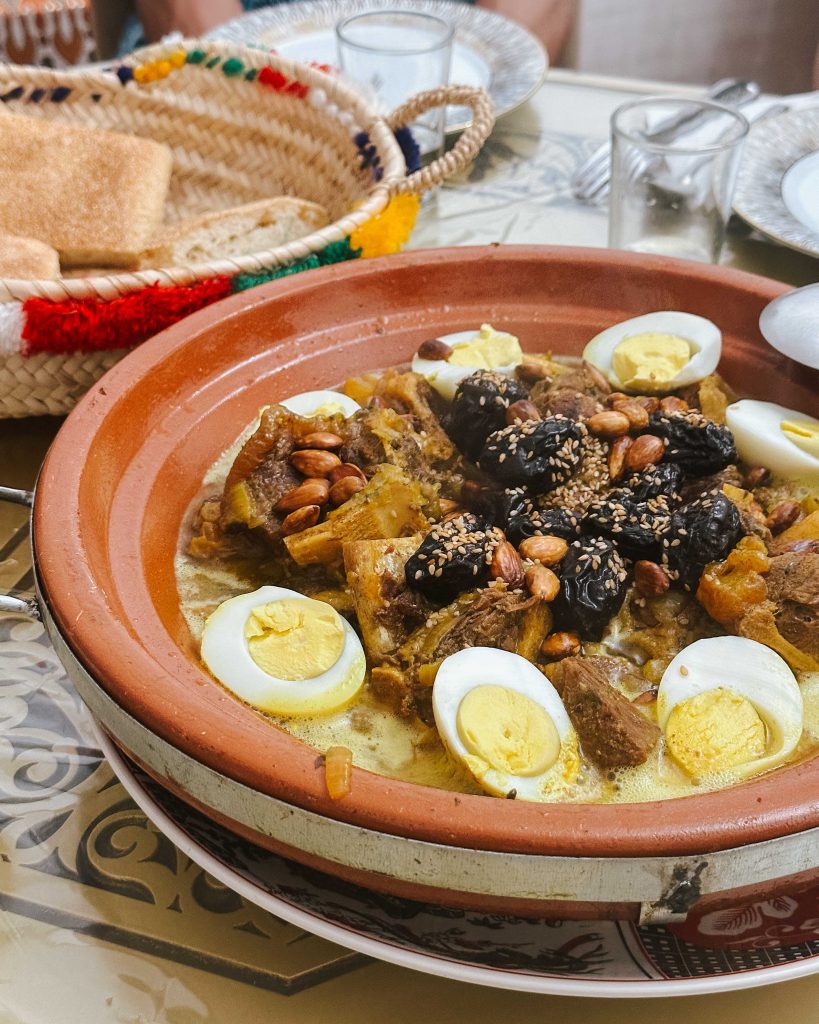
The food was a highlight for me (more on specific spots below), but eating well is genuinely one of the best things to do here. This is where I had my first taste of the creamy Moroccan goat cheese I became slightly obsessed with, served with honey, and a tagine with prunes and almonds that is now one of my favorite Moroccan dishes. It is not somewhere I would rush through dinner.
9. Take a day trip to the Akchour waterfalls
If you have an extra day and enjoy hiking, Akchour is a popular day trip from Chefchaouen, around 45 minutes away by car in Talassemtane National Park. There are two main routes from the trailhead, one toward the waterfalls and another toward the natural rock arch known as God’s Bridge, so do not assume you will see both on a single walk.
I did not make it to Akchour myself, so I cannot give you a first-hand review of those trails. One thing I can pass on, though: while I stayed in town with my camera, a few people from my group set off for a walk in the hills right next to Chefchaouen, took a wrong turn, got a bit lost, and added several hours to their day. Even on the easy-looking slopes around town, download an offline map before you set off, or go with a local guide.
10. Do very little, on purpose
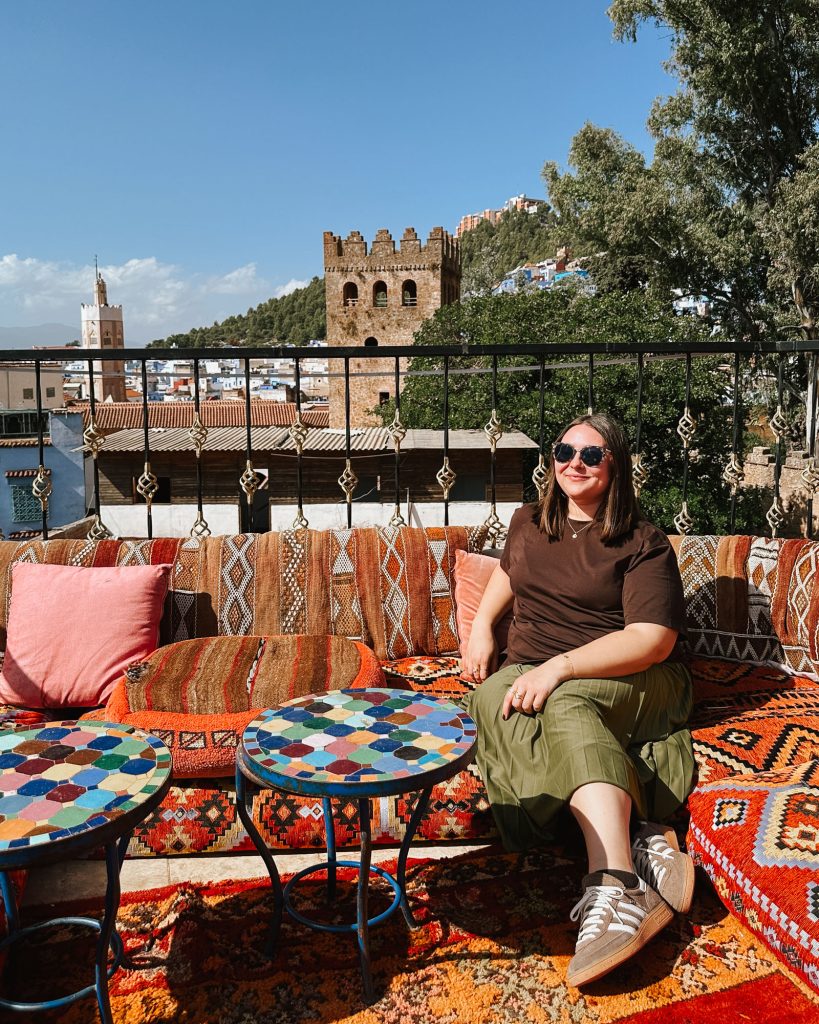
Chefchaouen is one of those places where I would not bother planning too much. Some of my best memories here are just sitting on a rooftop at golden hour or lingering over mint tea. You do not need to tick off a big list. Give yourself permission to potter, photograph, and do not much at all.
My ideal one day in Chefchaouen
If you only have a day and a night, here is roughly how I would spend it:
- Early morning: out with your camera before the day-trippers, while the lanes are quiet.
- Breakfast: a slow one on a rooftop or in the main square.
- Late morning: wander the medina with no plan, and do your shopping.
- Lunch: somewhere around Plaza Uta el-Hammam.
- Afternoon: the kasbah and its gardens, then stroll down to Ras el-Maa.
- Sunset: climb to the Spanish Mosque for the view over the blue town.
- Dinner: a long, unhurried one (see below).
Where to eat in Chefchaouen
I was not expecting Chefchaouen to become one of my favorite food stops in Morocco, but here we are. This is where I discovered Moroccan goat cheese with honey, which I then spent the rest of the trip trying to find again. A few places and experiences I would recommend:
- Riad Hicham. We had a lovely first dinner here, with chicken satay skewers and that creamy goat cheese served with honey or fig marmalade. I do not even eat goat cheese at home, so the fact that I became slightly obsessed with it says a lot.
- Cafe Clock. A fun, multi-level cafe famous for its camel burger. Naturally that was what I wanted to try, but they had run out the day I visited. Chicken sandwich it was, then.
- Dinner with a local family. One evening we ate at a local family’s home just around the corner from our hotel, everything homemade, including a tagine with prunes and almonds I still think about. It was not a restaurant, but if you ever get the chance to share a meal with a local family in Morocco, say yes.
Beyond those, the cafes around Plaza Uta el-Hammam are great for a long lunch or a rooftop dinner with a view over the blue rooftops.
Where to stay in Chefchaouen
I stayed at the Vancii Hotel, and the location was perfect for exploring, right around the corner from the main square. I loved the rooftop too, a chill spot with cushions and great views, and the little shared courtyard my room opened onto was cute, though I did not have time to actually use it.
In general I would stay inside or right on the edge of the medina so you can wander out first thing in the morning, and I would prioritize a place with a rooftop terrace, because sunset over the blue town is half the reason you came. For a full rundown of neighborhoods and my pick of riads and hotels, see my separate guide to where to stay in Chefchaouen.
How to get to Chefchaouen
Chefchaouen has no airport and no train station, so however you come, the last stretch is by road. Very roughly, it is around 2.5 to 3 hours from Tangier, about 4 hours from Fes, and a long day from Casablanca or Marrakech. I came in on the drive up from Casablanca as part of a longer loop, and it is scenic the whole way.
I have a full breakdown of every route, including buses, grand taxis, and private transfers, in my separate guide on how to get to Chefchaouen.
How long should you spend in Chefchaouen?
One night is the minimum I would recommend, but two nights is what I would actually choose. That gives you a relaxed afternoon to arrive and wander, a sunset at the Spanish Mosque, an early morning for photos, and still time for a slow lunch before you move on, without ever watching the clock. If you want to add the Akchour waterfalls, give yourself a second full day.
A lot of people visit Chefchaouen as a day trip from Fes or Tangier, and you can, but you miss the two best moments: sunset and the quiet early morning. If you possibly can, stay the night.
Best time to visit
Spring, roughly March to May, and autumn, September to November, are the loveliest, with comfortable walking weather. I went in October and it was ideal. Summer can be hot and busier, and winter in the mountains gets genuinely cold and can be rainy, though the blue against a moody sky has its own charm.
A few practical tips
- Wear proper shoes. The lanes are steep, cobbled, and uneven, and the Spanish Mosque is a real little climb.
- Carry some cash. Many small shops and cafes are cash only, so bring dirhams.
- Be respectful with photos of people. It is a working town, not a backdrop. Ask before photographing someone, and skip it if they would rather you did not.
- Dress comfortably, but be mindful of local customs. Covered shoulders and knees draw less attention and respect the local culture. My what to wear in Morocco guide has the full rundown.
- The Grand Mosque is only open to Muslims, as is the norm for working mosques in Morocco, so most visitors admire the minaret from the square.
FAQ
How do you pronounce Chefchaouen?
Roughly “shef-SHA-wen.” You will also hear it shortened to Chaouen, which is “SHA-wen.”
Is Chefchaouen worth visiting?
Yes. It is small enough to feel relaxed, and while the blue streets are the obvious draw, it was the quiet mornings, the food, and the mountain setting that made it worth far more than a quick stop for me.
Can you do Chefchaouen as a day trip?
You can, and many people do it from Fes or Tangier, but it is a lot of driving for a short visit and you miss sunset and the early morning, which are the best parts. An overnight is well worth it.
Is Chefchaouen safe?
Yes. I walked around on my own and felt completely comfortable, and I never had any trouble inside the medina. The one thing to flag is that when we first arrived in town, a few people offered us hashish, which is fairly common here given the region, so a polite no thank you and keep walking is all you need. If you are traveling as a woman, I go into Morocco safety properly in is Morocco safe for women.
Is Chefchaouen expensive?
Not really. It is generally one of the more affordable stops in Morocco, with good-value guesthouses and inexpensive, excellent food.
Go, and stay the night
I know Chefchaouen is famous for its blue streets, and yes, they are every bit as photogenic as they look online. But when I think back on my time there, it is not just the blue walls I remember. It is that early morning watching bread being baked, the goat cheese I became slightly obsessed with, the rooftop sunsets, and all those little streets I kept getting lost in with my camera.
It is one of the places I loved most on my first trip to Morocco.
So my biggest piece of advice: do not just squeeze Chefchaouen into a quick day trip if you can help it. Stay at least one night, get up early, and give yourself time to wander without a plan.
If you are planning a longer trip, I have included Chefchaouen in my 2-week Morocco itinerary.