Published on September 19, 2026 · Updated on September 19, 2026
If you are planning your first trip to Morocco, you have probably already fallen down the “what am I allowed to wear” rabbit hole. I did too. Before my first trip, I read a dozen packing lists, most of them a little scarier than they needed to be, and I ended up leaving things at home that I really wish I had packed.
I have now been to Morocco three times, in different seasons and different parts of the country, from Marrakech to the Sahara to the beaches down south. So this guide is not a list of rules I found on the internet. It is what I actually wore, what worked, what I got wrong, and what I would tell a friend before she goes.
The short version: you can dress a lot more normally than most guides suggest. But a little respect goes a long way, and there are a few places where it genuinely matters. Let me explain.
The short answer: the Morocco dress code in 30 seconds
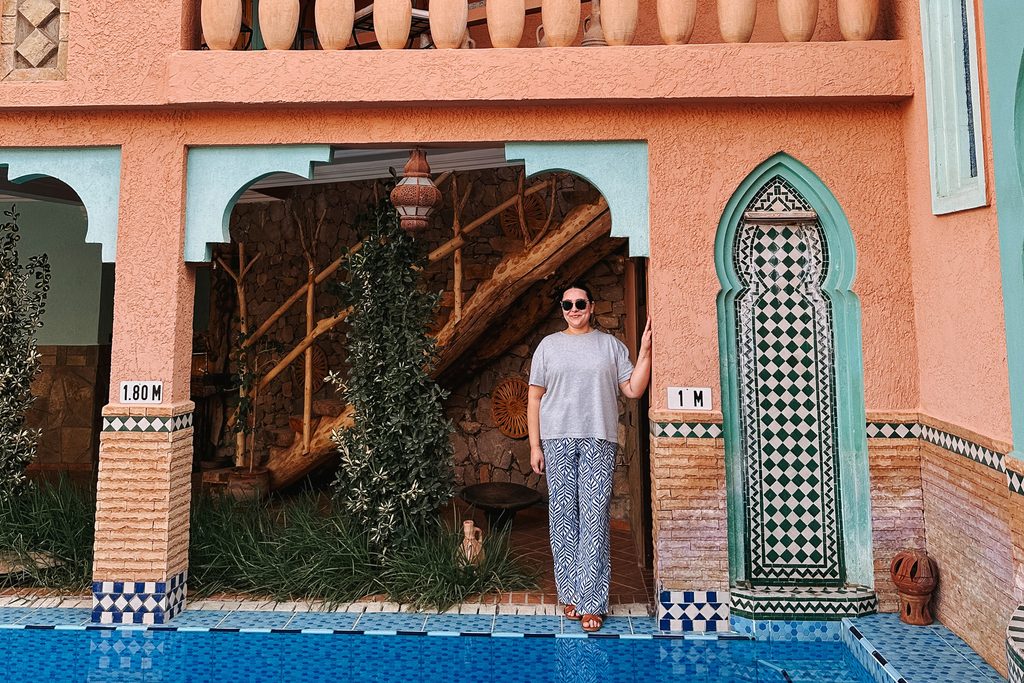
Morocco is a Muslim country, and outside the resorts and big cities most local women dress modestly. As a tourist you are not expected to follow the same standards, but covering your shoulders and knees in medinas, smaller towns, and rural areas is the respectful default.
In practice that means loose, breathable clothing that covers a bit more than you might at home. Think t-shirts and light long pants, maxi skirts and dresses, a scarf in your bag. Swimwear is completely fine at pools and beaches. And honestly, in the cities in summer, plenty of tourists wear shorts and tank tops and nobody bats an eye.
If you remember one thing: dress for respect and comfort, not out of fear. You do not need to overthink this.
How modest do you actually need to be?
Here is the thing no one told me clearly before my first trip. The “rules” are really more like guidelines, and how much you cover up depends a lot on where you are.
My first trip was with a UK tour company, and they sent us a packing list that leaned pretty conservative. I followed it to the letter and deliberately left my shorts at home. Then we landed in Marrakech at the end of October and it was 34°C (over 90°F). It was insanely hot. And when I looked around, tourists were walking through the city in shorts, totally comfortably, and it was completely normal. Every girl in my group said the same thing: we wished we had packed shorts. We would have felt perfectly fine wearing them around the cities.
So let me save you that mistake. For a local perspective it is worth reading a Moroccan operator’s take too, like this what-to-wear guide, which lines up more with what I saw in person.
Roughly:
- Big cities and tourist areas (Marrakech, Casablanca, Rabat, Fes, Agadir): relaxed. Locals are used to tourists, and you will see plenty of visitors in shorts and tank tops, especially in summer. Cover up if you want to blend in more, but you have a lot of freedom here.
- Smaller towns, villages, and rural areas: dress more modestly. Shoulders and knees covered is a kind gesture, and it also just draws less attention.
- The desert and mountains: practical modesty. You will want coverage from the sun, wind, and cold nights anyway (more on that below).
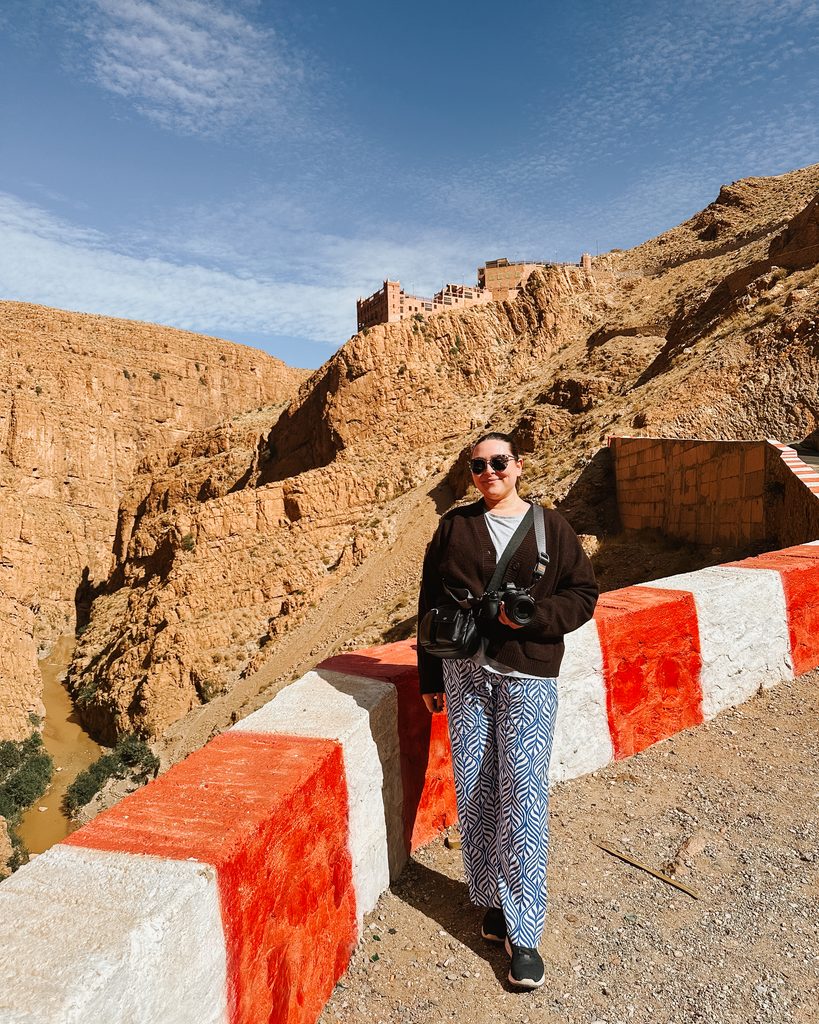
For what it is worth, I mostly wore loose, breathable pants and normal t-shirts, and I did not get any unwanted attention, not in the cities and not even in the more remote villages. Cover up a little out of respect, especially in rural areas, but do not overthink it. It is not a hard rule.
What to wear on top
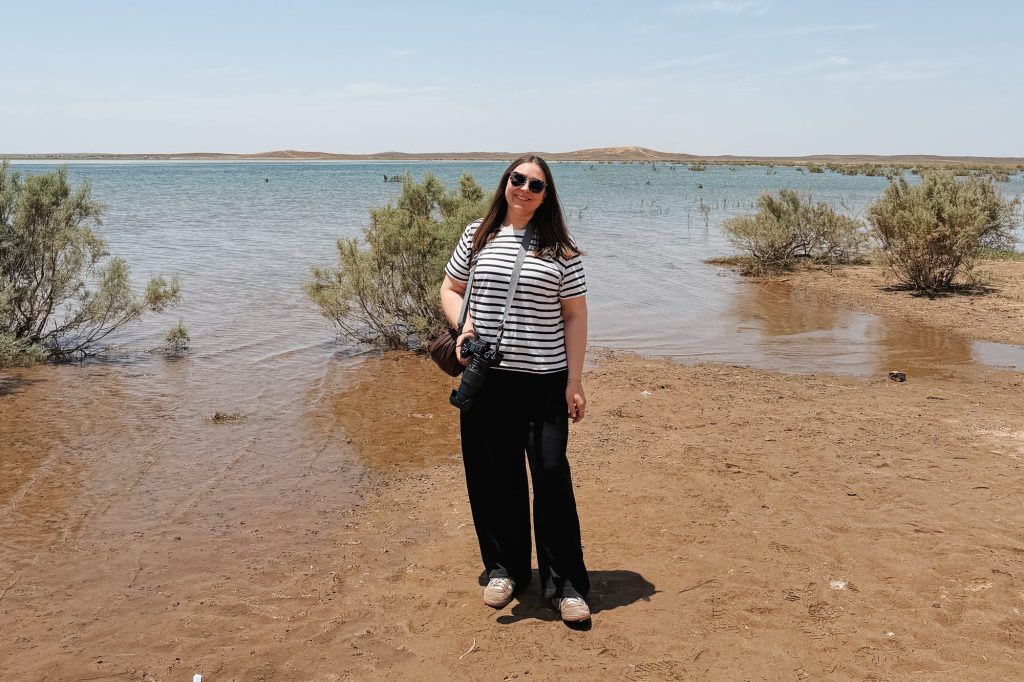
Light, loose tops that cover your shoulders are the easy everyday choice. I basically lived in cotton t-shirts, plus a few loose blouses for sun protection and for dressier evenings.
- T-shirts and short-sleeve tops (perfect for cities)
- Loose blouses and tunics in cotton or linen
- A couple of long-sleeve tops for the desert and cooler evenings
- One lightweight cardigan
You do not have to avoid showing your shoulders entirely. In the cities in summer a lot of tourists (and some locals) wear tank tops and no one seems to care. But a top with at least a small sleeve is the most low-fuss option that works everywhere.
What to wear on the bottom (and yes, jeans are fine)
This is where I would tell you to pack a little smarter than I did. Loose, breathable pants are the MVP. They keep the sun off, they are respectful anywhere, and they are cooler than they sound if the fabric is light.
- Loose linen or cotton pants (my most-worn item)
- Wide-leg trousers or palazzo pants
- Maxi skirts
- Jeans: yes, jeans are absolutely fine in Morocco and locals wear them too. Just know that heavy denim is hot in summer, so save them for winter or the evenings.
- Shorts: allowed in the cities and touristy areas, and genuinely normal there in the heat. I would pack at least one pair for hot days. In villages and rural areas, longer is more respectful.
Dresses, skirts, and jumpsuits
Long dresses and maxi skirts are made for Morocco. They are cool, they cover you without any effort, and they photograph beautifully against all that architecture and tile.
- Maxi and midi dresses in breathable fabric
- A jumpsuit or two (comfortable, covered, and easy)
- Skirts that fall below the knee
Nothing skin-tight if you want to keep things low-key, but flowy and covered is both the most comfortable and the most respectful, so this is an easy win.

Swimwear: pools, riads, and the beach
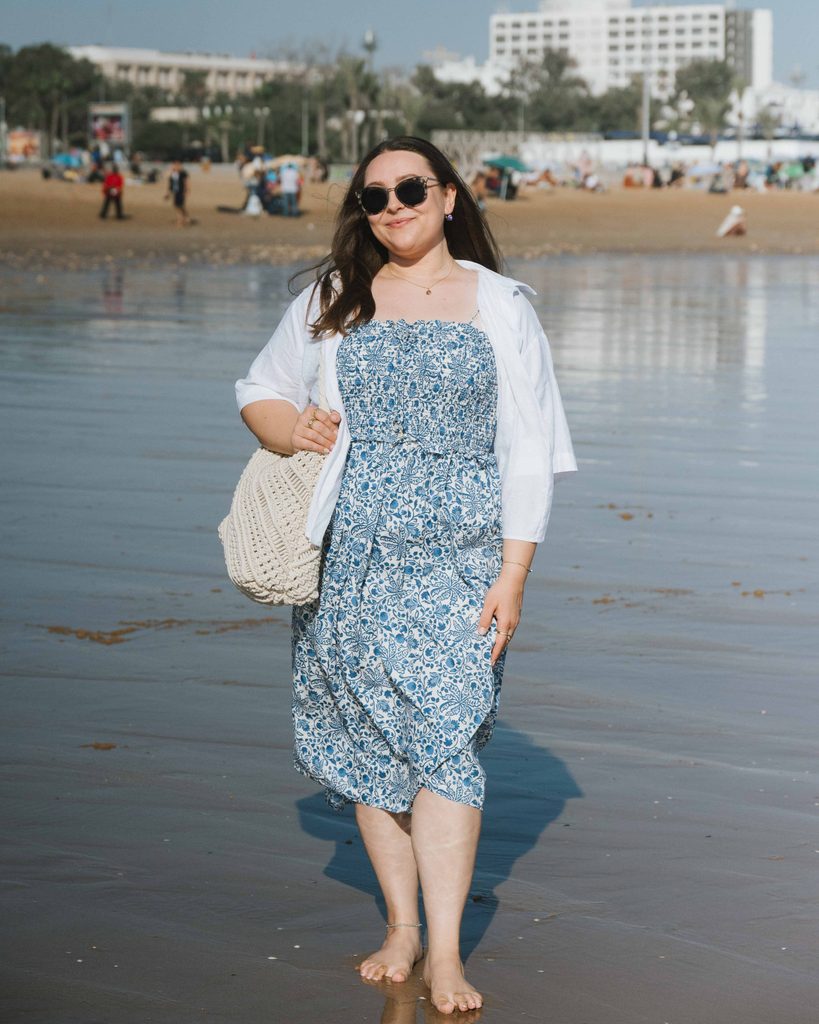
Good news: you can wear your normal swimsuit. At hotels, riads, and resort pools, standard Western swimwear is completely fine, and I have always just worn my usual swimsuit with zero issues.
On my last trip I spent time on the coast, and this surprised a lot of people I told afterward:
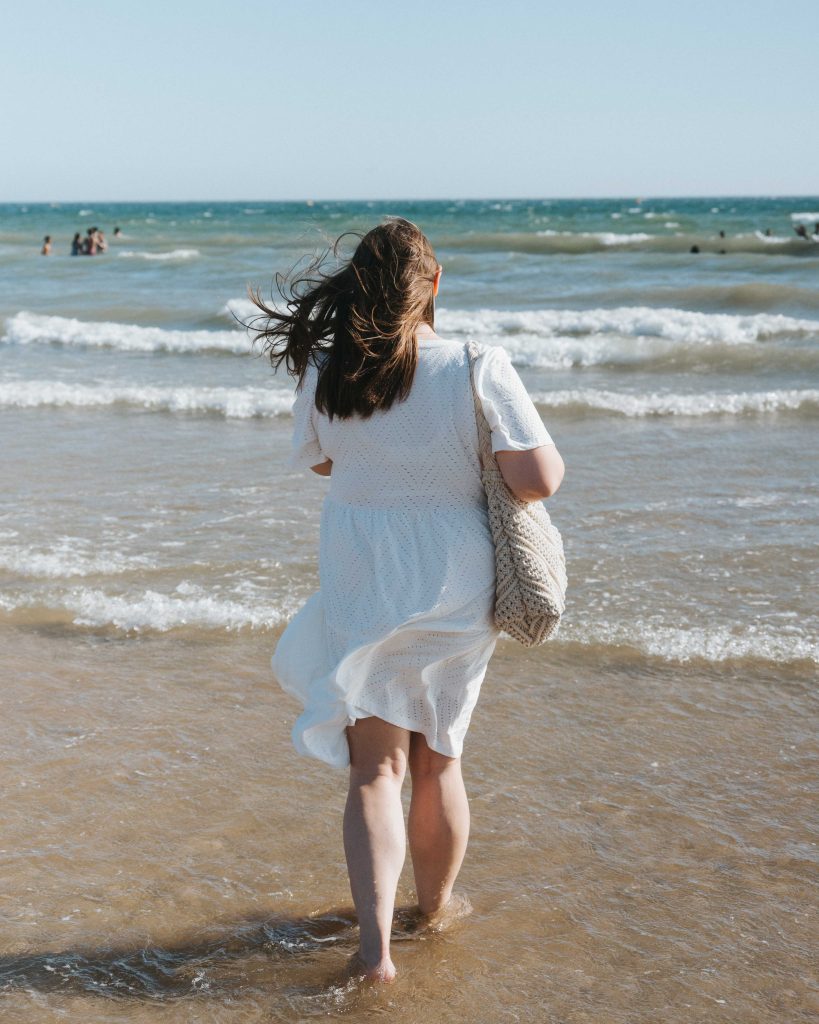
- In Agadir I went to a beach with a lot of local families, wearing my usual one-piece (that is just my personal preference), and I got no weird stares and no one made me feel uncomfortable at all.
- In Taghazout the beach was a mix of locals and tourists, and plenty of tourist girls were in bikinis. Again, no one seemed to have a problem with it.
The one habit worth keeping: wear a cover-up between your room and the pool or beach, rather than walking through town or the hotel in just your swimsuit. A sarong or a light dress does the job.
Shoes for Morocco’s medinas
The medinas are all uneven cobblestones, and you will walk more than you think. Comfort wins every time.
- Comfortable walking shoes or trainers for full days of exploring
- Sturdy sandals for hot days
- Flip-flops for the pool or beach
- Skip anything brand new or with a heel you cannot handle on cobbles
The scarf question: do you need to cover your hair?
No, you do not need to cover your hair as a tourist (or even a local) in Morocco. Not in the streets, the shops, the restaurants, or the cafes.
That said, a lightweight scarf is the single most useful thing in my bag, for reasons that have nothing to do with rules:
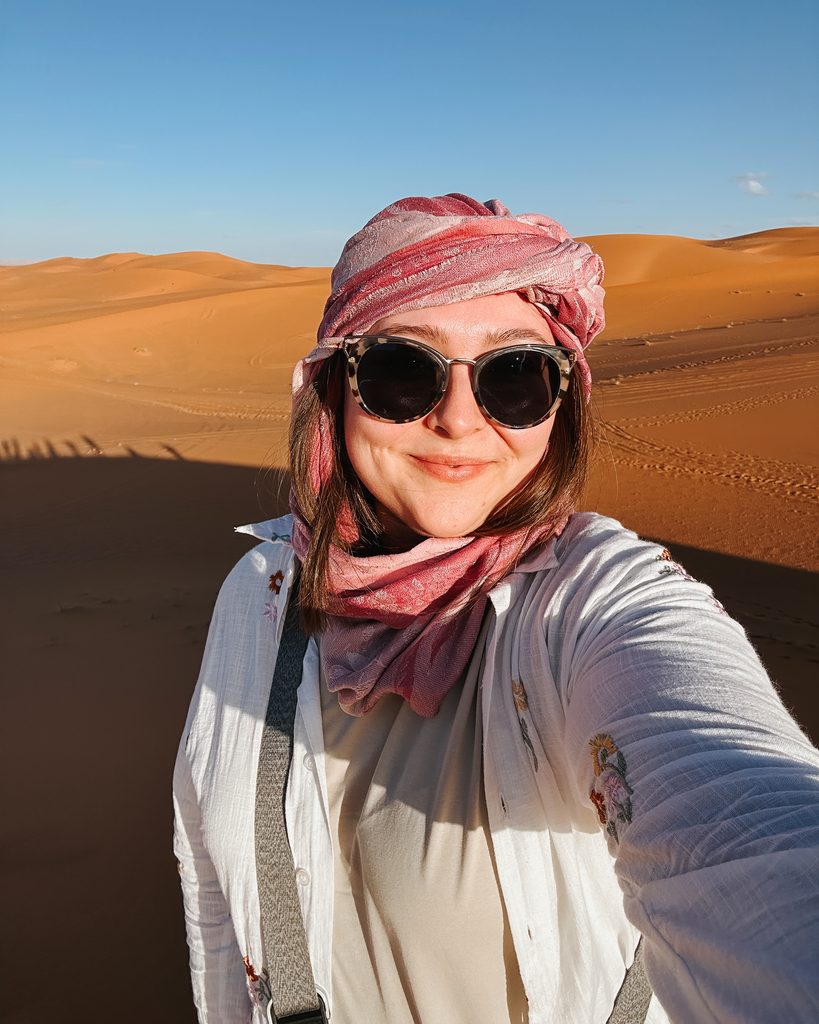
- In the desert it is essential. The wind and sun are no joke, and a scarf over your hair and face makes a huge difference.
- It is handy for sun and dust protection generally.
- It is there just in case you want to cover up in a more conservative village.
One thing I found genuinely interesting: I visited the Hassan II Mosque in Casablanca, which is one of the very few mosques in Morocco open to non-Muslim visitors on a guided tour. I did not have to cover my hair for the tour, which I honestly did not expect. I still carried my scarf with me just in case, which is what I would recommend you do too.
What NOT to wear in Morocco
You do not need a long list of banned items, but a few things are worth thinking about:
- Very short or very tight clothing in rural areas and small towns. Fine in the cities, more conspicuous in villages.
- Your swimsuit as you walk around town. Keep it for the pool and beach and use a cover-up in between.
- Brand-new, unbroken-in shoes. Those cobbles are unforgiving.
- Heavy fabrics in summer. Thick denim and anything that does not breathe will make the heat miserable.
What to wear by season and month
Morocco is not one climate, and the time of year changes everything.
- Summer (June to August): very hot, especially inland in Marrakech and the desert. Lightest, loosest fabrics, plus sun protection. This is prime shorts-and-maxi-dress weather in the cities.
- Autumn (September and October): still hot, especially early on. My late-October Marrakech trip hit 34°C (over 90°F), so do not assume “autumn” means cool. Pack for heat with a light layer for evenings.
- Winter (November to February): cold nights, chilly mornings, warmer afternoons. You will want proper layers, a warm jacket, and closed shoes, especially in the desert and mountains where it genuinely gets cold.
- Spring (March to May): probably the sweet spot. Warm days, cooler evenings, easy layering. Jeans are comfortable again.
What to wear by region
- Marrakech, Fes, and the imperial cities: relaxed but busy. Breathable everyday clothes, comfortable shoes for the medinas.
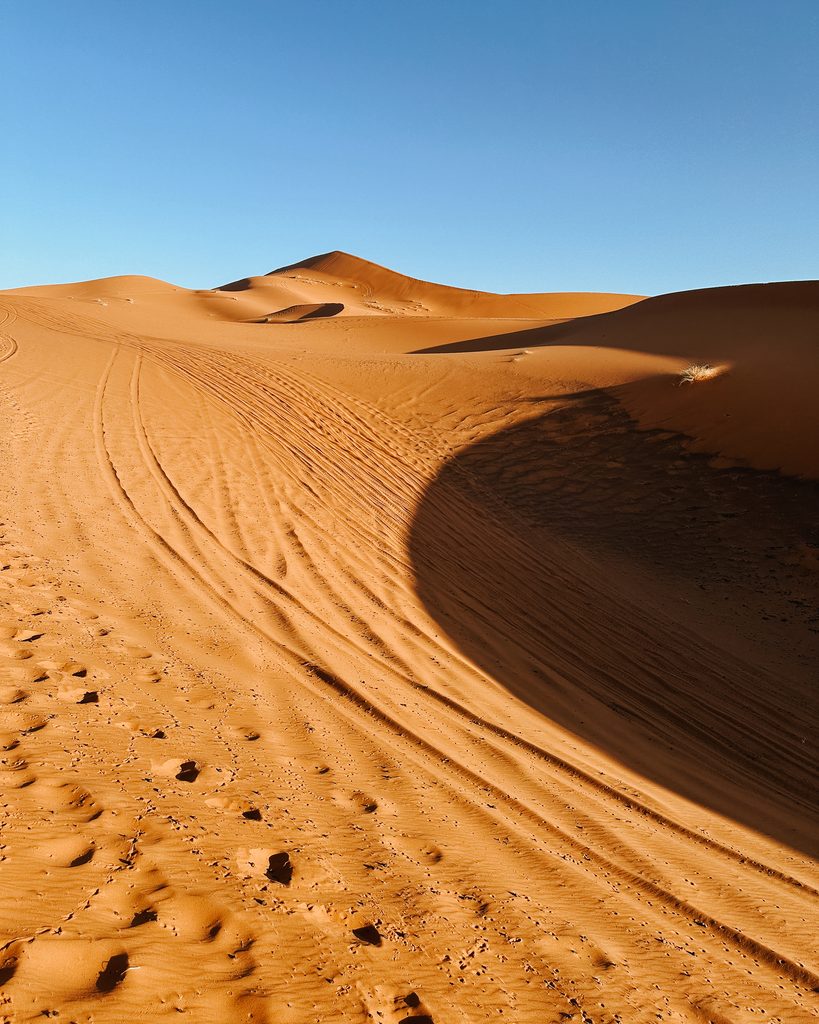
- The Sahara desert: layers. It is hot by day and can be surprisingly cold at night, plus wind and sand, so bring long sleeves, long pants, and that scarf.
- The Atlas Mountains: cooler than the cities and changeable. Layers and proper walking shoes.
- The coast (Agadir, Taghazout, Essaouira): the most laid-back of all. Beachwear, cover-ups, the usual clothing, and a light layer for the breeze, especially in windy Essaouira and Taghazout.
- Chefchaouen and small mountain towns: a touch more conservative, and lots of stairs, so comfortable shoes and modest layers.
What to wear at mosques and religious sites
Most mosques in Morocco are closed to non-Muslims, so this comes up less than you might expect. The main exception is the Hassan II Mosque in Casablanca, which you can visit on a guided tour.
For any religious site, the respectful approach is covered shoulders, covered knees, and a scarf in your bag in case you are asked to cover your hair. Modest, loose clothing is always the safe choice.
Where to buy Moroccan pieces (and what makes a great souvenir)
Half the fun is picking up something local while you’re there. A few things worth looking for in the souks:
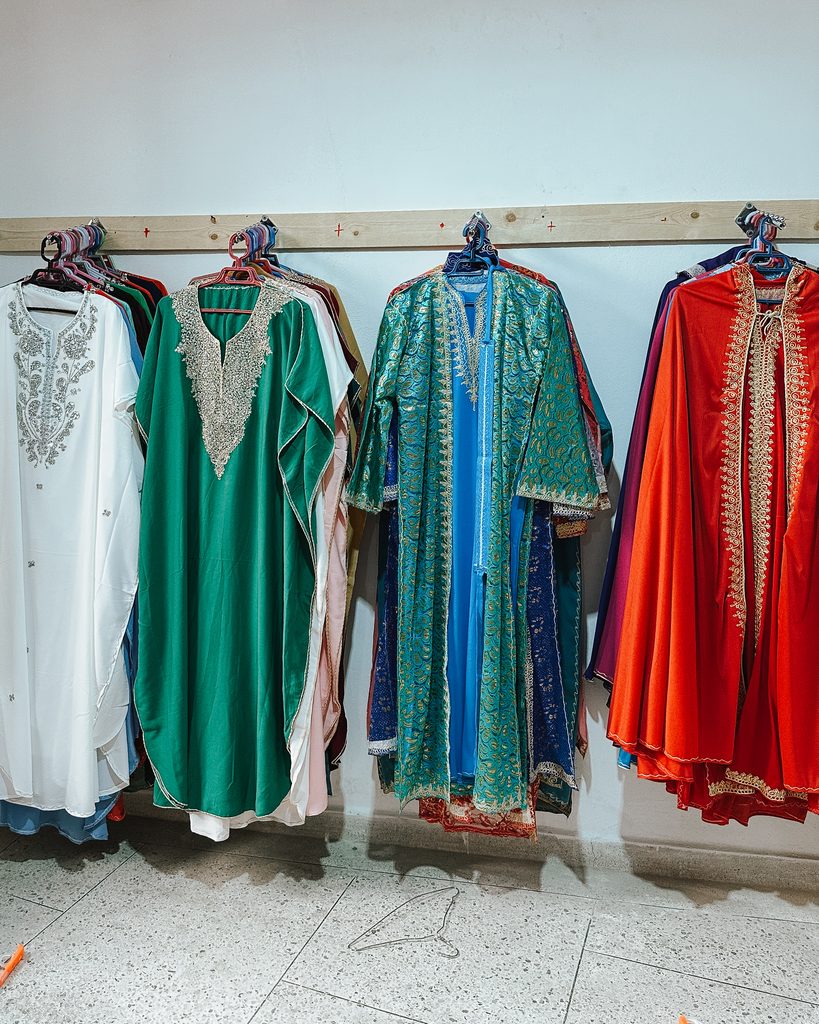
- A gandoura, a loose, lightweight traditional garment that’s comfortable in the heat and easy to wear during your trip.
- A djellaba, the classic long hooded robe, especially nice for cooler evenings and winter trips.
- Babouche, the traditional soft leather slippers, in just about every color imaginable.
- A scarf or shawl, an easy souvenir that also comes in handy for sun, wind and cooler desert evenings.
- A kaftan or takchita if you’re looking for something special rather than everyday clothing. These are more elegant, occasion pieces, with the takchita typically the more elaborate and formal of the two.
For something you can buy in Morocco and start wearing straight away, a gandoura, scarf or pair of babouche is probably your best bet.
My complete Morocco packing list for women
Clothing:
- Loose linen or cotton pants
- T-shirts and a few loose blouses
- 1 to 2 long-sleeve tops
- Maxi dresses and/or skirts
- A jumpsuit
- Shorts (for the cities in warmer months)
- A light cardigan or overshirt
- A warm layer or jacket (autumn, winter, desert nights)
- Swimsuit plus a cover-up or sarong
- A lightweight scarf (do not skip this)
Footwear:
- Comfortable walking shoes or trainers
- Sturdy sandals
- Flip-flops
Everything else:
- Sun hat and sunglasses
- High-SPF sunscreen
- A crossbody bag you can keep close in the medinas
- Reusable water bottle
Common questions
Do female tourists have to wear a hijab in Morocco?
No. Female tourists do not need to cover their hair in Morocco. A lightweight scarf is still useful for the desert, sun and dust, and worth carrying when visiting religious sites.
Can women wear shorts in Morocco?
Yes. Shorts are common on tourists in Marrakech, Agadir and other busy tourist areas, especially in summer. In smaller towns and rural areas, I would choose something longer out of respect.
Are jeans appropriate in Morocco?
Absolutely. Locals wear jeans too, and there is nothing inappropriate about them. The bigger issue is the heat: heavy denim can be uncomfortable in summer, so jeans are better for cooler months and evenings.
What should I not wear in Marrakech?
Marrakech is much more relaxed than many first-time visitors expect. Shorts, tank tops and dresses are all common on tourists. I would avoid walking around town in anything extremely revealing if you want to feel comfortable and draw less attention.
What should women wear in Morocco in summer?
Prioritize light, breathable fabrics. Loose linen or cotton pants, t-shirts, maxi dresses, skirts and shorts all work well. Bring a scarf for the sun and desert, and a light layer for cooler evenings.
Planning the rest of your trip? Check out the rest of my guides for Morocco.