Published on October 3, 2026 · Updated on October 4, 2026
My first trip to Morocco was supposed to be a once-and-done kind of trip. Thirteen days, a big loop through the country, tick Morocco off the list. That obviously didn’t happen. I’ve been back twice since, spent much longer in some of the places I only briefly saw the first time, and somehow Morocco has become one of those countries I keep finding reasons to return to.
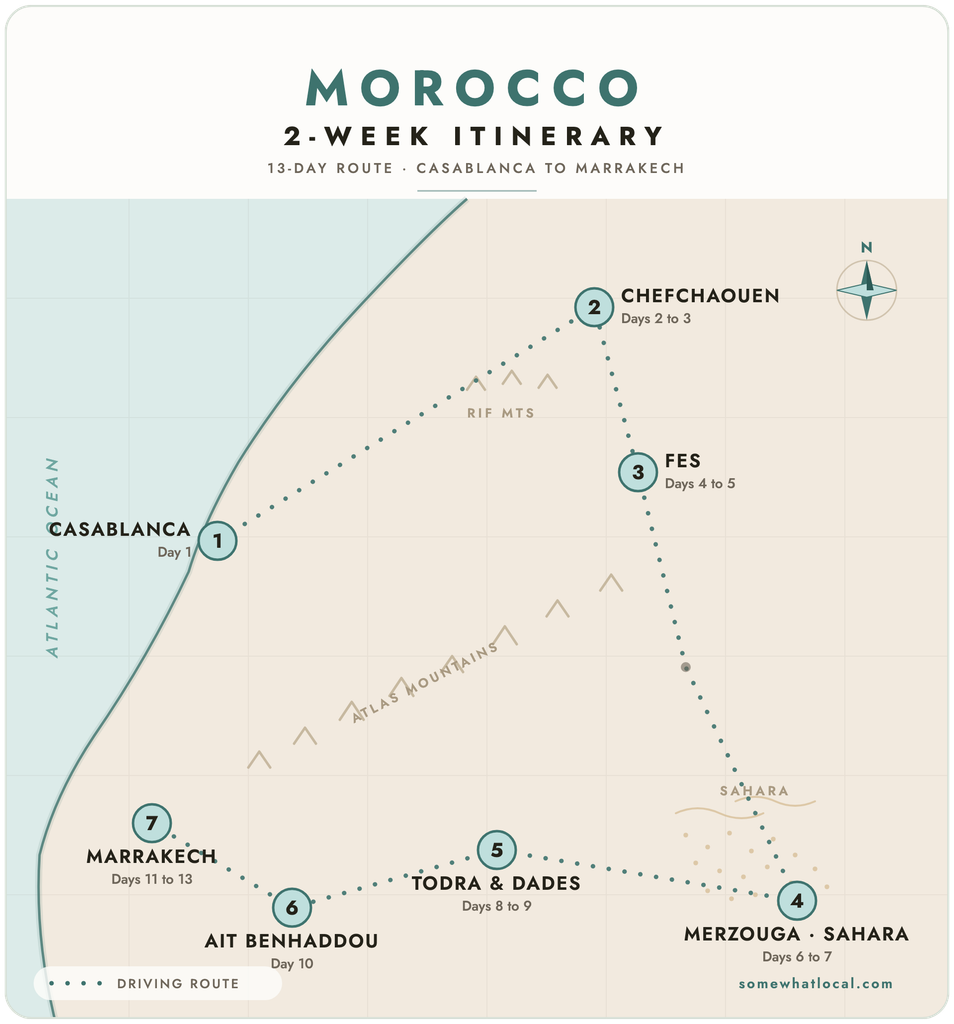
But this is where it started: a Morocco 2-week itinerary from Casablanca to Marrakech, taking in Chefchaouen, Fes, the Middle Atlas, the Sahara, Todra Gorge, the Dades Valley and Ait Benhaddou along the way.
I did this particular route as a group tour, and for a first trip to Morocco, I still think the itinerary was excellent. It covered a ridiculous amount of the country without feeling like we were simply racing between sights, although there are definitely places I would give more time to now.
Below, I’ll take you through the exact route I followed, where I stayed, what I ate, what I loved, what I’d skip, and what I’d do differently after returning to Morocco twice more.
Morocco 2-week itinerary at a glance
Here’s the route before we get into the details:
- Day 1: Arrive in Casablanca
- Days 2 to 3: Chefchaouen
- Days 4 to 5: Fes
- Day 6: Ifrane and the cedar forest, then on to Erfoud
- Day 7: Merzouga and the Sahara
- Day 8: Todra Gorge and the Dades Valley
- Day 9: Dades Valley
- Day 10: Ait Benhaddou
- Days 11 to 12: Marrakech
- Day 13: Departure from Marrakech
It’s a big loop, but importantly, you’re always moving forward rather than backtracking. And the landscapes change so dramatically that it sometimes feels like you’ve crossed into another country entirely.
Is 2 weeks enough time in Morocco?
For a first trip, I think two weeks is pretty close to ideal.
It gives you enough time to combine cities, mountains and the Sahara without spending your entire holiday in transit. And no, two weeks in Morocco definitely isn’t too long. If anything, my problem was the opposite: there were several places I wasn’t ready to leave.
If you only have 7 to 10 days, I wouldn’t try to squeeze this entire route in. I’d pick one part of the country instead, such as Marrakech, the Atlas Mountains and the Sahara, and save northern Morocco for another trip.
Even with almost two weeks, this itinerary leaves a lot out. There’s no Atlantic coast, which means no Essaouira or Agadir. I finally visited both on my third trip and discovered a completely different side of Morocco. I also missed Rabat, and I would happily have spent longer in Fes, the Sahara and Marrakech.
So if you’re planning the mythical “once-in-a-lifetime” Morocco trip and genuinely don’t think you’ll come back, I’d consider stretching it to three weeks.
Although, speaking from experience, Morocco has a habit of turning “once” into “when can I go back?”
How to do this trip: group tour, private tour or self-drive?
I did this particular trip as a group tour for solo travelers with a UK-based company, and I’m genuinely glad I did.
It was my first time in Morocco, I was traveling alone, and having all the logistics taken care of made the whole thing feel easy. I also met a brilliant group of people along the way, which ended up being a huge part of the experience.
Would I do it the same way now? Probably not.
After returning to Morocco twice and getting to know the country much better, I’d now do this route privately with a local driver or tour company. Mostly because I’d want more control over my time. There were places where I could happily have stayed for hours longer, particularly Fes, and others where I didn’t really need as much time.
A private trip also doesn’t necessarily mean luxury prices. If there are two, four or six of you splitting the transport (or even if it’s just you), booking directly with a Moroccan company can work out surprisingly well compared with an international group tour.
If you want to recreate this route, Village Morocco Travel can put together a private Morocco itinerary around these stops. They’re a local company I know personally, so in the interest of full transparency, this isn’t a random recommendation pulled from Google.
You can absolutely self-drive too. Morocco has plenty of good roads, but some of the distances on this itinerary are long, and driving through the mountains takes more concentration than Google Maps might suggest. If you go independently, I’d build plenty of extra time into the driving days, and maybe avoid winter. I’ve heard the mountain passes get sketchy once the snow arrives, or simply just close.
If you don’t want to drive at all, you don’t have to. A group tour, private tour or private driver can all cover this route.

The day-by-day Morocco itinerary
Day 1: Arrive in Casablanca
Highlights: Hassan II Mosque, a half-day city tour, the beach
Eat: Le Basmane
Stay: Hotel Val d’Anfa, Casablanca
My flight got into Casablanca late at night. The airport was smooth and easy, a driver was waiting to take me straight to the hotel, and I got my first taste of Moroccan hospitality pretty much as soon as I arrived.
My room at Hotel Val d’Anfa was lovely too, with one catch: it faced the big roundabout out front and was noisy all night long. If you stay here, ask for a room on the quieter side, away from the street. I moved rooms the following day when I started sharing with another traveler, and the second one was perfectly quiet.
Because the group tour itself didn’t officially start until the next evening, I had the morning free. Of course, I first ran to the closest beach, where there must have been about fifty football games happening at once. It was my first taste of just how football-mad Morocco is. With the palm trees, the boardwalk and long seafront, that stretch weirdly reminded me of California.
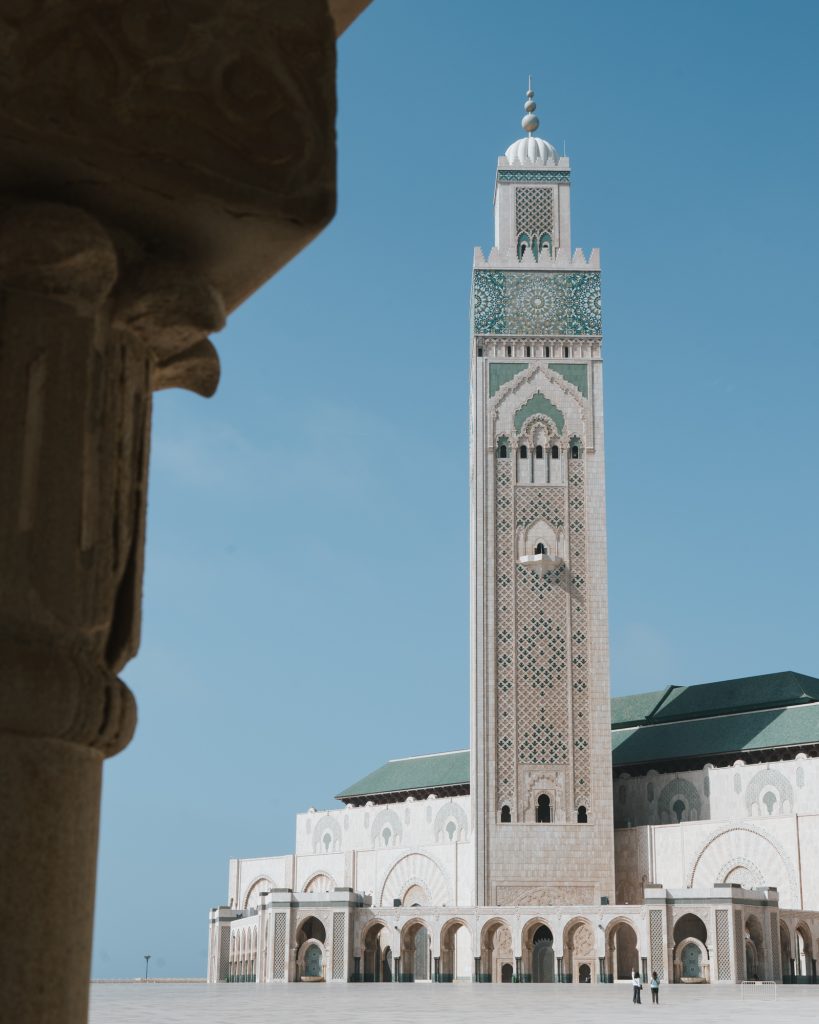
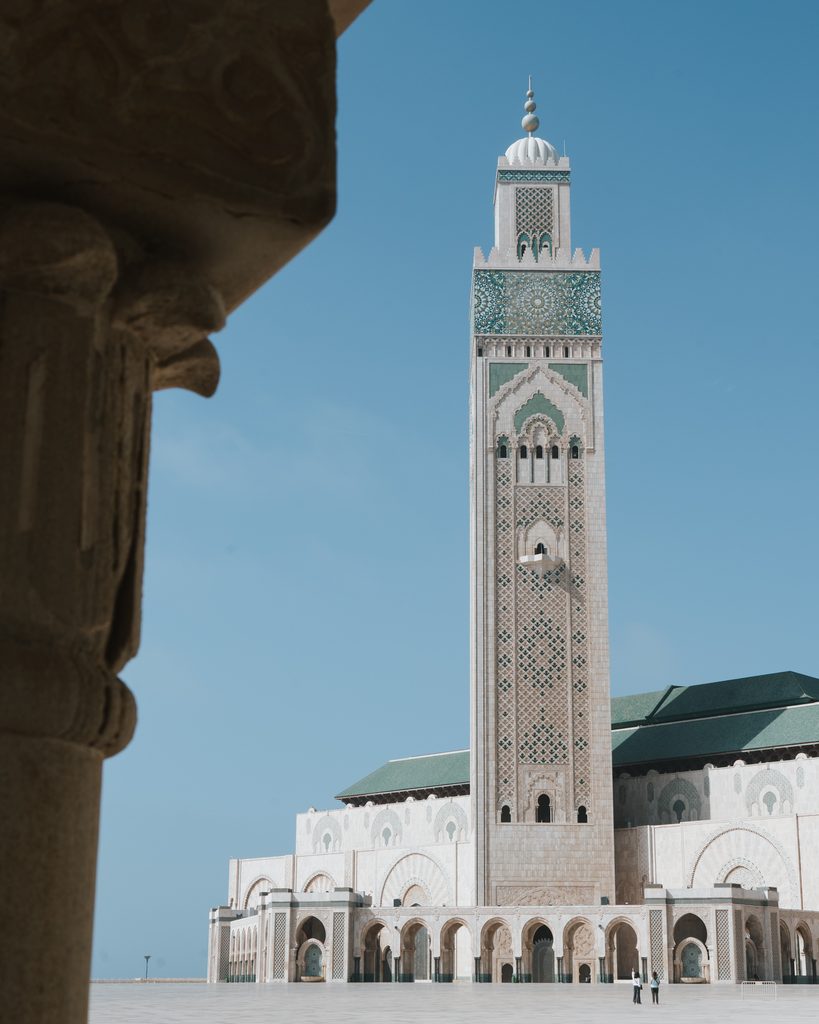
Then a couple of fellow travelers I’d connected with beforehand and I booked a half-day tour of Casablanca. The highlight, by far, was the Hassan II Mosque.
Built right on the edge of the Atlantic, it’s one of the largest mosques in the world and one of the relatively few in Morocco where non-Muslims can visit the interior on a guided tour. The carved plaster, zellige tilework, painted cedar and sheer scale of the building are incredible.
Our main group tour didn’t include it, so I’m very glad we arranged it ourselves. If you do one thing in Casablanca, make it the mosque.

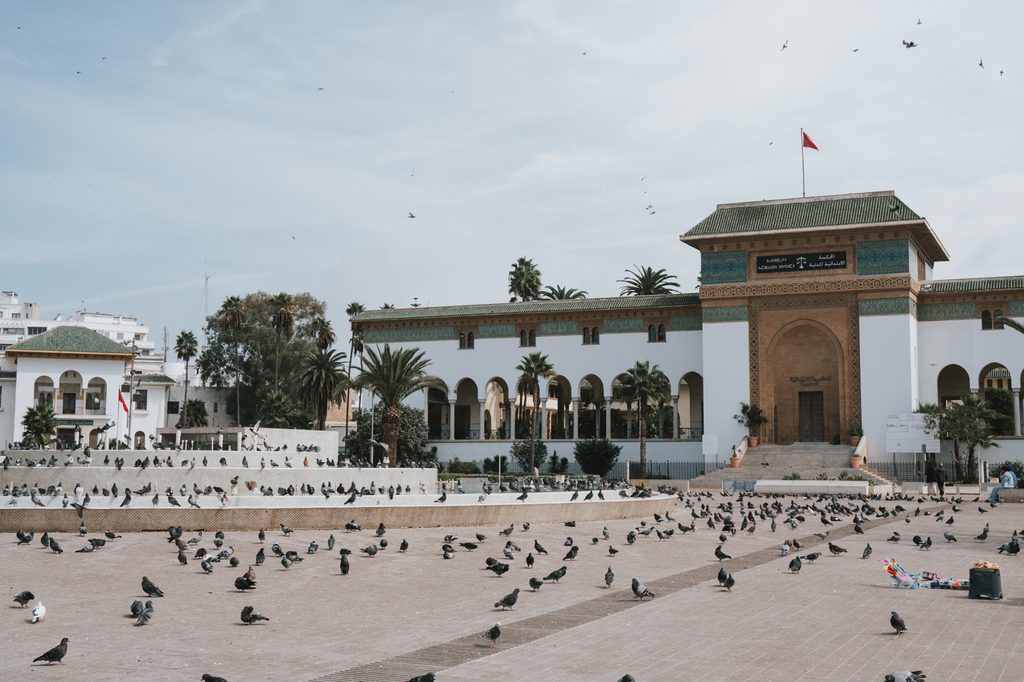
The tour took us to a few other places too. We stopped at Rick’s Cafe (just the outside), inspired by the film Casablanca. The movie wasn’t actually filmed in Morocco, but the cafe was created later to recreate the atmosphere of the fictional Rick’s Cafe Américain.
We also passed through a park, saw a couple of churches (yes, there’s churches in Morocco too) and stopped at the fish market. The rest of the city tour was pleasant but, for me, fairly skippable. The mosque is the bit I wouldn’t miss.
That evening the trip kicked off properly with dinner at Le Basmane. There were belly dancers, the room was buzzing, and the food was genuinely delicious. We had pastilla, chicken tagine with olives and preserved lemon, and a whole spread of little starters and dips.
I arrived in Morocco thinking I might not love Moroccan food.
This concern lasted approximately one meal.
Days 2 to 3: Chefchaouen, the blue city
Highlights: walking tour, sunset viewpoint, early-morning photography, dinner with a local family
Eat: Riad Hicham, Cafe Clock
Shop: La Botica de la Abuela Aladdin
Stay: Vancii Hotel, Chefchaouen, 2 nights
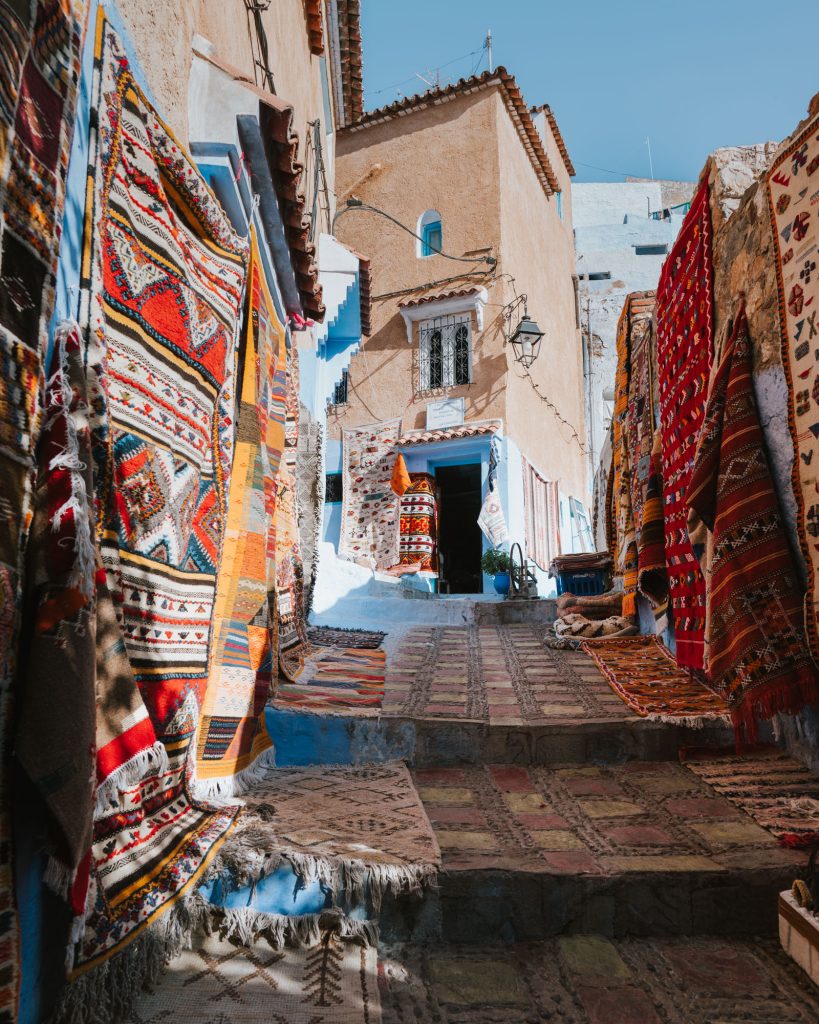
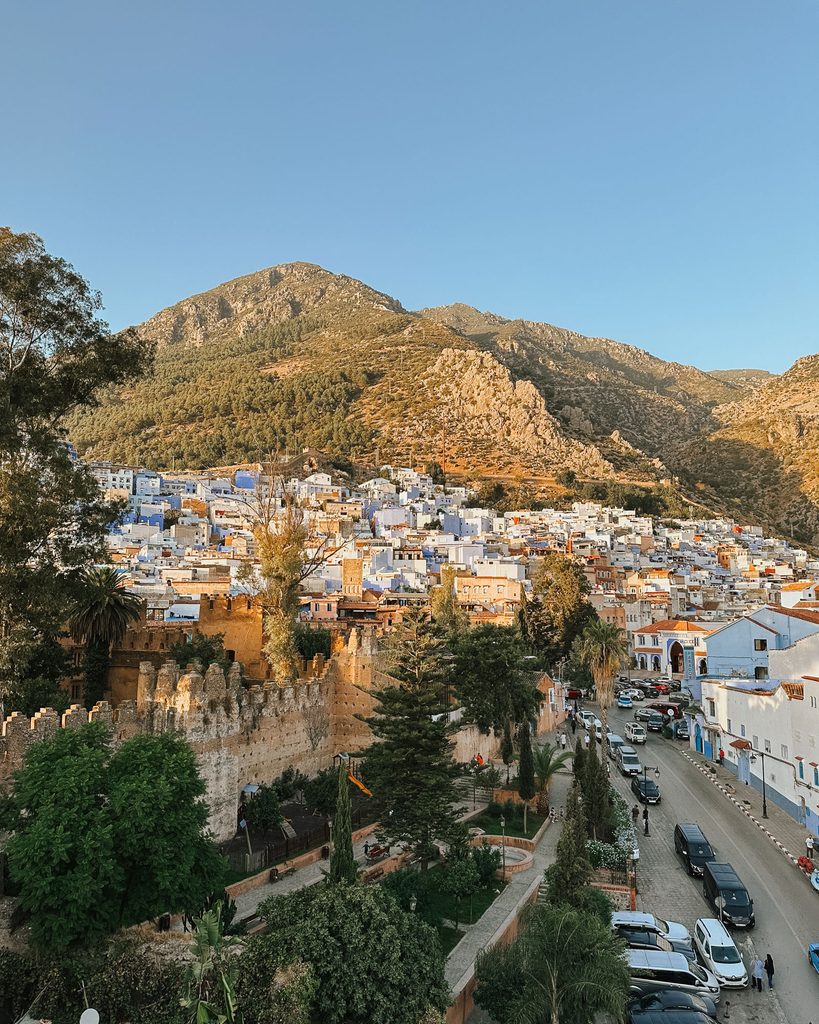
From Casablanca, it’s a long but scenic drive north to Chefchaouen, the famous blue-washed town tucked into the Rif Mountains. It quickly became one of my favorite places in Morocco.
Chefchaouen was founded in 1471, but ask why its all painted blue and you’ll hear all sorts of explanations. Theories range from Jewish tradition to keeping buildings cool or even deterring mosquitoes. There isn’t one universally accepted answer.
Whatever started it, today the blue is inseparable from the town.
We did a walking tour that afternoon to get our bearings, then climbed to the viewpoint on the hill above the medina. It got us all sweating, but it was worth it. You can see the whole blue town spread out below you, and on a clear evening it’s a gorgeous place to watch the sunset.

That first night we had dinner at Riad Hicham, where I think I had my first taste of the creamy Moroccan goat cheese I would become slightly obsessed with. They often served it in a salad or with honey or fig marmalade and it is insane. I don’t even eat goat cheese at home, yet I spent the rest of the trip hunting this stuff down and still look for it whenever I’m back in Morocco.
The next morning I got up early to wander the streets before the day-trippers arrived, and it remains one of my favorite mornings from the whole trip. Chefchaouen can look almost too perfect in photos, but early in the morning you see that it’s very much a lived-in town. I watched an old man baking bread in a communal oven, people opening up for the day and women going about their morning while I wandered around with my camera. This is my favorite way to get to know somewhere: before it fully wakes up.


For lunch, I stopped at Cafe Clock, whose specialty is a camel burger. Naturally, they were out of camel burger the day I went, so I ended up with a chicken sandwich instead. If they have it when you visit, though, it’s one of their signature dishes.
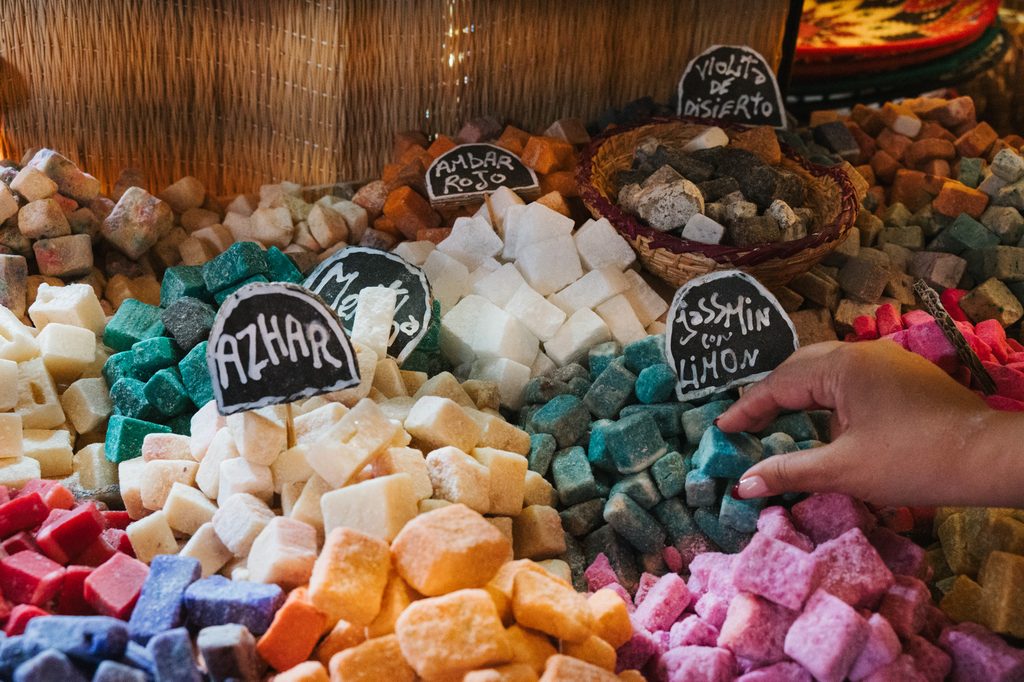
I also loved La Botica de la Abuela Aladdin, a little soap, perfume and argan oil shop where I bought scented argan oil and discovered their solid perfume bars.
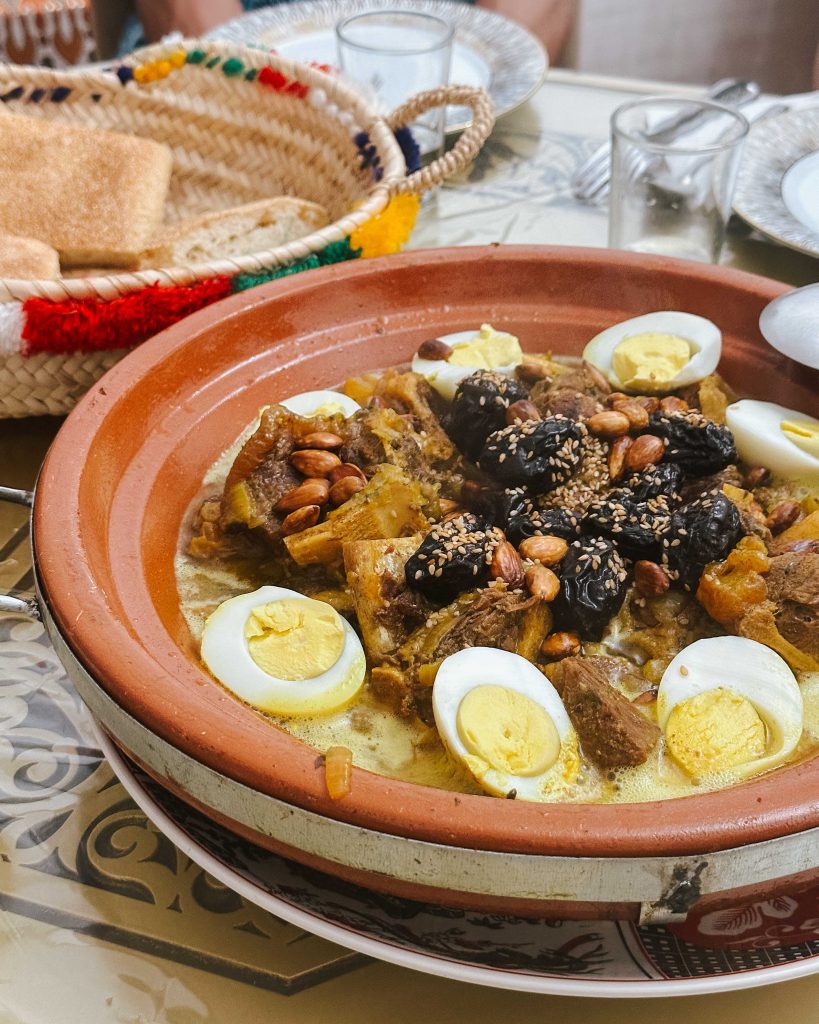
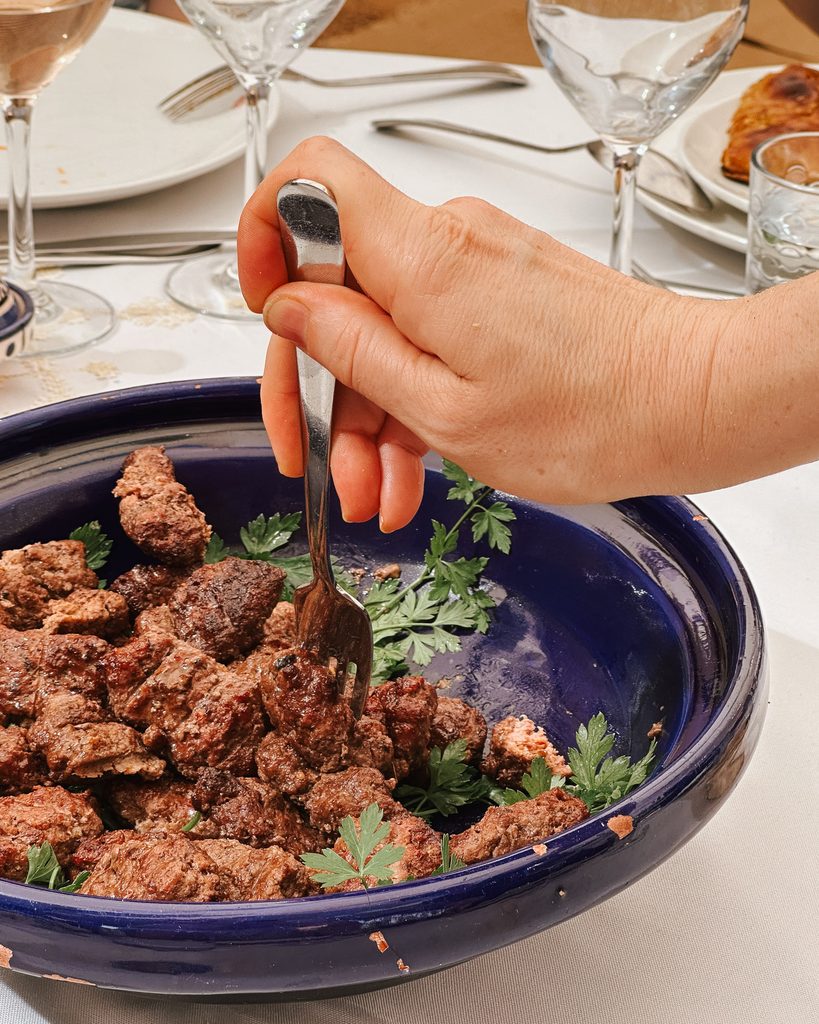
That evening we had dinner with a local family just around the corner from our hotel. We met the couple and their daughter and ate in their home, with everything homemade and fresh. There was tagine with prunes and almonds, now one of my favorite Moroccan dishes, and pastry to finish. Honestly, a recurring theme of this entire trip is going to be me telling you how good the food was.


Our base, Vancii Hotel, had a rooftop made for sunsets and my room even had its own little courtyard.
One thing to flag: while I wandered around town with my camera, a few people in our group went for a self-guided hike in the surrounding mountains. A couple of them took a wrong turn, got lost and added several hours to their day. If you head hiking, download an offline map or consider going with a local guide.

Days 4 to 5: Fes
Highlights: Villa Volubilia winery, Fes medina, souks, tanneries, al-Qarawiyyin
Eat: ISHQ
Stay: Fes Heritage Boutique Hotel, 2 nights
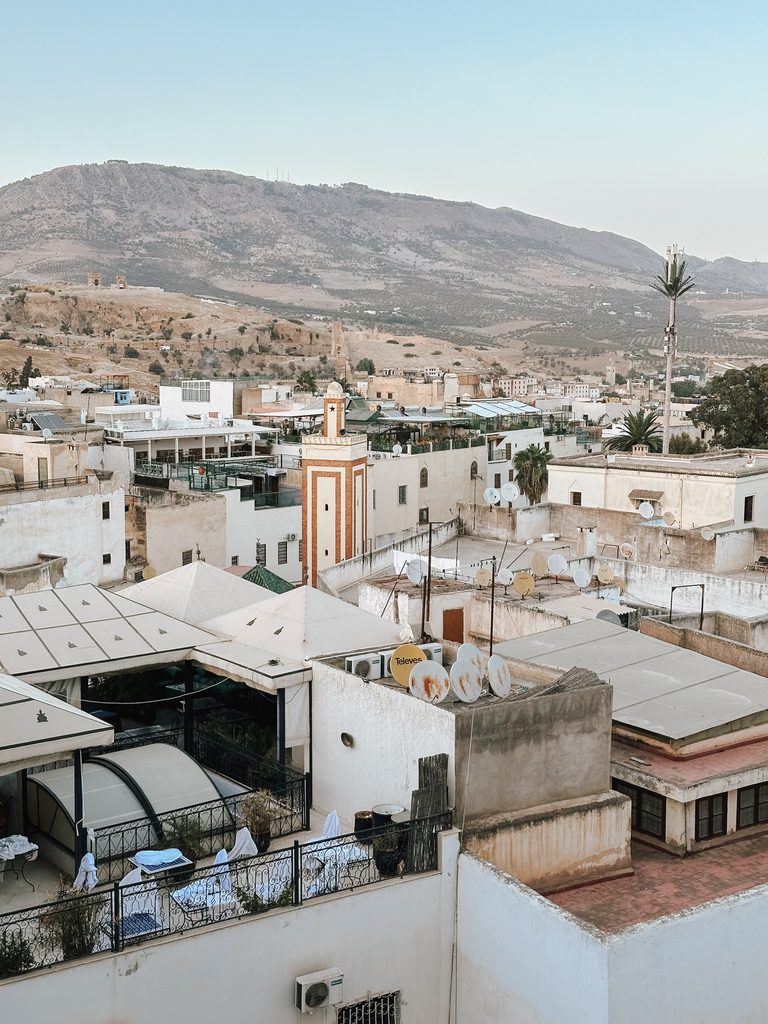
Fes is one of the places I most want to return to. Its historic medina is an enormous, largely car-free maze of alleyways, workshops, shops, mosques, food stalls and homes, and I left feeling like I’d barely scratched the surface.
On the drive there, we made a stop I didn’t see coming: a winery.
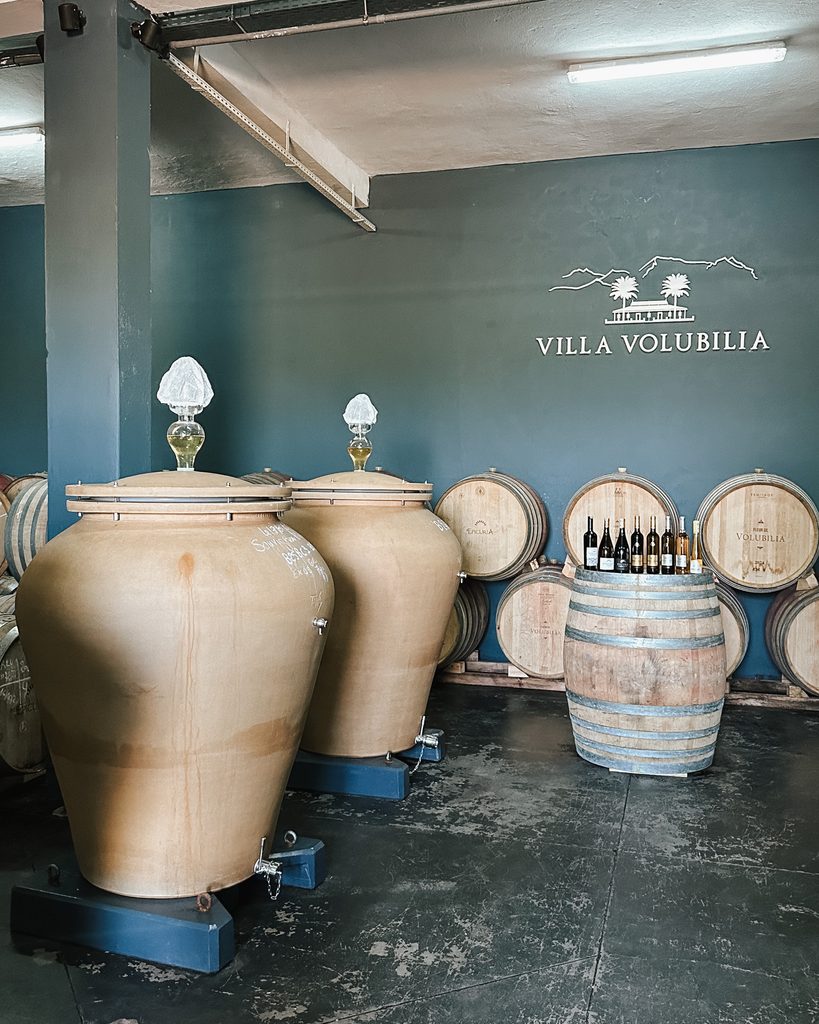
I had no idea Morocco produced wine before this trip. We visited Villa Volubilia in the Meknes wine region, named after the nearby Roman ruins of Volubilis, and had a really lovely lunch there.
I’m not a wine person, so I’m not going to pretend I can give you an informed review of the wine, but my fellow travelers enjoyed it. I was more interested in seeing the production process, including wine aging in large clay pots, and the food was fantastic.
We reached Fes with time to settle in, and the first night was very low-key: hotel, drinks nearby and staring longingly at the hotel pool without actually getting in it because it was too late.
The following day was our full city tour.
Some of my highlights were:
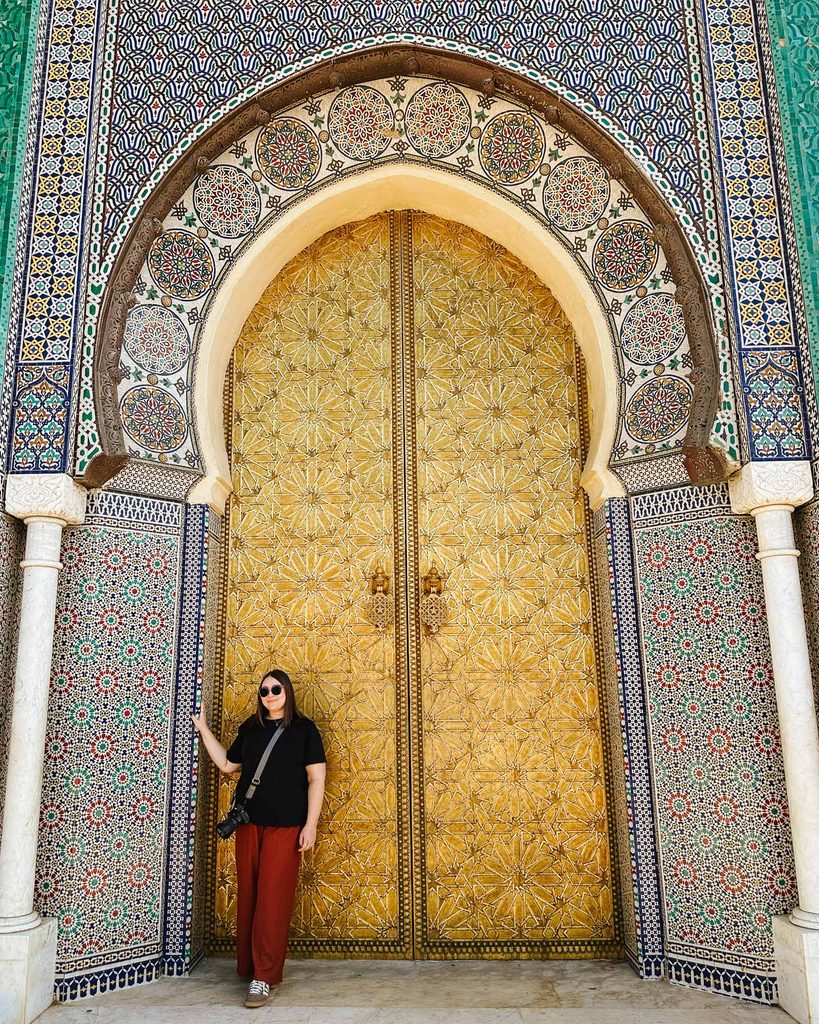
- the ornate golden doors of the Royal Palace in Fes el-Jdid
- walking through the historic Mellah, the old Jewish quarter
- a viewpoint over the city
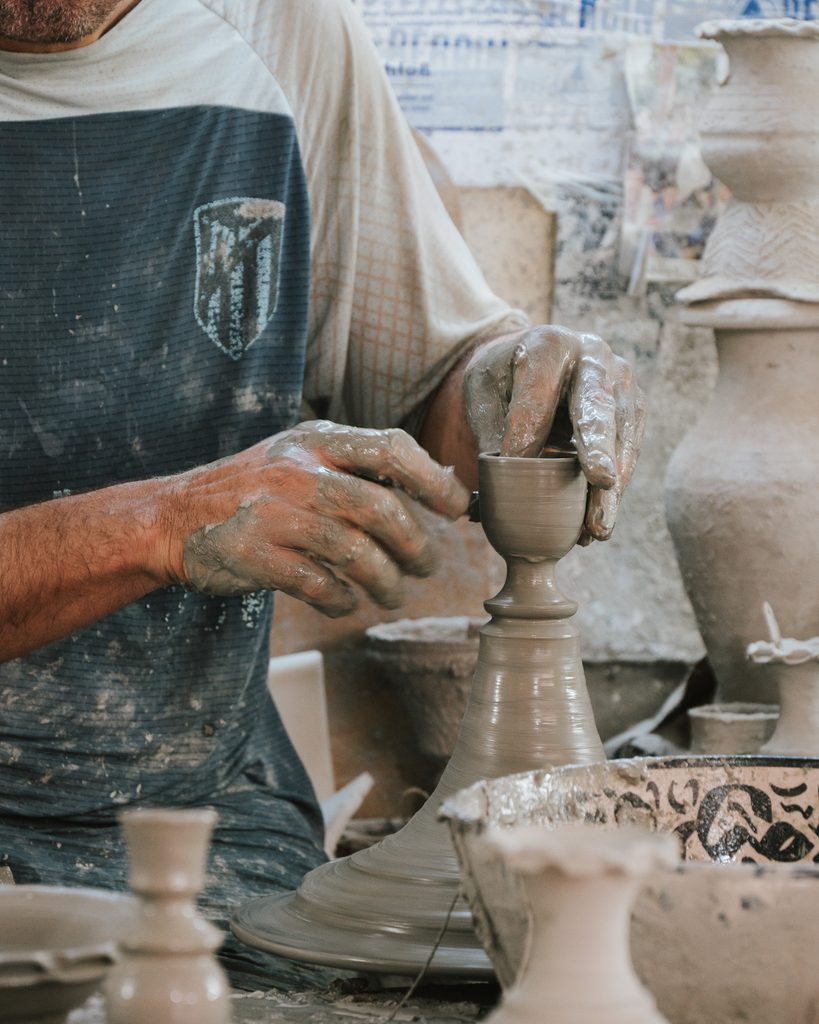
- a pottery and mosaic workshop, where we watched artisans shape ceramics and hand-cut tiny zellige tiles
- al-Qarawiyyin, founded as a mosque in 859 by Fatima al-Fihri and later one of the Islamic world’s great centers of learning
- watching craftspeople hand-work decorative metal pieces inside the medina

Then we went properly into the souks, and honestly, it felt like another planet.
People were making scarves and shoes, someone walked past carrying live chickens, workshops disappeared into tiny doorways, and every few meters there seemed to be another smell, sound or thing I wanted to photograph. A complete fever dream, in the best way.


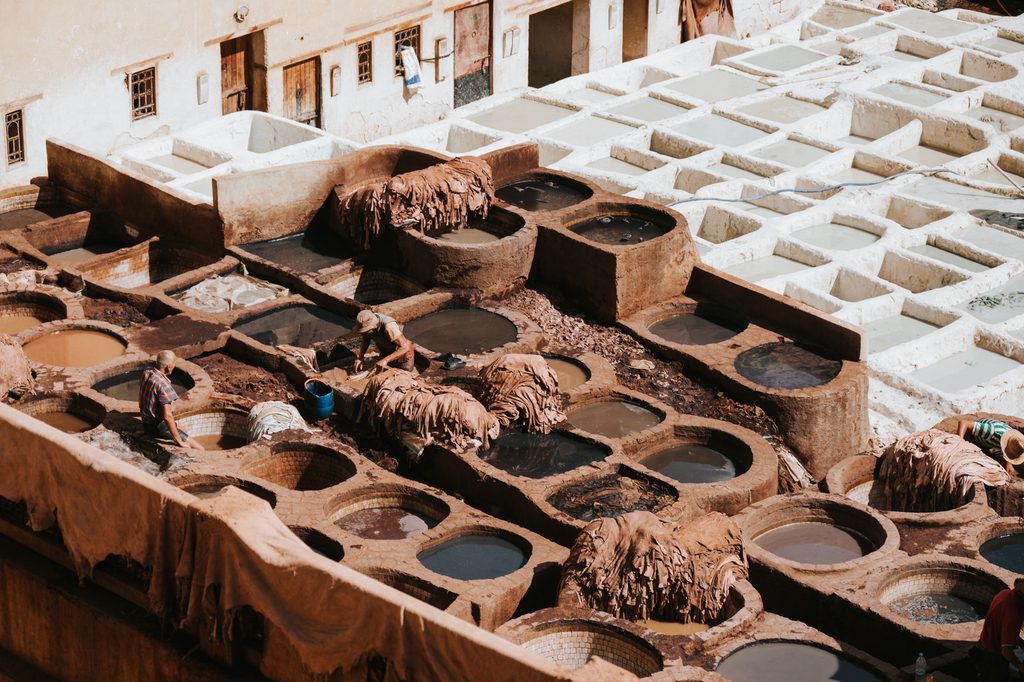
Of course, we also visited the famous tanneries, where leather is still processed and dyed in rows of stone vats. You view them from terraces above, and they hand you a sprig of mint to hold under your nose because the smell is notoriously intense. Maybe my sinuses are permanently blocked at this point, but I barely smelled a thing.
My biggest regret in Fes is that we moved through the medina quite quickly. I wanted to stop, look and photograph everything. Fes is firmly on my list for a return trip at a much slower pace.
Food-wise, lunch at Restaurant Le Patio Bleu was fine. I had couscous and nothing particularly wowed me. I also had stomach issues later that day (and the following days), if you know what I mean, so I wouldn’t necessarily recommend it.
Dinner was another story. One of the girls in our group was celebrating her birthday, so we went to ISHQ, a more modern take on Moroccan food. I had a sweet chicken pastilla that was incredible, tried my friend’s duck and loved that too, and the steaks looked great. If you want a treat-yourself dinner in Fes after days of traditional tagines and couscous, it’s a nice change of pace.

Day 6: Ifrane, the cedar forest and the long road south
Highlights: Ifrane, Barbary macaques, the drive toward the desert
Stay: Kasbah Hotel Chergui, Erfoud
This is a big travel day, but I actually loved it.
First up was Ifrane, often nicknamed Morocco’s Little Switzerland because of its alpine-style architecture. It sits high in the Middle Atlas, gets snow in winter and looks completely different from anywhere else on this itinerary.
Then came the cedar forest. The forest itself was nice rather than spectacular, and after being in the car for a while it was mostly good to stretch my legs. The real highlight for me was seeing the Barbary macaques. They’re the only macaque species native outside Asia, with wild populations in Morocco and Algeria, and they’re sadly endangered. As someone who loves animals, seeing them in the forest was easily the best part of the stop.
We stopped for lunch somewhere along the way, where the local specialty was river fish. I’m a big fish eater. This fish was very burnt. We’ll leave it there.
After that came a long stretch of driving toward Erfoud, but I didn’t mind it at all. The landscapes kept changing and I spent most of the journey staring out the window in awe.
Kasbah Hotel Chergui was our stop for the night, with lovely food and another big pool I wished I had time to actually use.


Day 7: Into the Sahara at Merzouga
Highlights: fossils, madfouna, Gnawa music, camel trek, sandboarding, stargazing
Eat: madfouna for lunch, dinner at camp
Stay: luxury desert camp in Merzouga
On the way to Merzouga, we stopped at a fossil workshop near Erfoud, which was far more interesting than the words “fossil workshop” make it sound. This part of Morocco is famous for fossils from a time when the region lay beneath prehistoric seas. Workshops around Erfoud cut and polish fossil-rich stone into everything from bowls to enormous tables.
Somewhere along the way I also tried camel milk for the first time. Tasted like cow milk, would have it again.
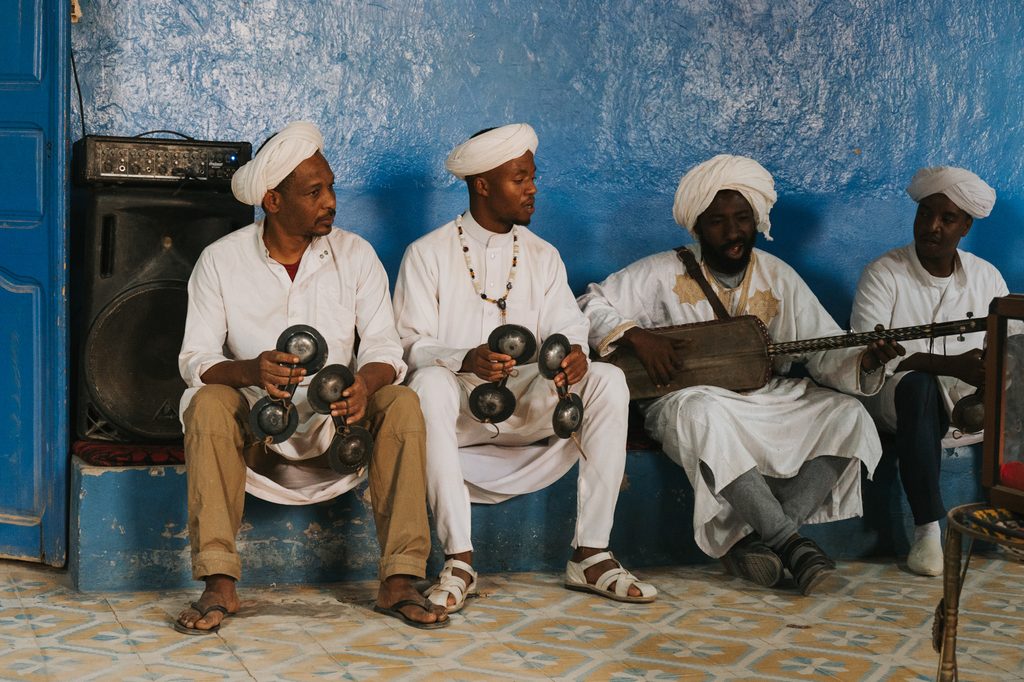
For lunch, we had madfouna, sometimes nicknamed Berber pizza, a stuffed flatbread that was genuinely delicious. We listened to Gnawa music too, a musical tradition deeply associated with this part of Morocco.
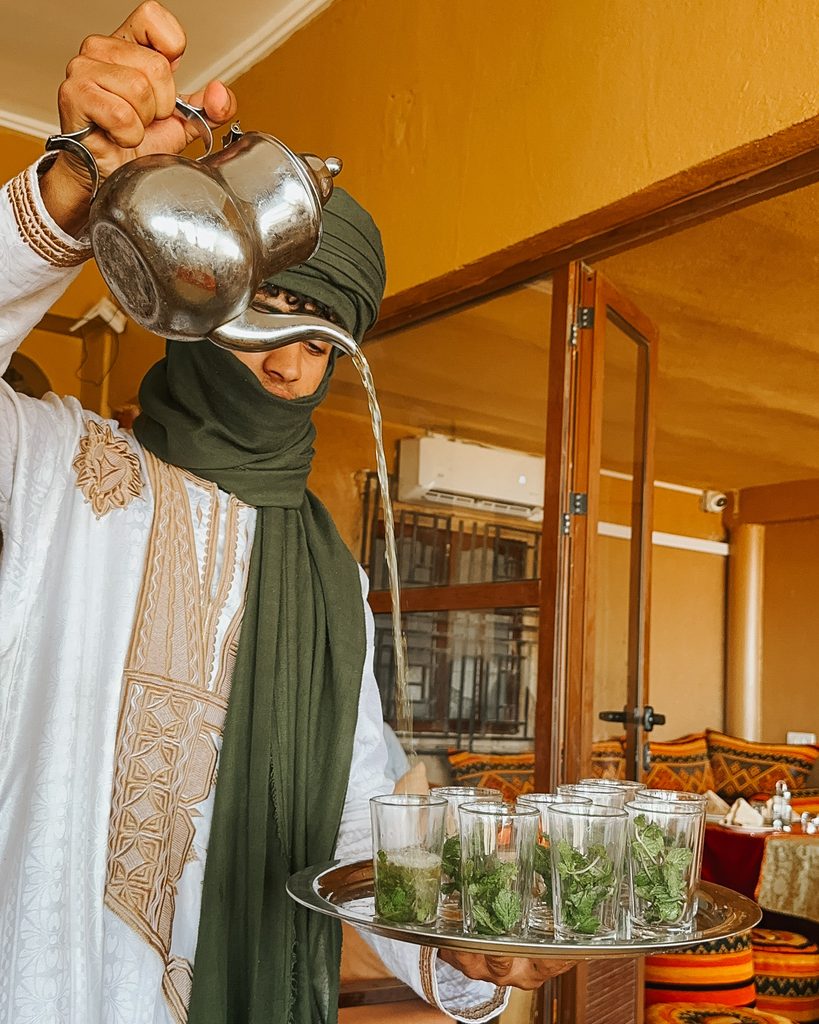
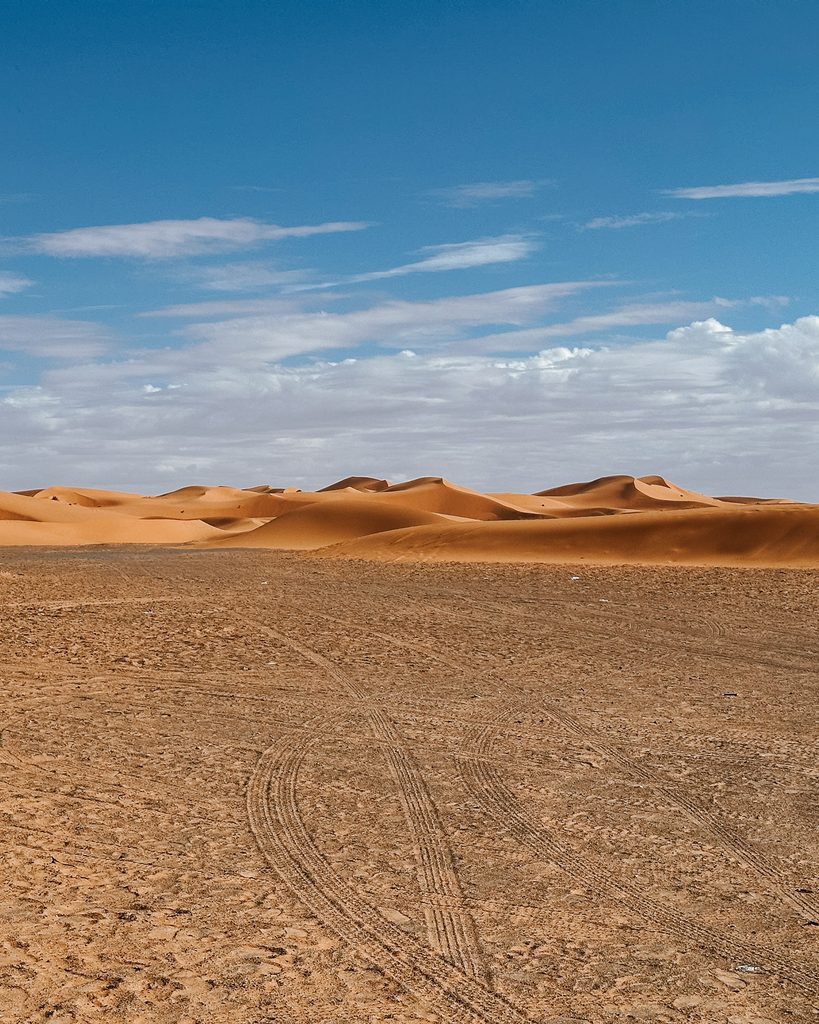
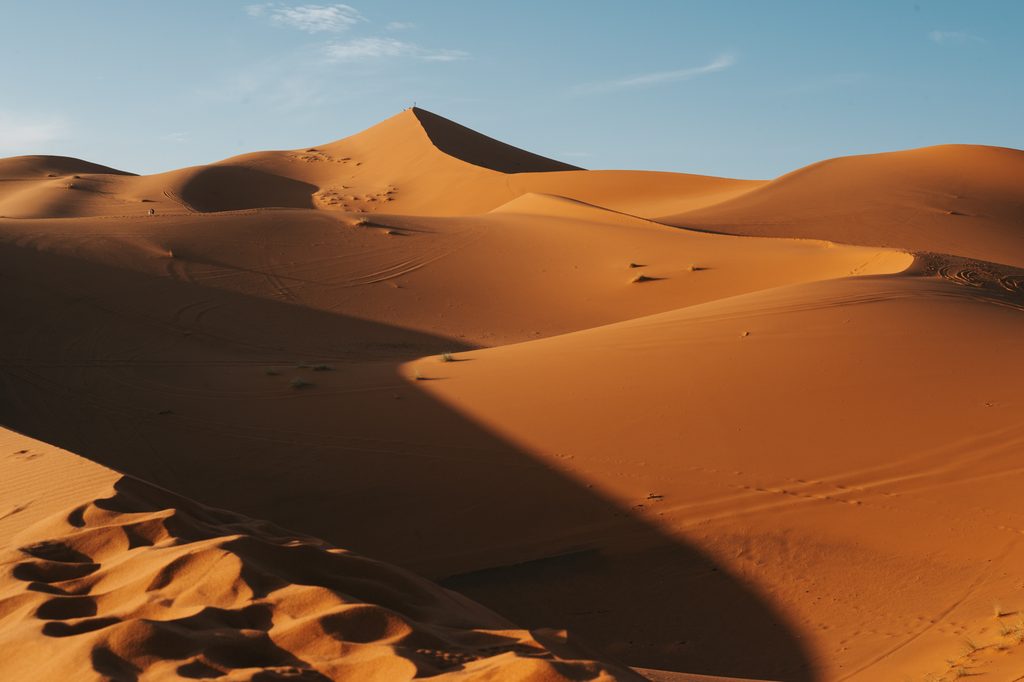
And then, finally, the dunes. Erg Chebbi rises suddenly from the surrounding landscape, with dunes reaching roughly 150 meters at their highest. We climbed onto camels and headed into the dunes as the light started turning golden.
At camp we went sandboarding, watched the sunset, had dinner and sat around the fire listening to music. Later, once it was properly dark, I stayed outside with my camera shooting the stars.
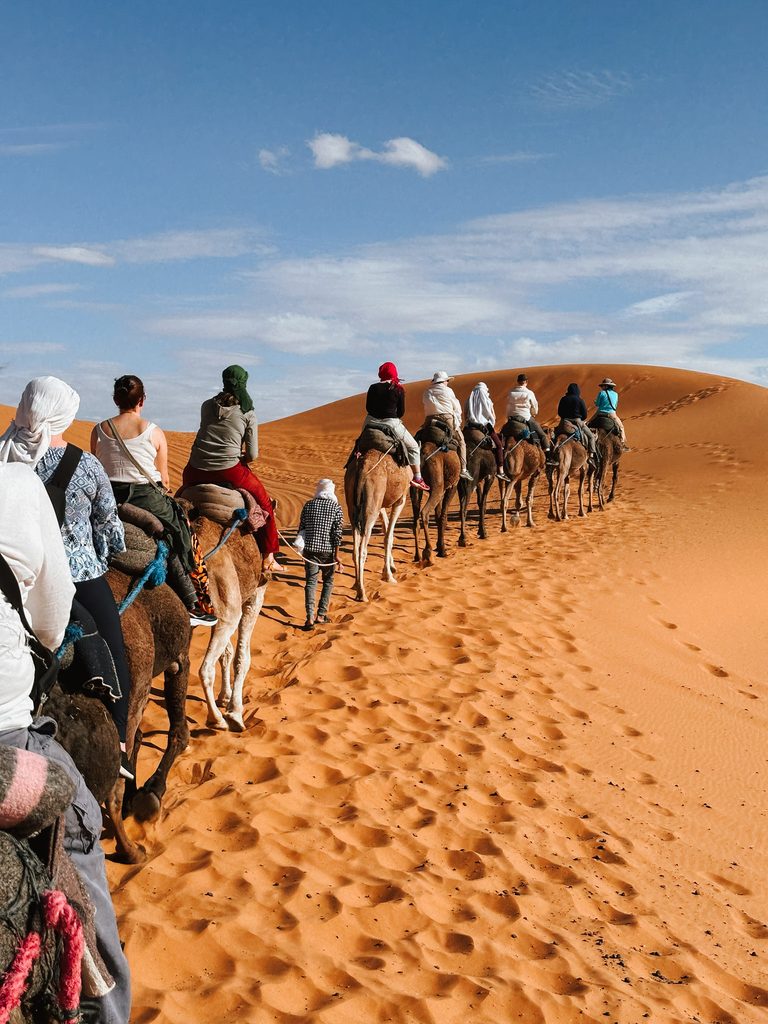


I thought one night in the Sahara would be enough to say I’d done it. Apparently not. On another trip, I came back and stayed for almost a week.
The camp I stayed at on this first trip was lovely, although its name has completely escaped me. I can’t find it for the life of me, and this girl can do research… On a later visit I stayed at Sahara Eden Camp and loved it even more, so that’s the camp I’d personally choose now.
See my full Sahara Eden Camp review for more on what staying in a desert camp is actually like.

Day 8: Todra Gorge and the Dades Valley
Highlights: leaving the dunes by camel, Todra Gorge, Dades Valley
Stay: Dar Ahlam, Dades Valley
I was genuinely sad to leave the Sahara after one night. Having since gone back and spent almost a week around Merzouga, I can confirm that the desert deserves more time than most Morocco itineraries give it.
There’s much more here than riding a camel into the dunes. There are tiny villages, nomadic communities, old mining settlements, seasonal lakes, local families and huge stretches of desert you never see if you arrive at sunset and leave after breakfast.
On my later trip, I visited the nomads, explored the abandoned M’Fis mining village, saw Dayet Srji, a seasonal lake that can attract flamingos after the rains, and celebrated Eid al-Adha with a local family in Erfoud. Rissani and its souk are still on my to-do list for next time.
If I were rebuilding this itinerary now, this is one of the places where I’d add an extra day.
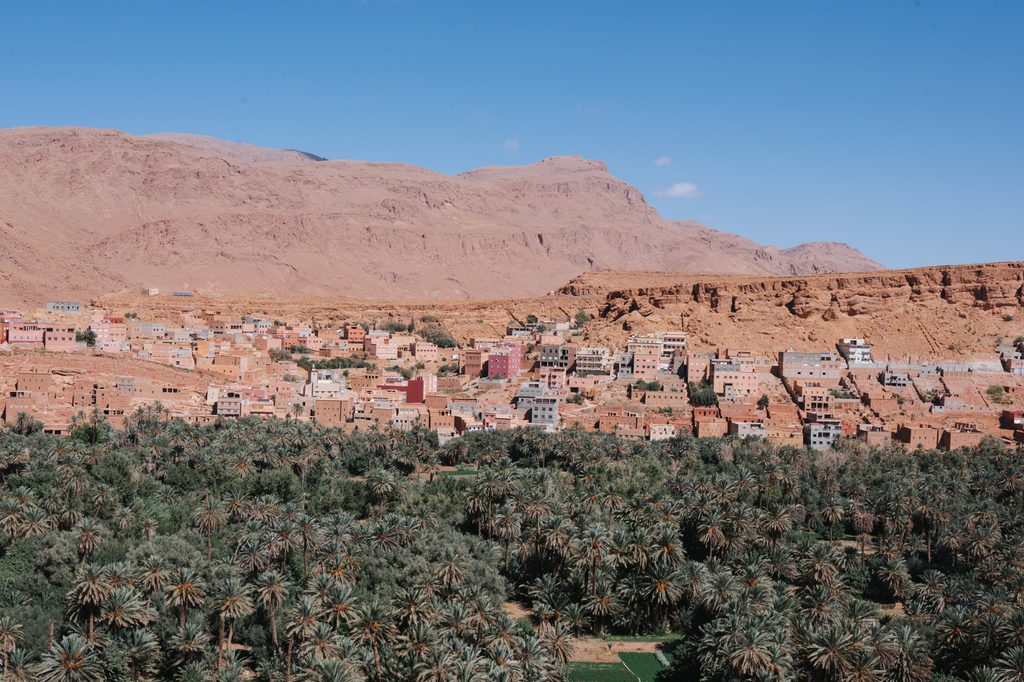
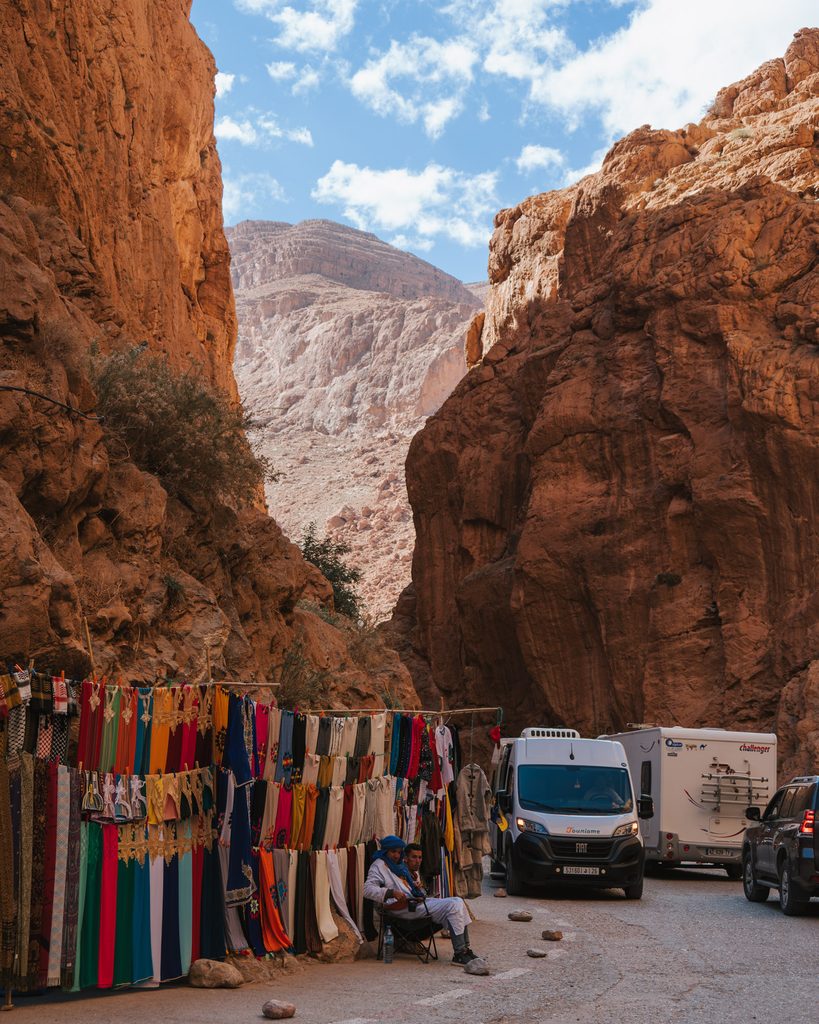
For now, though, we left camp the way we arrived, by camel, and continued toward Todra Gorge. The rock walls here rise dramatically on either side of the river, reaching around 300 meters in places, and the gorge is particularly popular with rock climbers.
From there, we continued into the Dades Valley, through a landscape of sculpted rock, old fortified villages and colors that seemed to change every few minutes. I could have photographed it all day.
We stayed at Dar Ahlam, a cute family-run property with carved stucco, traditional tilework and a little pool.

Day 9: A slower day in the Dades Valley
Highlights: switchback-road viewpoint, river walk, an unexpected blackout and henna party
Stay: Dar Ahlam, second night
After several big driving days, having nowhere particularly urgent to be felt very welcome.
Some of our group went off on a proper hike and came back saying it had been pretty tough. The rest of us took things slower. We wandered around town, headed up the famous switchback road for the view and walked along the river. Some stretches of the landscape genuinely looked like a scene from The Lion King.
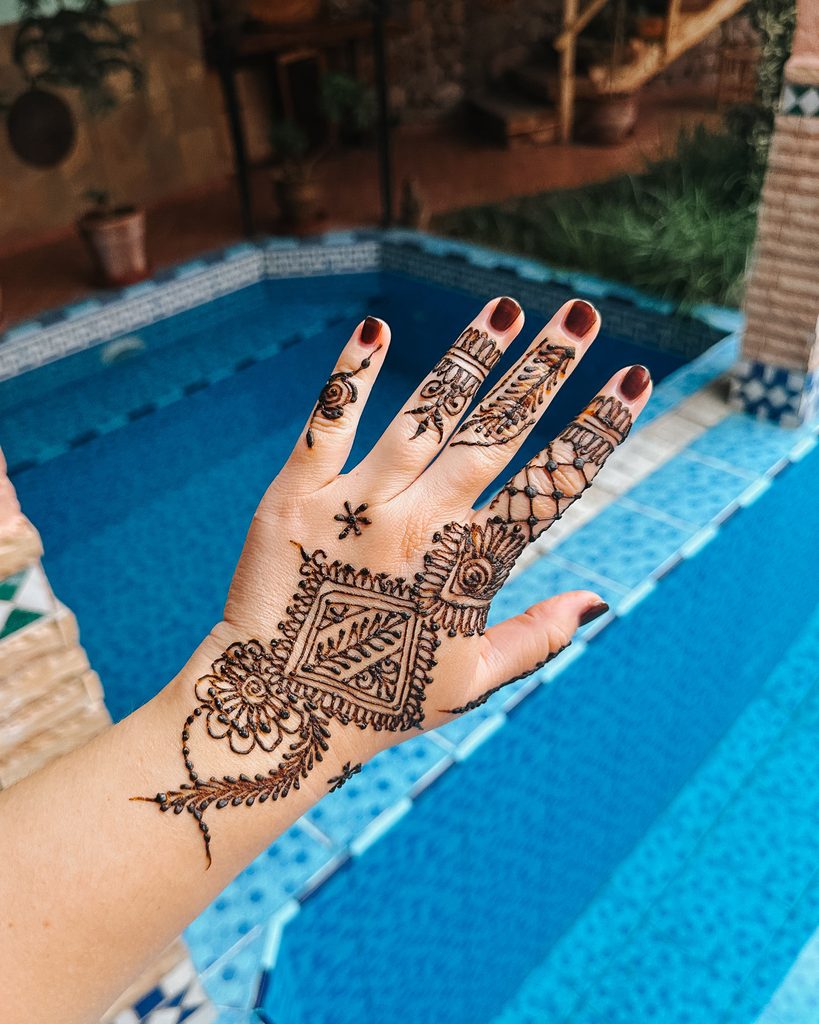
Then the whole town lost electricity and phone signal. What could have been annoying turned into an accidental digital detox. The hotel couldn’t cook, so they somehow arranged pizzas from the next town. With the power still out that afternoon, they turned the whole thing into a henna party for us.
Between that, wandering around and simply having time to watch normal life going on around us, it ended up being one of my favorite low-key days of the trip.

Day 10: Ait Benhaddou
Highlights: Tawesna women’s cooperative, carpet cooperative, Ait Benhaddou, my first hammam
Eat: Tawesna women’s cooperative
Stay: Ksar Ighnda, Asfalou
Before visiting Ait Benhaddou itself, we stopped for lunch at Tawesna, a women’s cooperative tea house at the foot of the ksar. Run by local Amazigh women, it was exactly the kind of place I love finding when I travel: small, local and connected to the community.
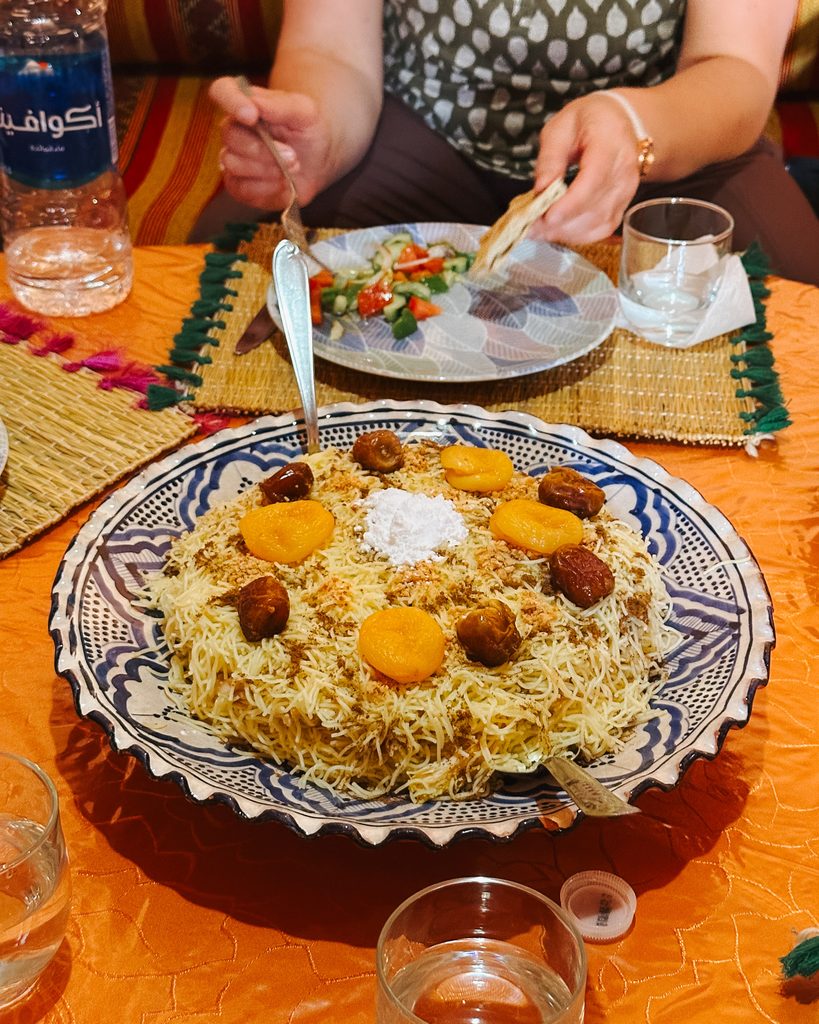
We had seffa medfouna, sweet steamed vermicelli with chicken hidden underneath and topped with cinnamon, sugar and almonds. Sweet and savory together can be divisive, but I am very firmly on board.
We also stopped at a carpet cooperative, where we watched rugs being woven and learned about some of the symbolism worked into the patterns.

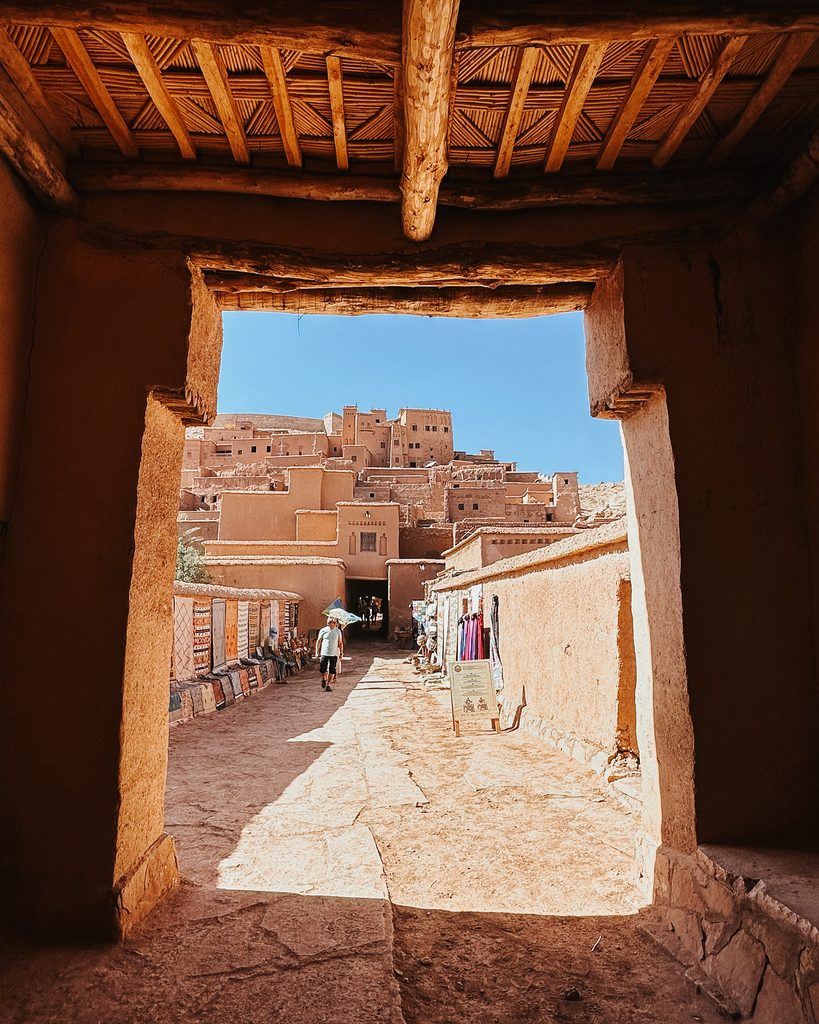
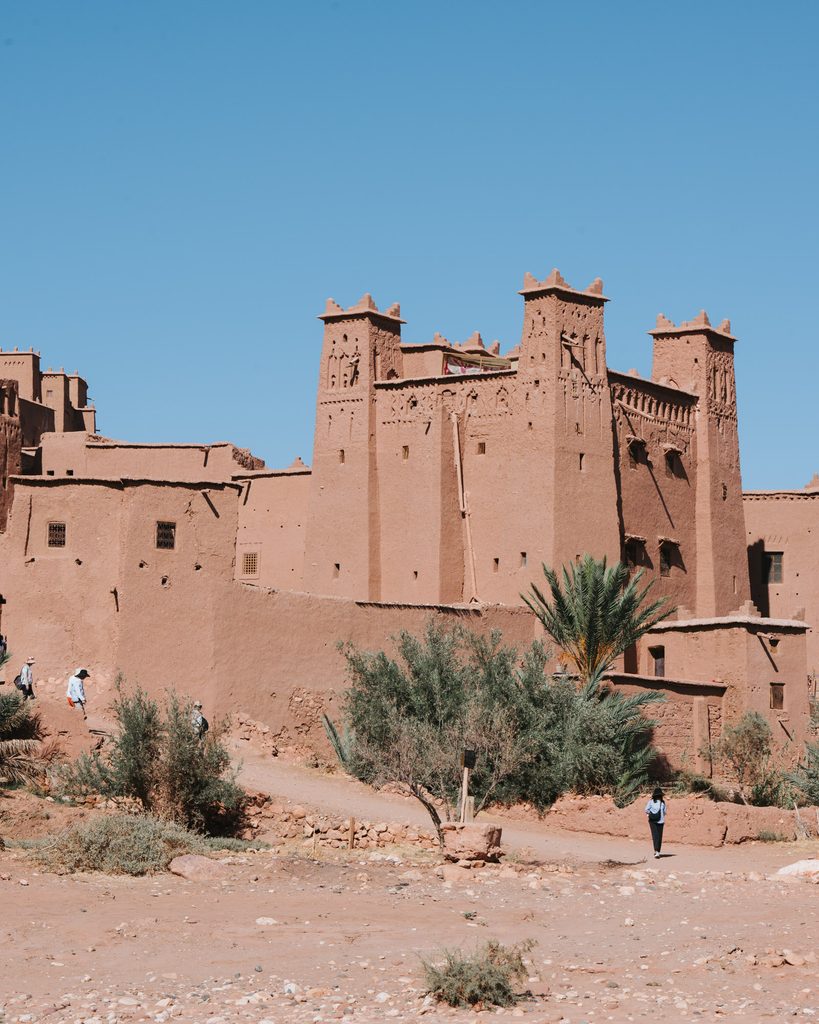
Then came Ait Benhaddou itself. The UNESCO-listed ksar is a striking collection of traditional earthen buildings that once formed one of the trading posts along the route linking the Sahara and Marrakech. These days, you might recognize it from film and TV. Gladiator and Game of Thrones are among the productions filmed here.
It was scorching the day I visited. The sun was relentless, I was dripping, and I still wanted to photograph every corner of it. I’d love to come back in softer light and without feeling like I’m slowly being cooked.
That night at Ksar Ighnda, which had lovely food and a gorgeous pool, I had my first hammam. I’ll be honest: I hesitated. I’m not naturally someone who thinks, “Yes please, let me strip down in front of a stranger so they can scrub several layers of my skin off.” There was also a moment when it felt a little like being gently waterboarded, and I had to find my rhythm and remember to breathe. But overall? I loved it. I came out slightly bewildered and with the smoothest skin of my life, and I’d absolutely do it again.
Day 11: Over the Atlas Mountains to Marrakech
Highlights: High Atlas, Marrakech street food
Eat: Marrakech street food tour
Stay: Bab Hotel, Marrakech, 2 nights
On Day 11 we crossed the High Atlas and reached Marrakech. Founded by the Almoravids around 1070, Marrakech is known as the Red City, and it was the final proper stop on our route.
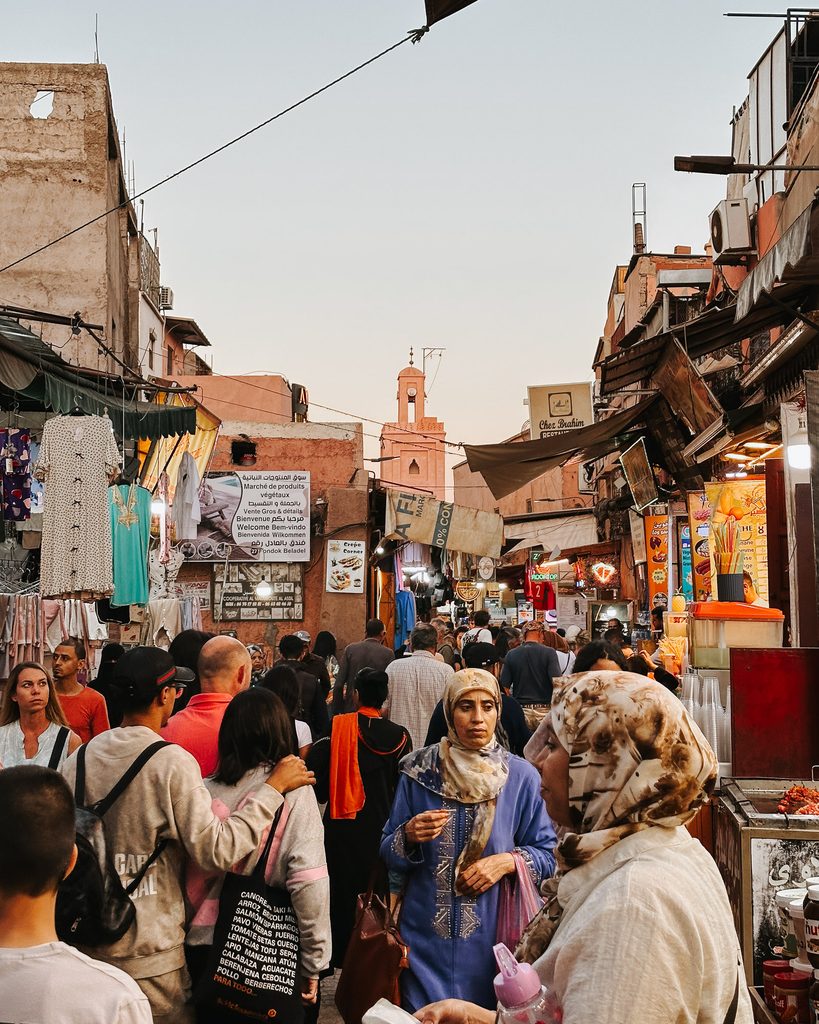
Somehow, after almost two weeks of eating extremely well, one of my favorite things I did there was… eat some more. We had an evening street food tour and it was brilliant.
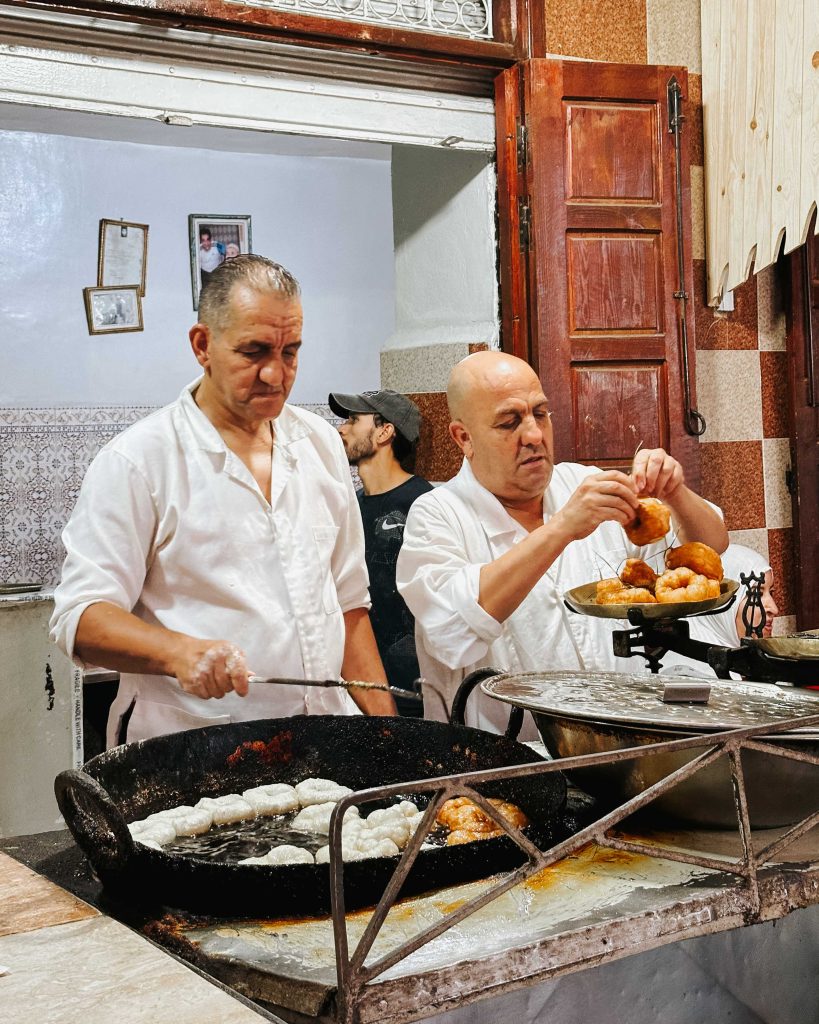
We tried tangia, the slow-cooked meat dish Marrakech is famous for, raib, a set yogurt, sfenj, Moroccan doughnuts, and plenty of other things along the way.
Jemaa el-Fnaa itself is famous not just as a square but as a living cultural space filled with storytellers, musicians, performers, food stalls and traditions. UNESCO recognizes those cultural traditions as part of the Intangible Cultural Heritage of Humanity.
If food is even vaguely important to you when you travel, I’d absolutely do a food tour here. My one regret is that I didn’t see enough of Marrakech itself. We didn’t have time for many of the famous palaces, monuments and historic buildings, so I left feeling like I’d only seen one version of the city. Next time, I’m staying longer.

Day 12: Sidecars, pomegranate trees and Jardin Majorelle
Highlights: sidecar tour, Jnane Tihihit, YSL Museum, Jardin Majorelle
Eat: farm-to-table lunch at Jnane Tihihit
Stay: Bab Hotel, Marrakech
The next day was just fun. We took a sidecar out of Marrakech to Jnane Tihihit, a guest farm near Lalla Takerkoust, for a farm-to-table lunch. We literally ate underneath the pomegranate trees while drinking fresh pomegranate juice, then wandered around the farm afterward. This is exactly my kind of travel experience. Good food, somewhere local, and a chance to see something beyond the obvious sights.


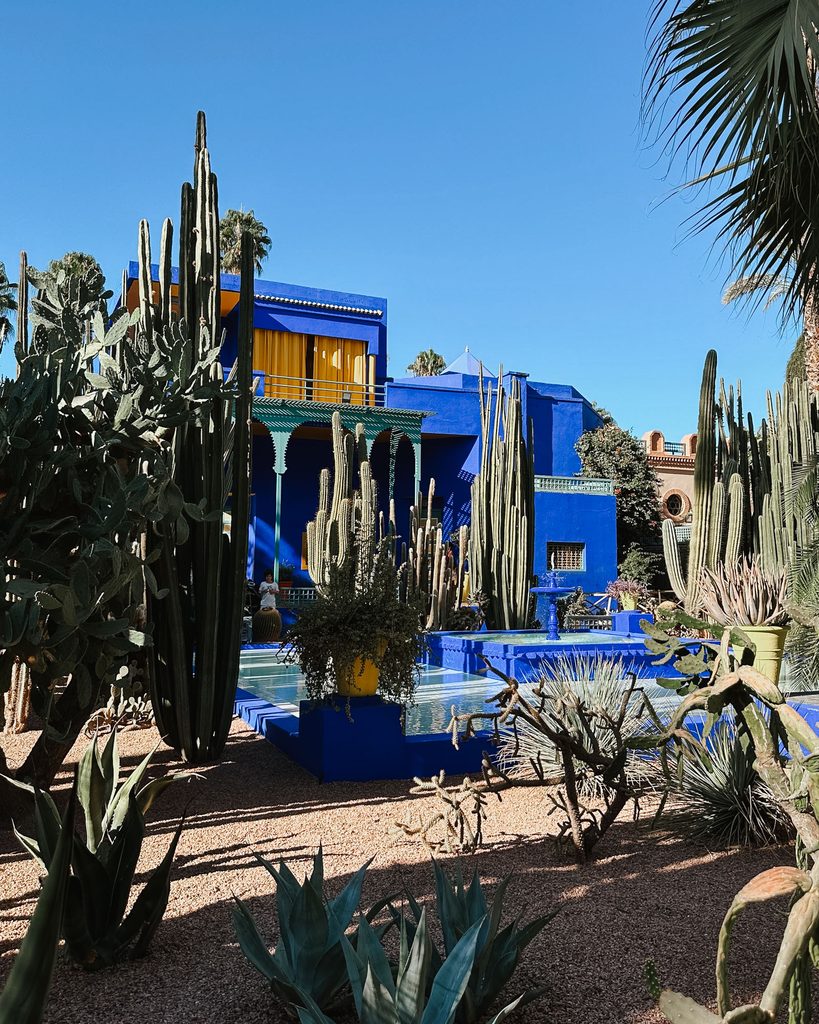
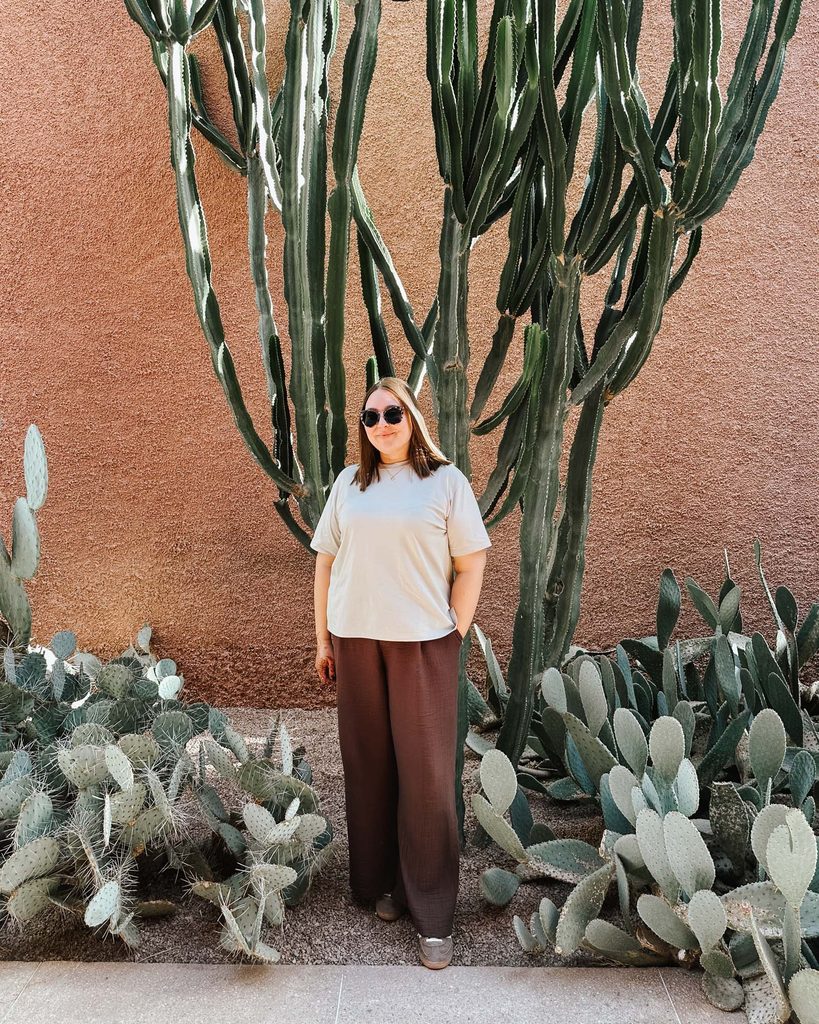
Back in Marrakech, I also visited the Yves Saint Laurent Museum and Jardin Majorelle. The garden was created by French painter Jacques Majorelle and is famous for that intense cobalt blue that now bears his name. It was later restored by Yves Saint Laurent and Pierre Bergé. It was beautiful and, happily, much less crowded than I’d expected.
Day 13: Departure
Highlights: breakfast, check-out and a teary goodbye
And that was it. Breakfast, check-out and onward.
I cried when it was time to leave. Morocco got under my skin on that first trip in a way I hadn’t expected, and I’ve kept coming back ever since.
Where I stayed on this Morocco 2-week itinerary
| Stop | Nights | Accommodation |
| Casablanca | 1 | Hotel Val d’Anfa |
| Chefchaouen | 2 | Vancii Hotel |
| Fes | 2 | Fes Heritage Boutique Hotel |
| Erfoud | 1 | Kasbah Hotel Chergui |
| Merzouga | 1 | Luxury desert camp |
| Dades Valley | 2 | Dar Ahlam |
| Asfalou / Ait Benhaddou | 1 | Ksar Ighnda |
| Marrakech | 2 | Bab Hotel |
One extra option for the Dades Valley: I stayed at Riad Sahara Stars Dades on a later trip and really liked it. It has a little pool, super cute interior design, and, more importantly, the food was excellent.
How much does a 2-week Morocco trip cost?
Was my trip cheap? Absolutely not.
The tour itself cost around €4,000 and once I added flights, lunches, tips, activities and shopping, I spent somewhere between €5,000 and €6,000. These were my costs in October 2025, so treat them as a snapshot rather than current pricing.
But please don’t read that as “Morocco costs €5,000 to €6,000 for two weeks.” It doesn’t have to.
This was my first trip to the country. I was traveling solo, wanted nicer accommodations and specifically chose a small group aimed at solo travelers rather than the cheapest large coach tour I could find. I also booked through a UK-based company rather than directly with a Moroccan operator. All of that added a significant premium.
Part of the reason I booked that way was nerves. Before my first trip, plenty of people warned me that Morocco was dangerous, particularly for a woman traveling alone, and I didn’t feel comfortable arriving and figuring everything out by myself.
My actual experience was very different from what I’d imagined. I felt welcome, never personally felt unsafe during that trip, even when wandering around by myself, and have since returned twice.
If I were booking this exact itinerary now, I’d go directly through a local company and expect to spend considerably less. So treat €5,000 to €6,000 as what I spent, not what Morocco costs.

Best time to do this Morocco itinerary
For this particular route, I’d choose spring or fall.
I went in October and the weather was pretty much perfect, although some places were still hotter than I expected. Temperatures reached around 33°C (91°F), and I hadn’t quite packed for that level of heat.
Summer can get brutally hot inland and around the desert, while winter brings much colder nights, particularly in the Sahara and mountains.
Spring, roughly March to May, and fall, September to November, give you a better chance of warm days without the most extreme summer heat.
Morocco has a lot of different landscapes and elevations, though, so don’t expect one weather forecast to apply to the entire trip.
What to pack for 2 weeks in Morocco
You’re packing for cities, mountains, desert and potentially some pretty big temperature swings, so layers are your friend.
Comfortable shoes are non-negotiable, particularly for the medinas, and I always carry a scarf because it takes up almost no room and comes in handy constantly.
For the full breakdown, including what I actually wore, the modesty question and what to pack for the desert, see my guide to what to wear in Morocco as a woman.
Morocco 2-week itinerary FAQ
What is the best city to start and end a Morocco itinerary?
For this particular route, Casablanca in and Marrakech out works really well because you can keep moving in one direction instead of backtracking. You can also reverse it and start in Marrakech. The best option ultimately depends on your flights, so I’d compare open-jaw tickets before automatically booking a return flight to the same city.
Can you do this 2-week Morocco itinerary without a car?
Yes. I first did it as an organized group tour, and a private driver or private tour works just as well.
Public transportation connects many of Morocco’s major cities, but this particular itinerary includes desert camps, mountain stops and rural areas that are much easier to reach with your own transport. You absolutely do not need to drive yourself, though.
Is Morocco safe to visit?
I can only speak from my own experience: across three trips, I’ve felt comfortable traveling around Morocco and have generally found people incredibly welcoming. That doesn’t mean nothing ever happens, and the usual travel awareness still applies, particularly in crowded medinas and when traveling alone. I first visited solo as part of a group tour because I was nervous about doing the whole trip independently. I now know the country much better, but I’m still glad I traveled in the way that made me comfortable at the time. Check your own government’s current Morocco travel advice before you go, and don’t let either news horror stories or glossy Instagram posts be your only source of information.
Do I need a visa for Morocco?
It depends on your nationality. Many visitors can enter Morocco visa-free for short tourist stays, but entry rules can change and passport requirements vary. Always check the current requirements for your nationality through an official government or Moroccan consular source before booking your trip.
Casablanca or Marrakech: which is better?
They’re completely different. Casablanca is a large, modern coastal city and, for me, its standout attraction is the Hassan II Mosque. Marrakech is much more of the Morocco many first-time visitors imagine: historic medina, souks, food stalls, riads and the constant buzz of Jemaa el-Fnaa. If I had limited time and had to give one of them more days, I’d personally give them to Marrakech. But Casablanca makes a very practical starting point for this particular route, and the mosque alone made me glad I spent a day there.
How much walking is involved?
Quite a bit. You’ll do plenty of walking in Chefchaouen, Fes and Marrakech, and there are optional hikes and viewpoints along the route too. Bring comfortable shoes that you’ve already worn in. A two-week Morocco trip is not the moment to discover your cute new sandals are instruments of torture.
Final thoughts
Looking back, this itinerary gave me exactly what I needed from a first trip to Morocco: enough of the country to realize how wildly different one region can be from the next, and nowhere near enough to feel finished with it.
There are things I’d change now.
I’d slow down in Fes. I’d stay longer in the Sahara. I’d give Marrakech more than two nights. And I’d probably travel privately so I could stop every five minutes when I saw something I wanted to photograph.
But I wouldn’t change the route itself.
In 13 days, I went from Casablanca’s Atlantic coast to the blue lanes of Chefchaouen, got completely overwhelmed by Fes, crossed the mountains, slept under the stars in the Sahara, wandered through gorges and old kasbahs, ate an unreasonable amount of tagine and finished in the chaos of Marrakech.
And then I cried when I had to leave.
I thought I was going to Morocco once. I’ve been back twice since. Make of that what you will.