Published on October 31, 2026 · Updated on October 31, 2026
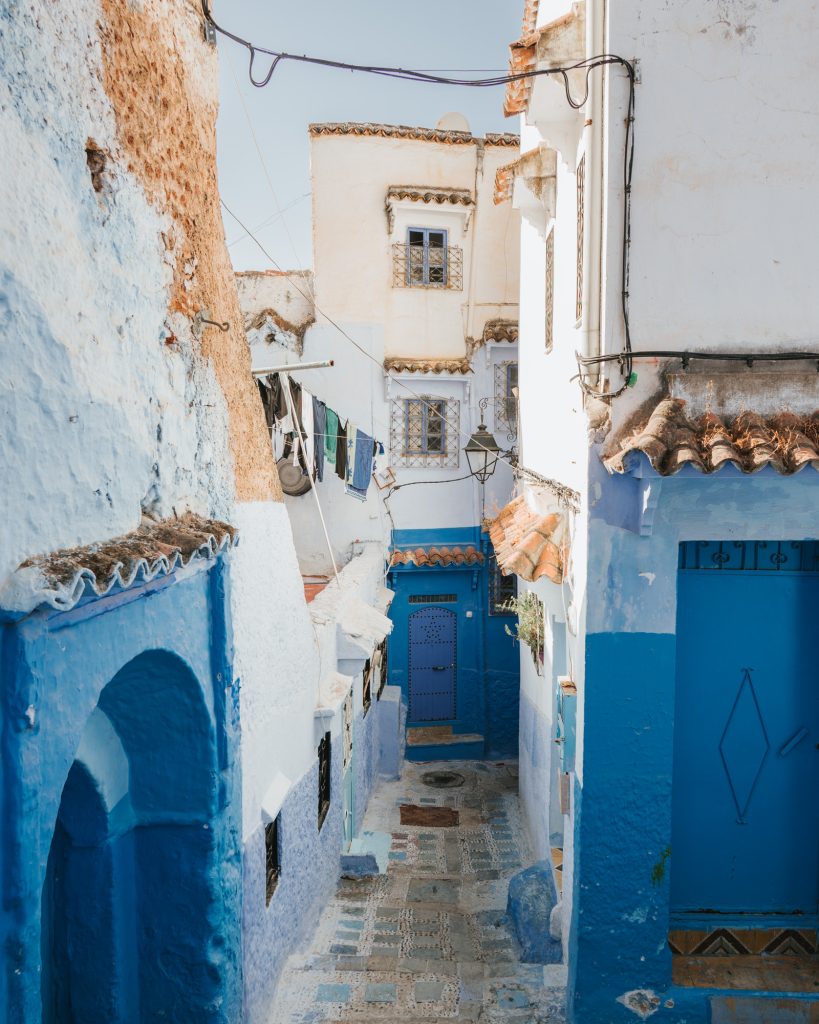
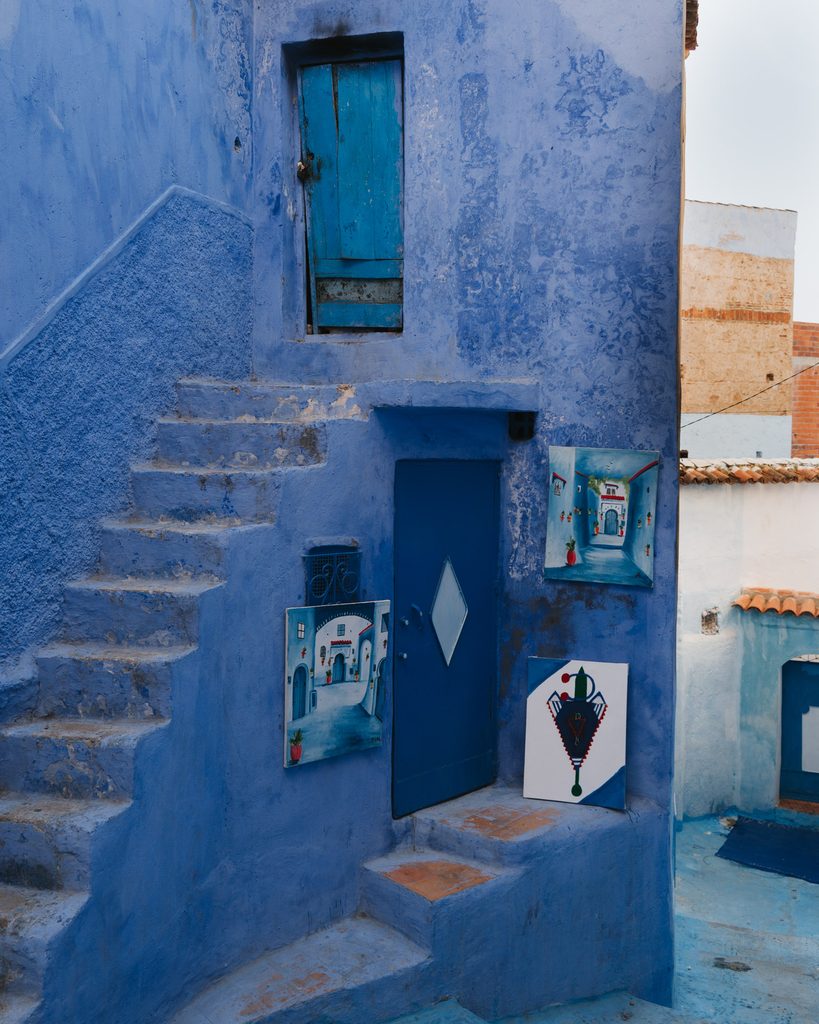
I knew Chefchaouen was going to be blue. I had seen enough photos of Morocco’s famous Blue City to know roughly what to expect. What I had not quite expected was just how blue it actually is: entire streets, staircases, doorways, and walls, in every shade from pale powder to deep cobalt, sometimes all on the same street.
But why is Chefchaouen blue in the first place? I was curious about that too, and it turns out the answer is not as straightforward as you might think.

The short answer
No one knows for certain. There is no single confirmed reason Chefchaouen is blue, but the most widely cited explanation links the blue to the town’s Jewish community, for whom the color carries spiritual meaning. Other popular theories say the blue keeps mosquitoes away, keeps the houses cool, or simply makes the town beautiful, something locals have leaned into as tourism has grown.
In other words, it is probably a mix of tradition, practicality, and, more recently, the fact that it is lovely to look at.
The theories, one by one
1. A Jewish tradition (the most widely cited explanation)
The explanation you will come across most often links Chefchaouen’s blue walls to its Jewish community. The town was founded in 1471 and later became home to Muslims and Jews who had fled persecution in Spain. It had a Jewish community for centuries, and some accounts also connect the spread of blue paint to Jewish arrivals in the early twentieth century.
In Jewish tradition, blue carries spiritual significance, associated with the sky, the heavens, and the divine. One theory is that residents painted their homes blue as a reminder of that presence.
It is a beautiful explanation, but the historical details are not settled. There is no definitive evidence establishing exactly when the practice began, or whether this was the original reason the town turned blue.
2. To keep mosquitoes away
A very common practical theory is that the blue keeps mosquitoes at bay. Some versions of the story say the painted walls resemble flowing water, which mosquitoes supposedly avoid. I have not found convincing scientific evidence that blue walls actually repel mosquitoes, though, so I would treat this one as local folklore rather than fact.
3. To keep the houses cool
Another practical explanation is that the pale blue reflects sunlight and helps keep the thick-walled houses cooler through the hot summers. There is some logic to it, although white would reflect sunlight too, and there is no clear evidence that cooling was the original reason for painting the town blue. Chefchaouen sits up in the Rif Mountains, so it is already cooler than the lowlands.
4. Because it is beautiful, and it brings visitors
Whatever started it, there is no question that the blue has become Chefchaouen’s calling card. The all-over blue is thought to have spread through the twentieth century, and today the color is actively kept up. It draws photographers and travelers from all over the world, and maintaining the blue has become part of how Chefchaouen presents itself. That is not cynicism, just a town that knows what makes it special.

My take, having walked those blue streets
Chefchaouen is one of the most photogenic places I have been, and that is saying something, because plenty of places look incredible online and turn out a little underwhelming in person. Chefchaouen is not one of them.
What I love most is that the blue is never just one blue. Some streets are almost turquoise, others pale and chalky, and then you turn a corner and find a doorway painted the deepest cobalt. The color shifts with the light too, which makes it very hard to put your camera away.
My favorite time to explore was early in the morning, before the day-trippers arrived. I had some of those famous blue lanes almost to myself, and I could have spent hours photographing the doors alone. But there is more to Chefchaouen than pretty blue walls. It is still a town where people live and work, baking bread and carrying bundles of branches through the lanes while the rest of us wander around with our cameras. That is worth remembering when you visit.
If you are planning a trip, I have put together a separate guide to the best things to do in Chefchaouen, including my favorite viewpoints, places to eat, and tips for exploring the medina.
When did Chefchaouen become blue?
Here is something I found surprising: Chefchaouen has not always looked the way it does today. Although some accounts trace blue-painted buildings back centuries, the town was once much more white than blue. Historical descriptions and old photos suggest the blue gradually spread across the medina during the twentieth century.
Exactly when that happened is still debated, but the all-over blue look we recognize today is relatively recent. So while Chefchaouen itself is more than 500 years old, the Blue City everyone knows from Instagram is a much more modern version of it.
Is the blue painted, or is it natural?
It is paint, and it is kept up. The walls are traditionally finished with limewash mixed with blue pigment, though modern paints are used too. The color needs refreshing as it fades, which is why you might spot freshly painted walls and doorways as you wander through the medina.
What does Chefchaouen mean?
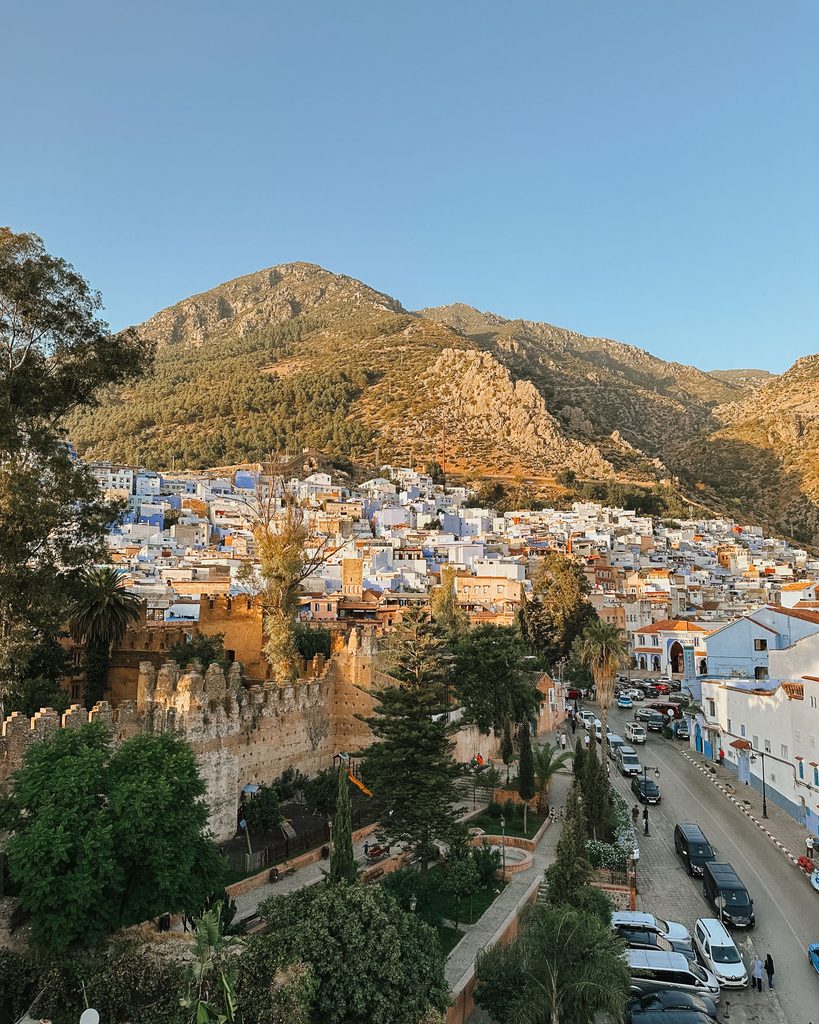
The name has nothing to do with the color. Chefchaouen, often shortened to Chaouen, comes from a Berber phrase meaning something close to “look at the horns,” a reference to the two mountain peaks that rise above the town and resemble goat horns. So the name points to the mountains, and the blue came much later.
FAQ
Is the whole town blue?
Not quite. It is mainly the old medina that is painted blue. The newer parts of Chefchaouen look like a fairly ordinary Moroccan town, so the blue you see in every photo is concentrated in the historic center.
Who keeps Chefchaouen blue?
The residents themselves. There is no single authority painting the town. Keeping the medina blue comes down to the people who live there refreshing the walls as the color fades, which is part of why the look has held on for decades.
Can you photograph the blue streets freely?
The blue streets are wonderful to photograph, but remember that many of those beautiful doorways lead to people’s homes. Do not block entrances, respect any signs asking you not to take photos, and always ask before photographing someone.