Published on October 12, 2026 · Updated on October 12, 2026
I will be honest: before my first trip, I was a little nervous about the food in Morocco. Not because I am a picky eater. Quite the opposite. I will try almost anything, but my body genuinely cannot handle spicy food.
The good news? Moroccan food generally is not spicy in the chili-heat sense. It uses plenty of spices, but they tend to be warm and aromatic rather than fiery. And three trips later, Moroccan cuisine has become one of my favorites in the world. I now plan entire days around what I am going to eat.
So if you are wondering what to eat in Morocco, this is everything I think is worth trying, from the obvious tagines and couscous to Marrakech street food, Moroccan breakfasts, sweets, and a few dishes I had never even heard of before my first trip.
If you only try five things: chicken tagine with preserved lemon and olives, couscous, pastilla, tanjia in Marrakech, and msemen with amlou for breakfast.
Moroccan food reflects Amazigh (Berber), Arab, Andalusian, Mediterranean, and other influences, with lots of slow cooking, preserved lemons, olive oil, herbs, and spices that tend to be aromatic rather than aggressively hot.
The must-try Moroccan dishes
Tagine
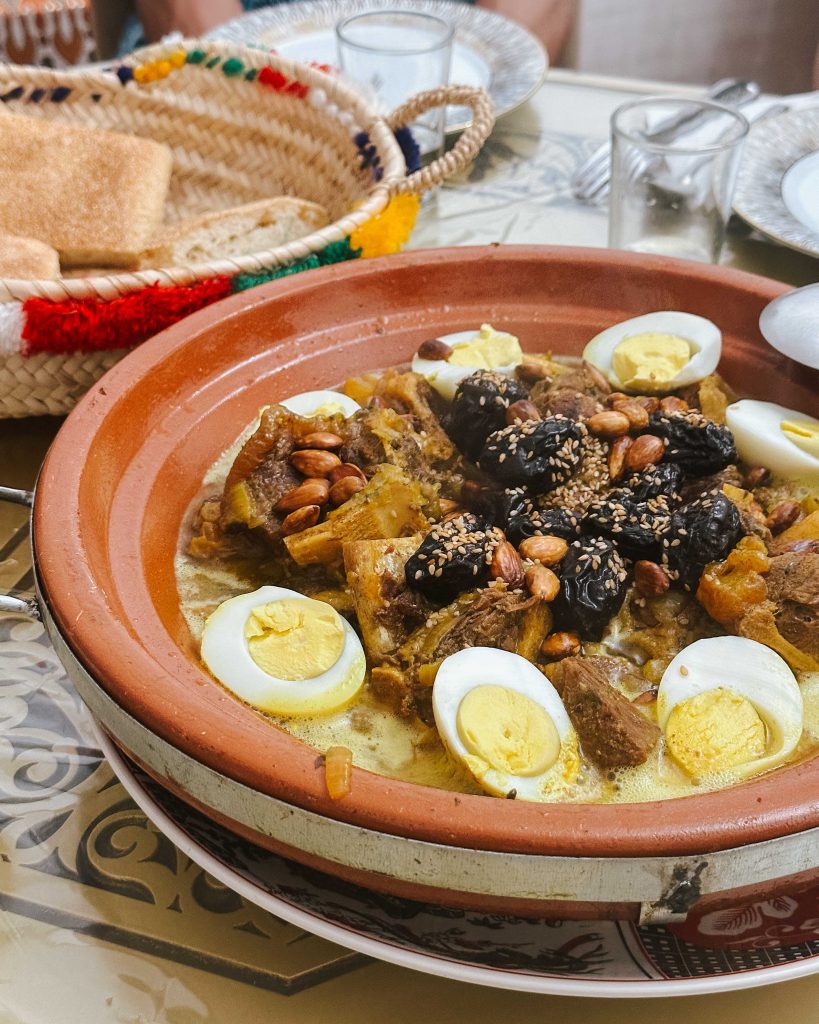
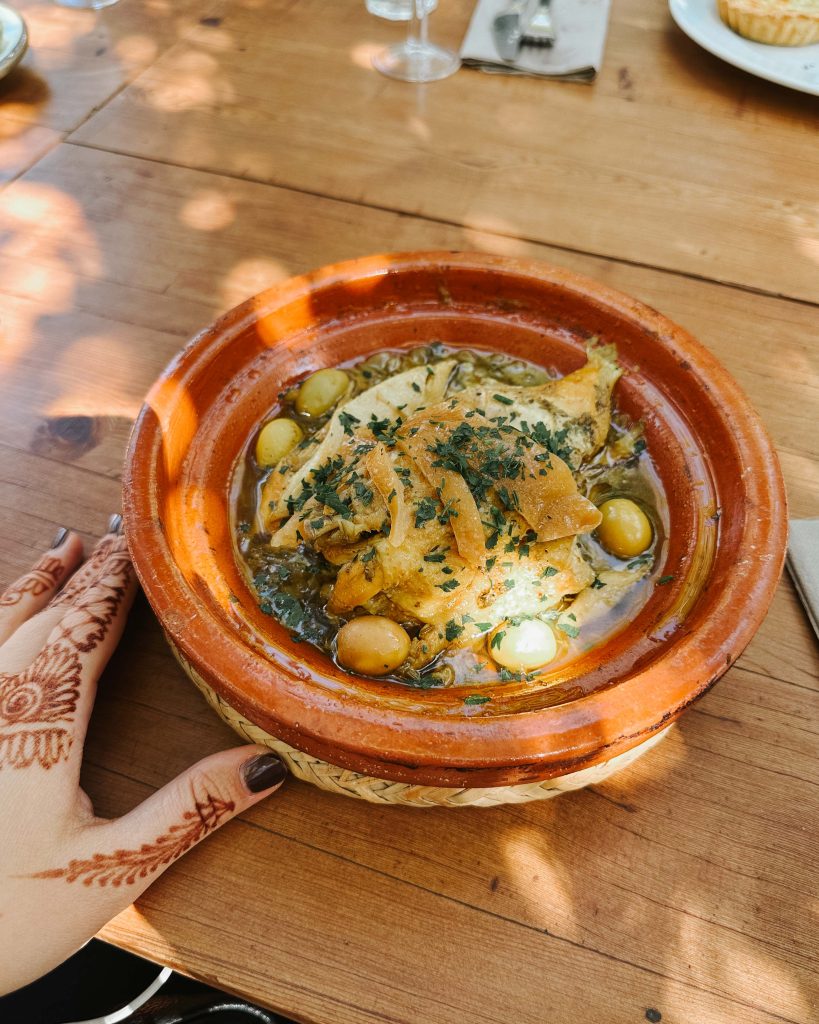
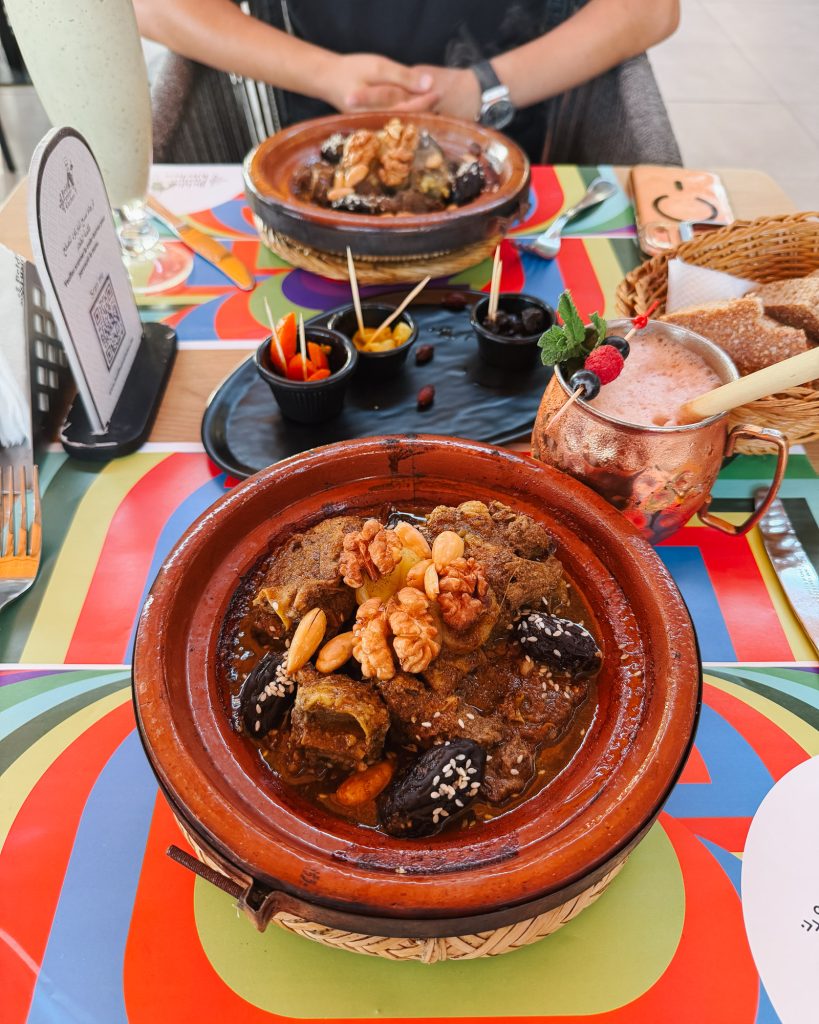
The dish most people picture when they think of Moroccan food, and for good reason. A tagine is a stew named after the conical clay pot it is slow-cooked in, which traps the steam and keeps everything meltingly tender. The two classics to try:
- Chicken tagine with preserved lemon and olives: bright, savory, a little tangy.
- Lamb (or beef) tagine with prunes and almonds: sweet-savory and rich.
Honestly, both of these are among my favorite Moroccan dishes, full stop. I loved them so much that I bought myself a little tagine pot to try to recreate them at home. Wish me luck. You will see vegetable tagines everywhere too, which are fantastic and naturally meat-free.
Couscous
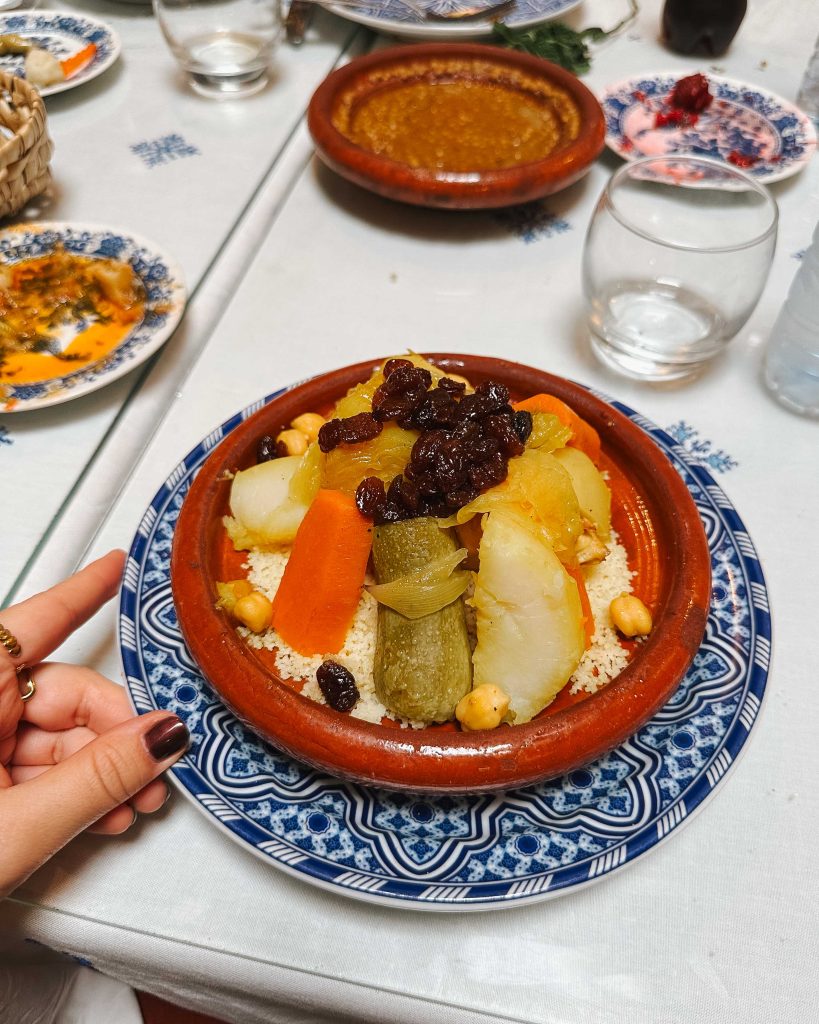
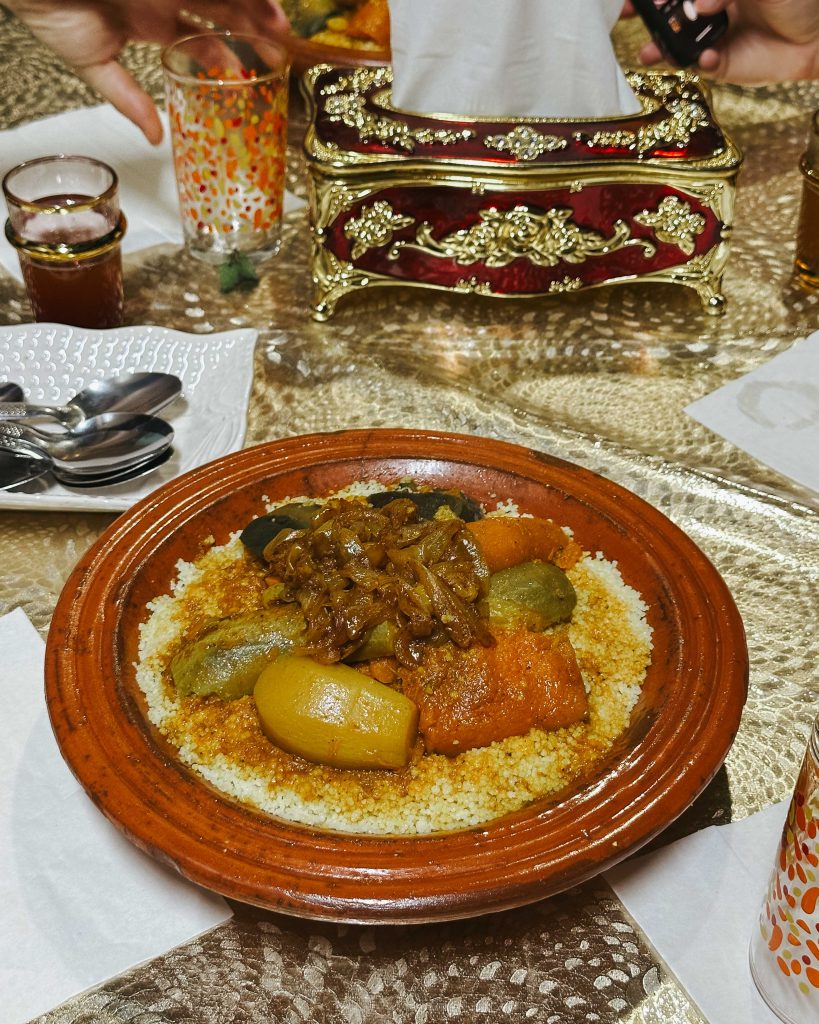
Not actually a grain but tiny steamed semolina pasta. Traditionally eaten on Fridays, often after midday prayers, it comes piled with vegetables and usually some meat, with seven-vegetable couscous being one of the classic versions. It is fluffy, comforting, and a genuine must. If you are ever invited to a Friday couscous with a local family, say yes immediately.
Tanjia (the Marrakech one)
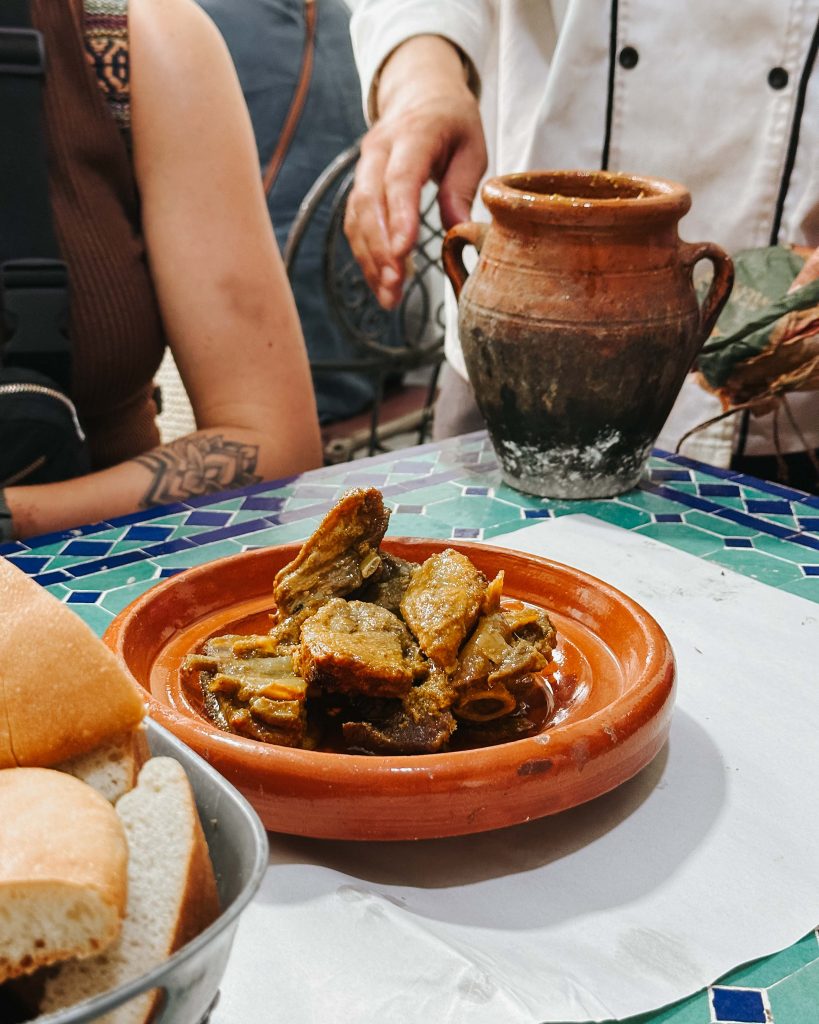
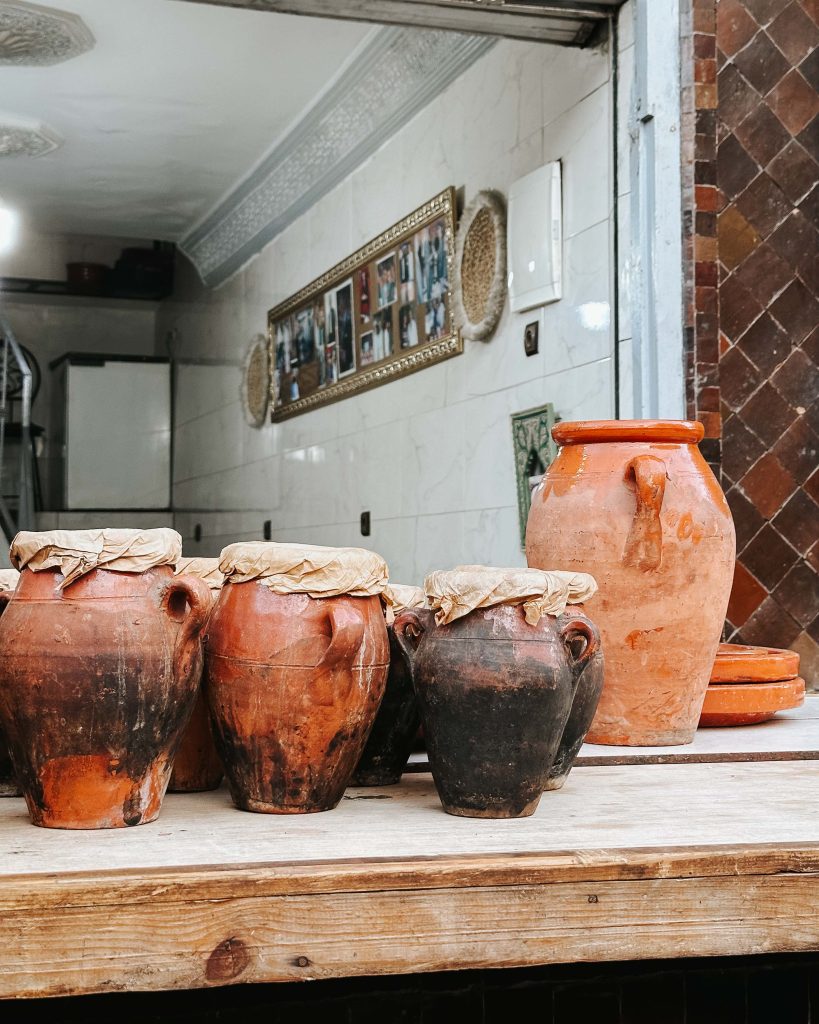
Do not confuse this with tagine. Tanjia is a Marrakech specialty, traditionally made with beef or lamb, preserved lemon, garlic, cumin, saffron, and smen (aged butter) sealed in a tall clay urn. The pot is then taken to the furnace that heats a neighborhood hammam and left to cook slowly in the embers for hours. It has a long association with Marrakech’s working men and is sometimes nicknamed the bachelor’s dish. And the meat? Ridiculously tender. This was the standout of my Marrakech food tour.
Pastilla (b’stilla)
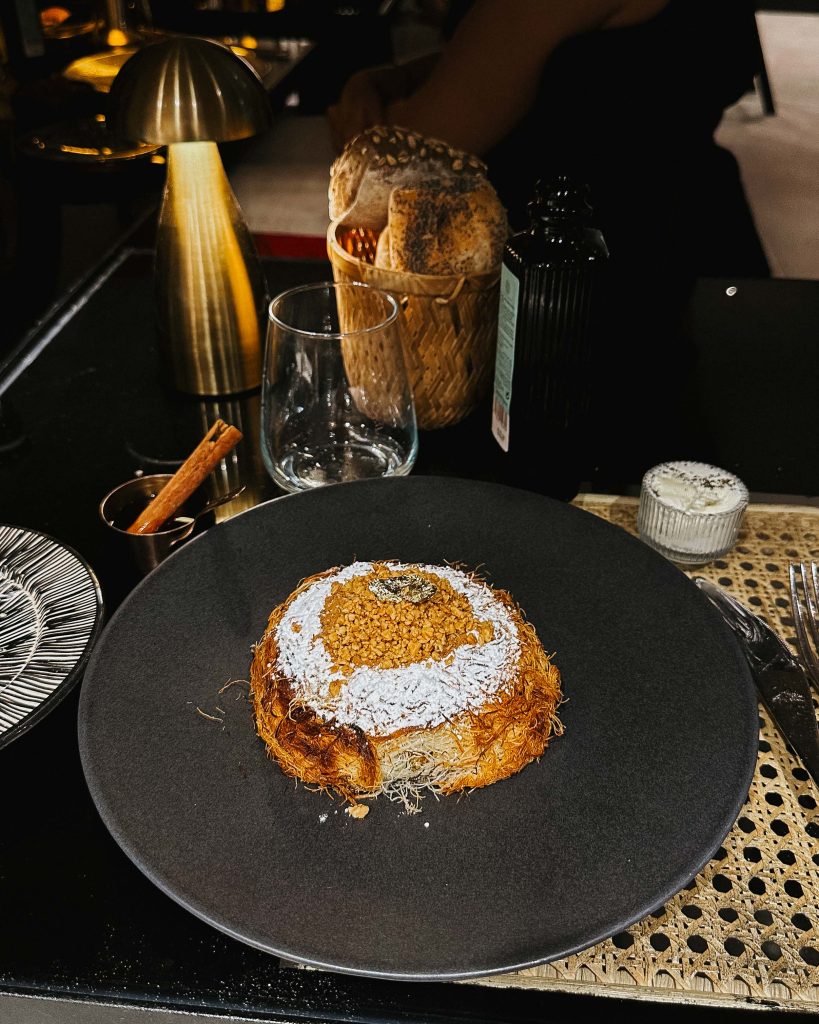
A show-stopping sweet-and-savory pie: layers of thin, flaky warqa pastry wrapped around spiced poultry (traditionally pigeon, usually chicken now), dusted with cinnamon and powdered sugar. There is also a seafood version. It sounds strange and tastes incredible. I had a modern chicken one in Fes that I still think about.
Harira
A rich tomato, lentil, and chickpea soup, fragrant with herbs and spices, famously eaten to break the fast during Ramadan. Hearty, warming, and often served with dates and sweets on the side.
My Marrakech street food tour
If you only do one food thing in Morocco, do a street food tour in Marrakech. It is the single best way to try a whole range of traditional dishes in one evening, with someone local to explain what you are eating and lead you to the good stalls rather than the tourist traps.
Here is what we tried on mine, and what I thought:
- Tanjia: the Marrakech lamb I rave about above. It was the standout of the night, literally melting in my mouth. I do not even normally like lamb, and this converted me.
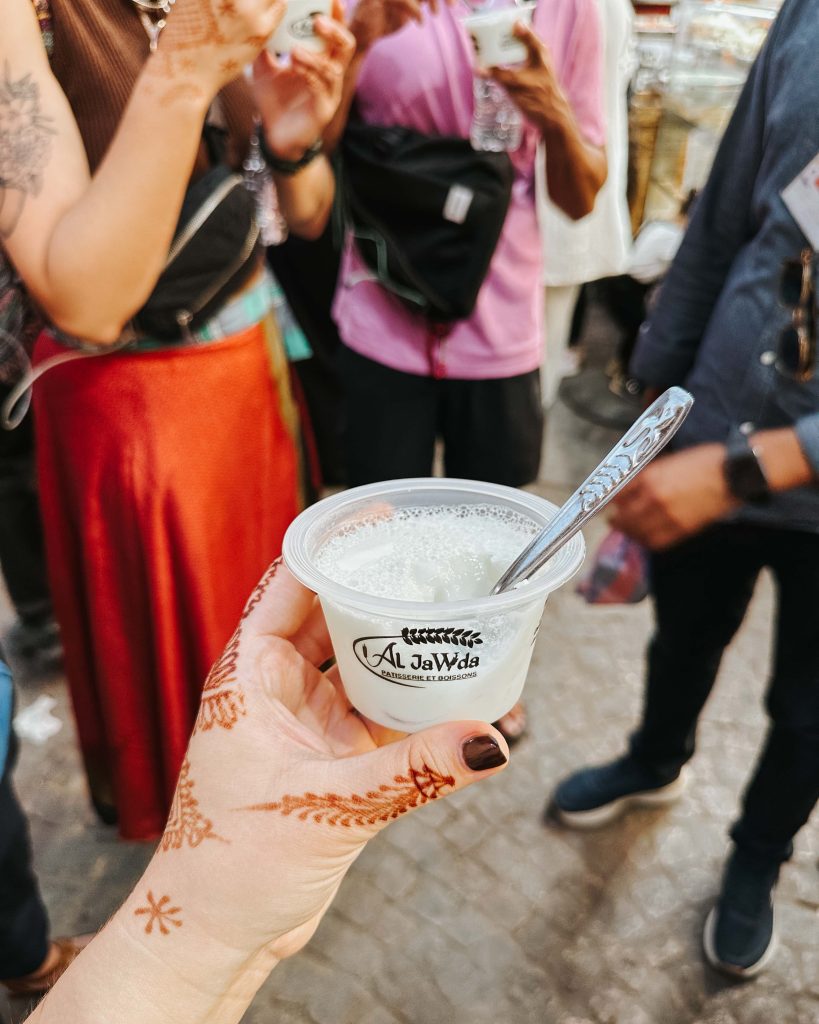
- Raib: a sweet Moroccan fermented yogurt, sometimes flavored with orange blossom. The one I tried was thick, cold, and almost dessert-like, somewhere between yogurt and frozen yogurt. I loved it.
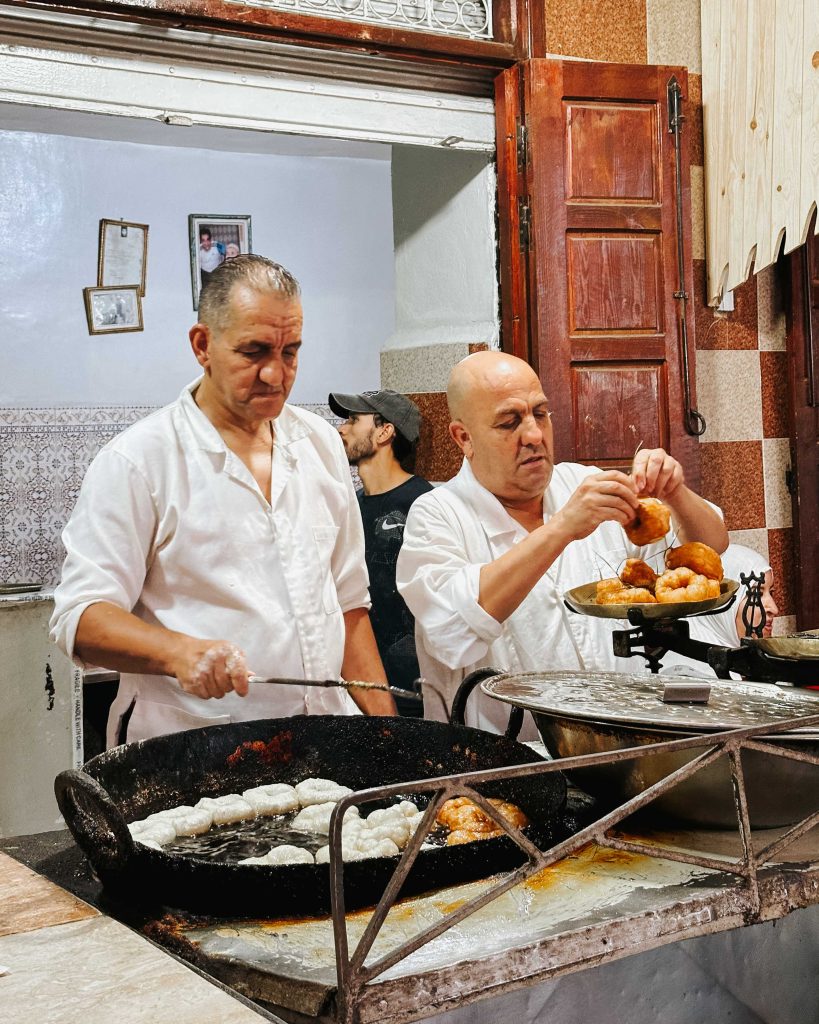
- Sfenj: a Moroccan doughnut you dip in sugar or honey. The dough reminded me of Slovenian doughnuts, just crispier on the outside.
- Prickly pear: I finally tried it, and the taste was nice, but I could not get past the big seeds and I managed to stain my whole body in the process. A hard no for me, though it makes a great natural lip stain.
- Mint tea: with a lot of sugar. I genuinely miss drinking it every day.
- Couscous with vegetables: a must in Morocco (more above).
- Spiced nuts and “Moroccan M&Ms”: sugar-coated nuts for round two of snacking.
- A smoothie and biscuits on a rooftop terrace to finish the night.
I would 100% recommend doing a Marrakech food tour with a local guide when you visit. If you would rather fold it into a wider trip, a private tour around Morocco with a local company can build food experiences in.
Moroccan street food and snacks
Street food is where Moroccan food really opened up for me. It is often inexpensive, and there is an enormous amount to try. Beyond the sfenj, spiced nuts, and prickly pear from my food tour above, keep an eye out for:
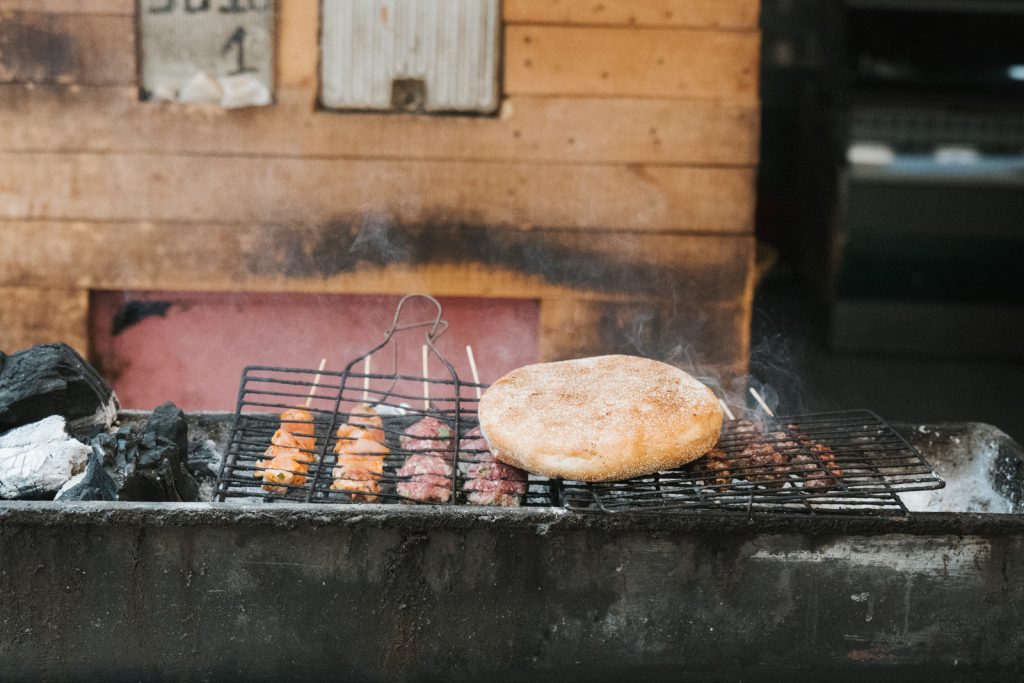
- Brochettes and kefta: charcoal-grilled skewers of spiced lamb, beef, or chicken, and little seasoned meatballs. Order them fresh off the grill.
- Merguez: smoky lamb sausages off the charcoal, one of my favorite quick bites.
- Mechoui: whole lamb slow-roasted until it falls off the bone, carved to order and eaten simply with cumin and salt. A special-occasion treat.
- Grilled sardines: butterflied and stuffed with chermoula, a garlic, herb, and spice marinade, then grilled. Best along the coast in Essaouira and Agadir.
- Maakouda: fried potato cakes, often tucked into a sandwich with harissa and salad.
- Snail soup (babbouche): sipped hot from a little bowl at stalls. I have not been brave enough to try it yet, maybe next time, but locals absolutely swear by it.
A typical Moroccan breakfast
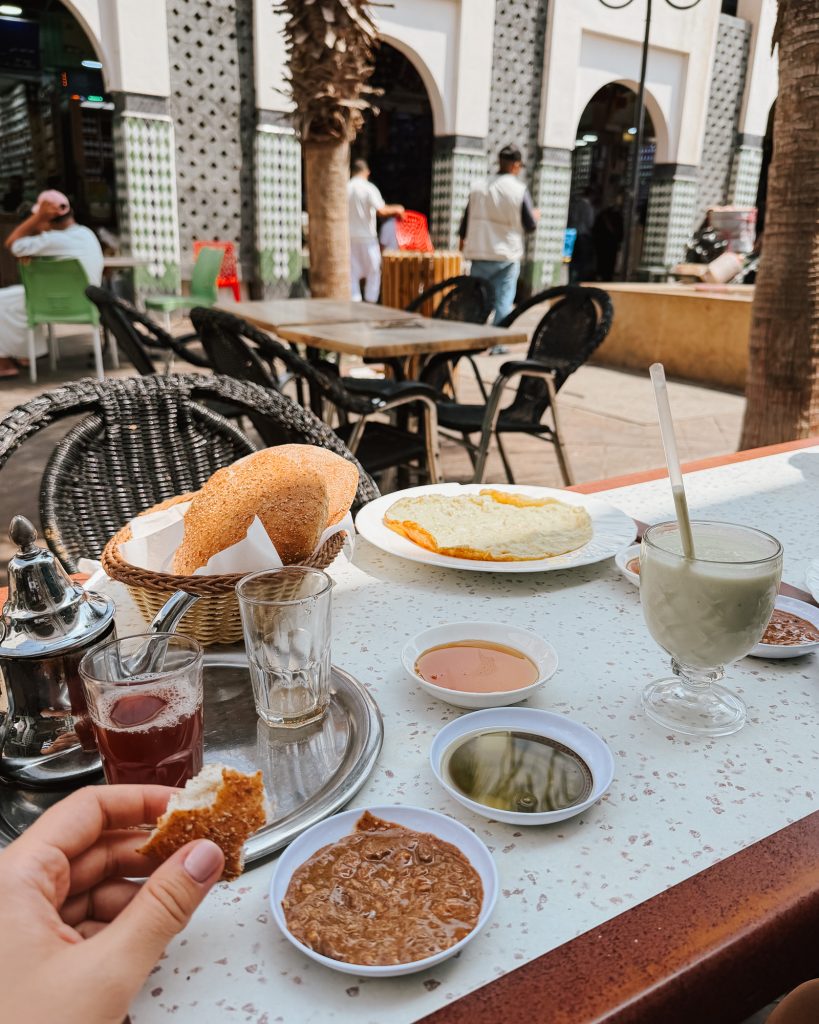
Breakfast is one of my favorite meals in Morocco, a spread of breads and spreads rather than one dish:
- Msemen: flaky, buttery square flatbread, amazing with honey or cheese.
- Harcha: a pan-fried semolina bread with a cornbread-like crumb, lovely split with butter, jam, or cheese.
- Baghrir: spongy “thousand-hole” semolina pancakes that soak up honey and butter.
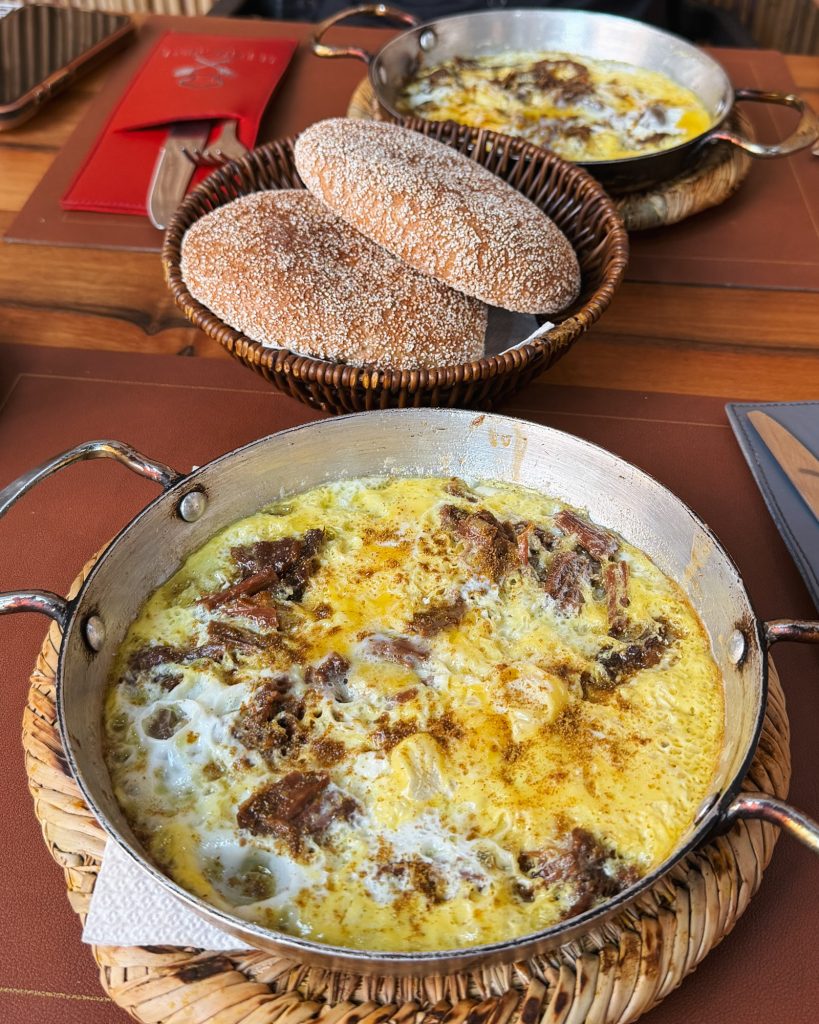
- Khlii omelet: eggs fried with khlii, Morocco’s preserved cured meat. Rich, salty, and completely addictive, one of my favorite Moroccan breakfasts.
- Bissara: a warming fava bean soup, a classic cheap breakfast in the north.
- Bread with olive oil, amlou, and jam: amlou is made from almonds, argan oil, and honey. Calling it Moroccan Nutella does not really do it justice, but it is probably the easiest way to explain the level of addiction we are dealing with here. Grab a couple of jars to take home. I go through one a month, and I am currently suffering because I ran out, which is honestly reason enough to book my next trip back.
- Eggs, olives, and mint tea to round it out.
Moroccan dishes you might not know yet
A few dishes that surprised me and that you will not find on every tourist menu:
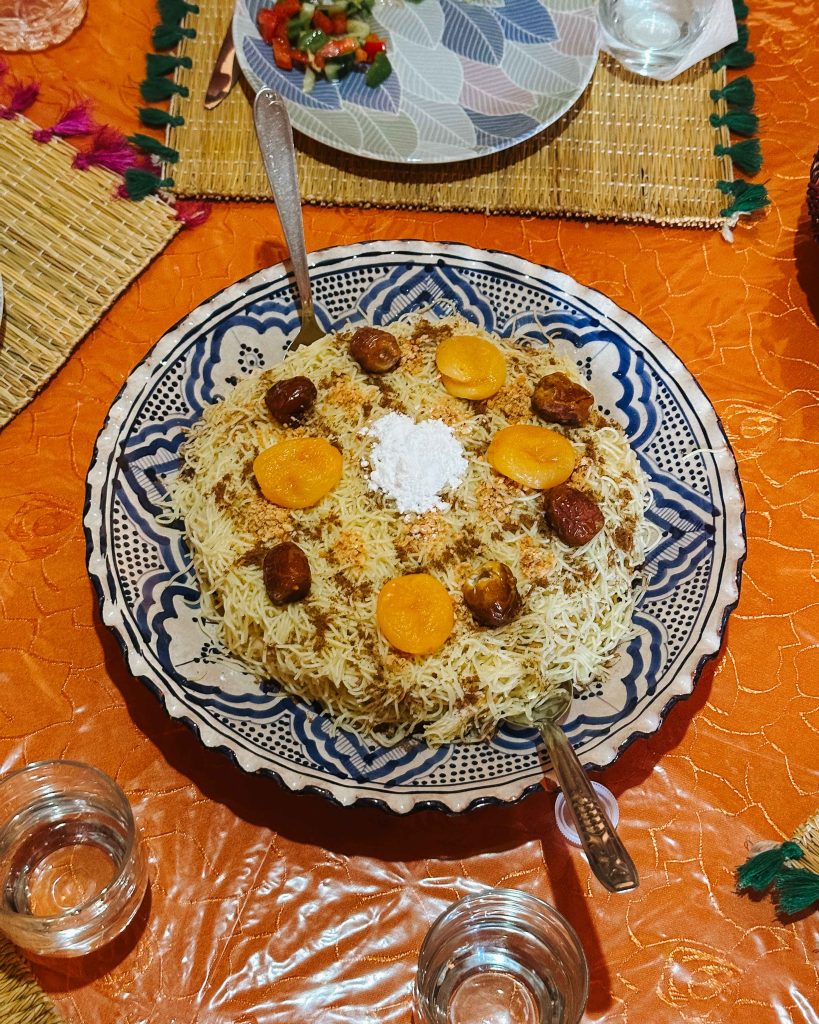
- Seffa medfouna: sweet steamed vermicelli piled over hidden chicken or meat, dusted with cinnamon, sugar, and almonds. That sweet-and-savory combination is so Moroccan, and I loved it.
- Rfissa: shredded msemen or day-old bread soaked in a rich chicken, lentil, and fenugreek broth. Deeply comforting, and traditionally made for new mothers.
- Tlitli: little orzo-like pasta, a specialty of the Oujda region in the east, usually cooked with chicken.
- Berkoukes: large hand-rolled pasta pearls, somewhere between couscous and a hearty soup.
Moroccan sweets and desserts
Moroccan sweets lean floral and honeyed, and they are everywhere around tea time.
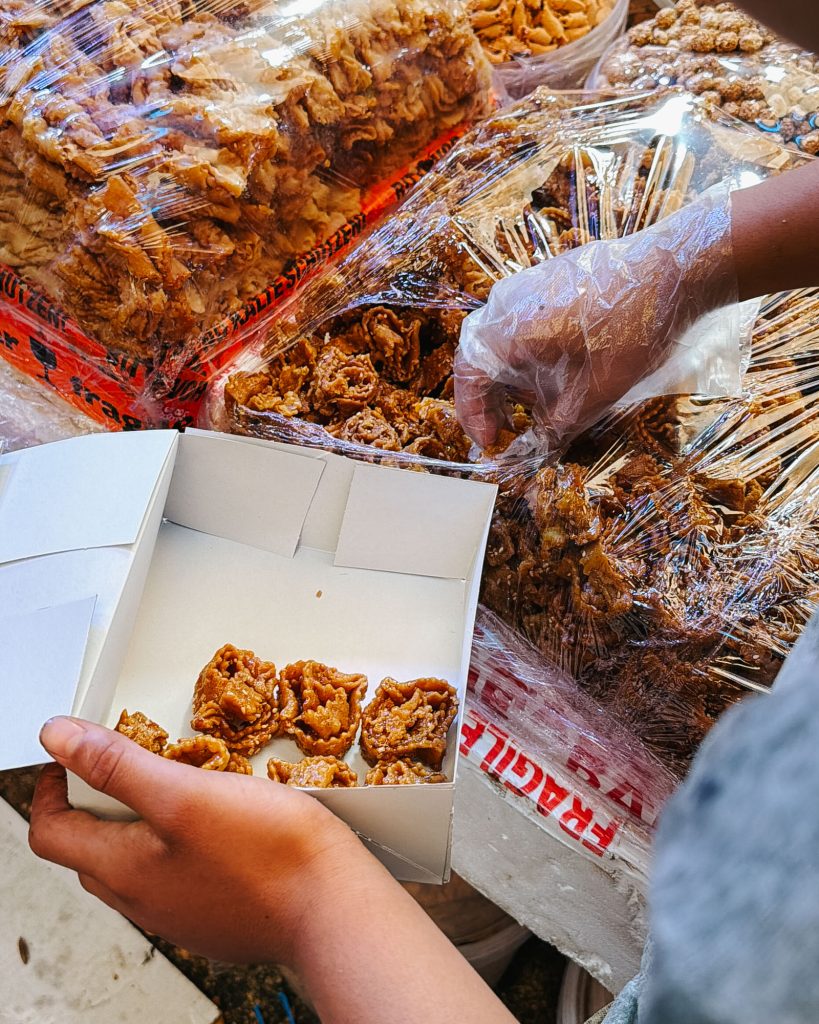
- Chebakia: flower-shaped sesame cookies, deep-fried and soaked in honey and orange blossom water.
- Kaab el ghazal (cornes de gazelle): delicate crescent pastries filled with almond paste.
- Briouats: little fried pastry triangles, sweet (almond and honey) or savory.
- Ghoriba: crumbly Moroccan shortbread cookies.
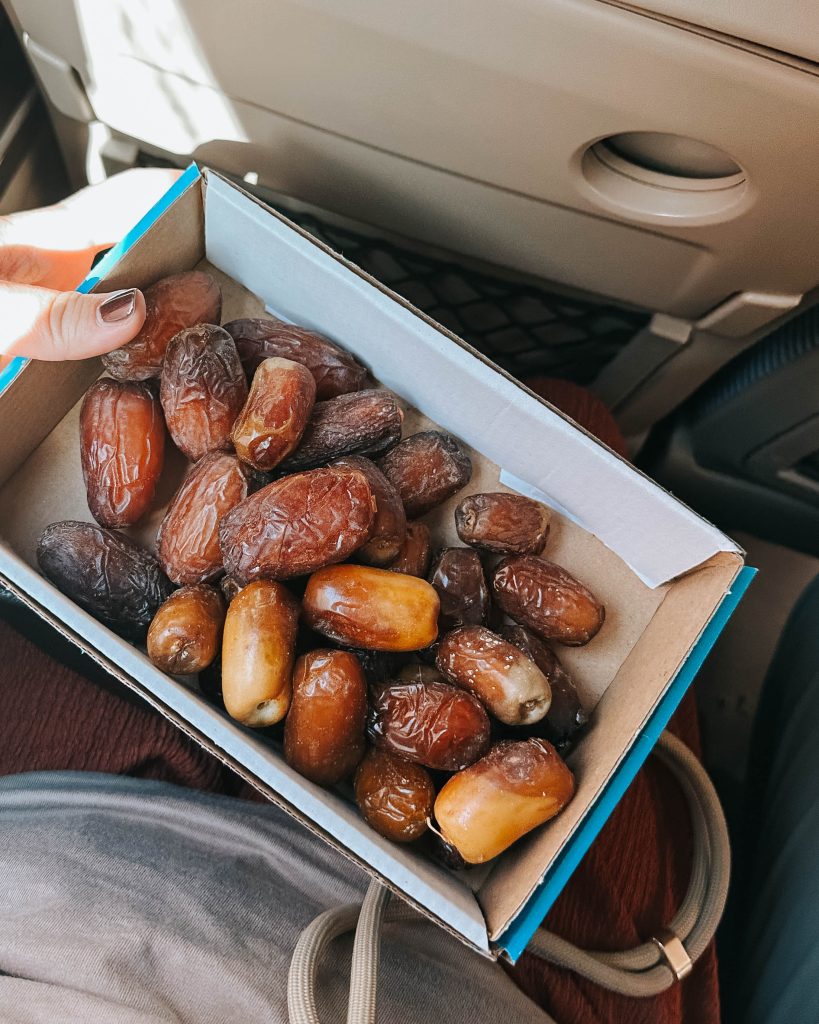
- Fresh dates and stuffed dates: especially around the desert, where they are exceptional.
What to drink in Morocco
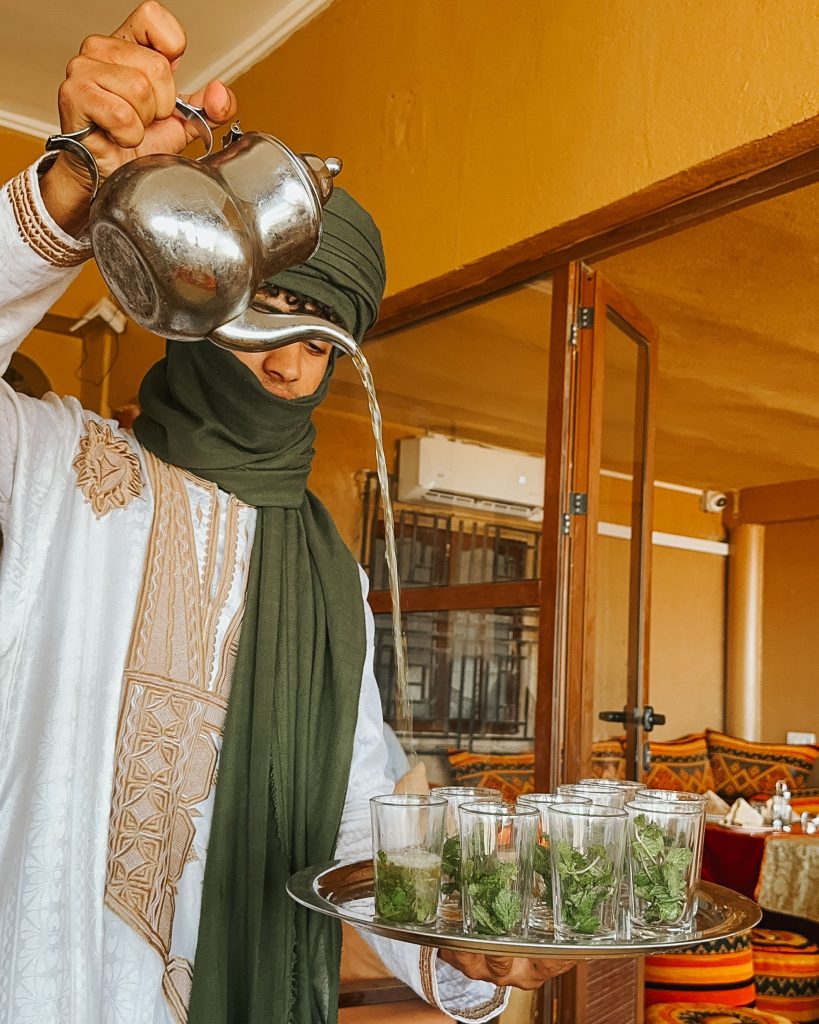
- Mint tea: green tea brewed with heaps of fresh spearmint and sugar, poured high from the pot. It is the heartbeat of Moroccan hospitality and I became completely hooked.
- Raib: the sweet fermented yogurt from my food tour, thick and almost dessert-like, somewhere between a drink and a pudding.
- Fresh orange juice: squeezed to order for a few dirhams at stalls all over, especially in Jemaa el-Fnaa.
- Almond milk and avocado smoothies: rich, lightly sweet, and surprisingly common.
Is there much vegetarian food in Morocco?
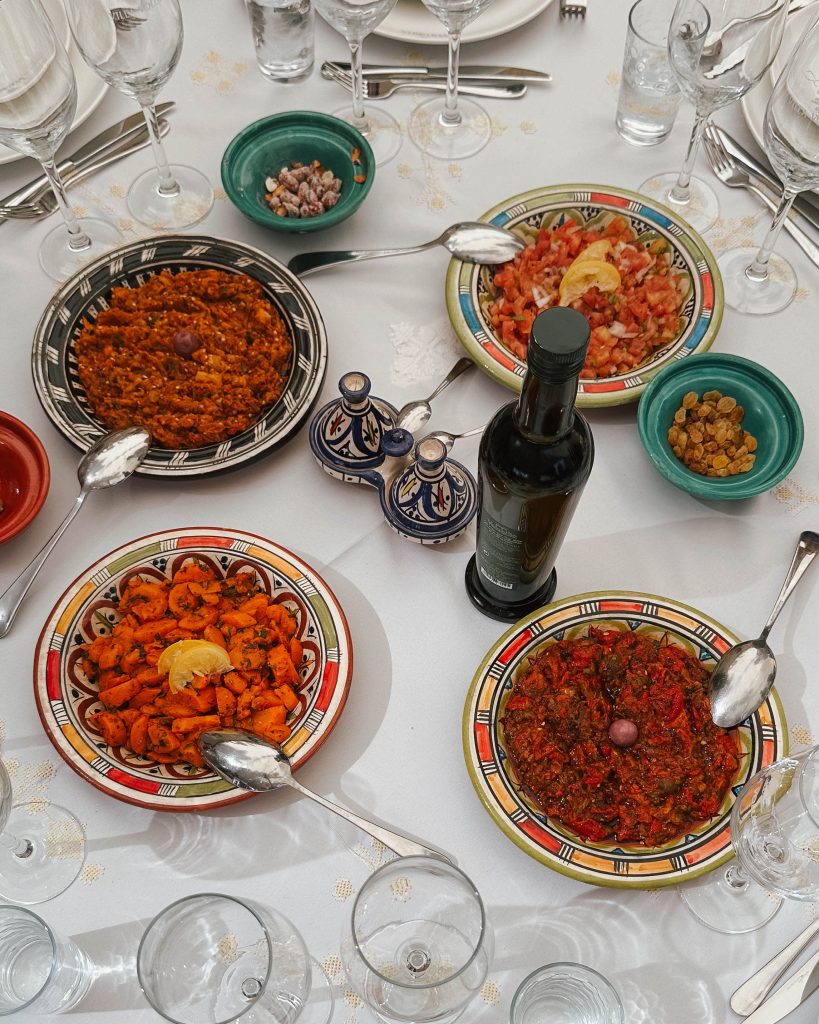
Morocco is actually pretty easy for vegetarians once you know what to look for. Vegetable tagines, seven-vegetable couscous, bissara, loubia (a white bean and tomato stew), zaalouk (smoky eggplant salad), taktouka (pepper and tomato), fresh breads, olives, and amlou can all work well. Just do not assume that “vegetable” automatically means vegetarian: a couscous or tagine may still be made with meat stock, and harira often contains meat. Vegans can eat well too with a little care around butter and honey.
Is Moroccan food safe, and how to not get sick
Mostly yes. I have only been properly ill once across three trips. Several people in my group got sick one after another, so whether it was something I ate or a bug passing through the group, I honestly do not know. A few simple habits help either way:
- Eat at busy stalls with high turnover, where the food is fresh and cooked to order.
- Avoid anything that looks like it has been sitting out for a while, especially sauces and dishes left at room temperature.
- Stick to hot, freshly cooked food, and be a little more cautious with pre-cut fruit and salads washed in tap water.
- Drink bottled or filtered water, and skip ice if you are unsure of the source.
- Peel fruit yourself where you can.
- Ease in gently. All the rich food and spices at once can be a lot for your stomach on day one.
A food tour is a good way to start, since a local guide knows the vendors and takes you to places they rate.
FAQ
Is Moroccan food spicy?
Not really. It is deeply flavorful and aromatic rather than hot. The heat usually comes from harissa (a chili paste) served on the side, so you control it. As someone whose stomach cannot handle spice, I was completely fine.
Is Moroccan food healthy?
On the whole, yes. It is built on vegetables, legumes, olive oil, and slow-cooked lean meats, which is a fairly Mediterranean way of eating. The breads, sweets, and heavily sugared mint tea are the treats to enjoy in moderation.
Is there pork in Morocco, and is the food halal?
Morocco is a Muslim country, so the food is overwhelmingly halal and pork is very rare outside some tourist hotels and specialty shops. Alcohol is available but not on every menu.
What is a good Moroccan dish for beginners?
Chicken tagine with preserved lemon and olives, or a vegetable couscous. Both are gentle, familiar, and a great gateway. If you think you do not like lamb, try tanjia anyway, it converted me.
Is a Marrakech food tour worth it?
For me, absolutely. You taste far more in one evening than you would alone, you learn what everything is, and you eat where locals actually eat.
A few last bites
If there is one thing I have learned after three trips to Morocco, it is to come hungry and say yes when someone pours you mint tea.
Try the obvious things, obviously. Eat the tagine. Order couscous on a Friday. Get the pastilla. But also try the thing you do not recognize, eat somewhere that does not have an English menu, and do not skip breakfast because you think it is just bread.
Some of my favorite things I have eaten in Morocco are dishes I had not even heard of before I got there. And I still have not tried the snails.
Trip four, apparently.